Air Purifiers · 2026 edition
Quietest air purifiers: what the dB specs don't tell you
Every air purifier on Amazon claims to be 22 dB in sleep mode. Every single one. What that number doesn't tell you: sleep mode is the fan speed set just above idle, barely moving air through the filter. You could measure your own breathing at 22 dB. It's the setting you activate when you want quiet - not necessarily when you want clean air.
The speed that actually cleans your room is medium. On medium, the same "22 dB" purifier typically runs at 40-50 dB - comparable to background conversation. That's not a defect. It's physics. The question is whether you knew to expect it before you bought the thing.
Below: three things the category routinely gets wrong, then 12 quiet air purifiers organized by room size. All dB figures on this page are manufacturer-claimed. None were independently measured. We say that now so we don't have to hedge every card.
Three things the category gets wrong
Sleep mode is not how air purifiers clean air. It's the lowest fan speed, kept low to let you sleep near the unit without being disturbed. The 20-22 dB claims that dominate product listings describe that setting. When auto mode fires up because your cat jumped on the couch or you burned toast, fan speed jumps to medium. That's 40-55 dB, depending on the unit. Not broken. Just not what the listing implied.
The "covers up to 1,500 sq ft" claim is built on an assumption nobody mentions: one air change per hour. For meaningful allergen reduction - the kind that makes allergy sufferers notice a difference - you need four to five air changes per hour. Divide the advertised coverage by four and you have a usable working figure. A unit listed at 1,000 sq ft is doing real allergy-grade work in a 250 sq ft bedroom.
Not all quiet purifiers are equivalent. Some are near-inaudible on low and noisy on medium. Some have auto modes that spike to high at 2am when air quality dips. Some have no audible indication they've changed speeds, so you wake up wondering why it got louder. The dB spec doesn't distinguish any of these patterns. Buyer reports across thousands of purchases do, which is why this page exists.
All 12 picks at a glance
Noise labels are editorial judgment based on buyer feedback and manufacturer specs. All dB figures are manufacturer-claimed, measured in sleep mode at the lowest fan speed. No independent air purifier noise certification exists for this category.
| Product | dB | Type | Price | Badge | Verdict |
|---|---|---|---|---|---|
| LEVOIT Core Mini-P | Near-silent (low) | Desktop | $40 | Best Budget Pick | Tiniest footprint; consistently near-inaudible on low |
| Afloia Air Purifier | 22 dB (claimed) | Mid-range | $60 | Three filter types; stay on Medium - High is noticeably loud | |
| AIRTOK 2-Pack | 25 dB (claimed) | Budget Pair | $70 | Best Value Pair | Two units for $70; placement strategy is the real advantage |
| VOOPNU Compact | 22 dB (claimed) | Budget | $27 | Six certifications at under $30; personal-space scale only | |
| Purivortex AC400 | Quiet (unspecified) | Budget | $33 | Oversized filter for a sub-$35 unit; good longevity per buyers | |
| Aroma Room H13 | 22 dB (claimed) | Compact | $27 | Compact; outperformed larger expensive units per buyer reports | |
| KNKA APH4000 | 22-24 dB (claimed) | Mid-large | $150 | Quietest Large Room | Best CADR documentation here; dual-cartridge design reduces noise |
| MOOKA PR1 | 26 dB (claimed) | Mid-large | $80 | Pet Mode distinguishes it from generic auto mode; 26 dB honest | |
| PuroAir 240 | Quiet (unspecified) | Mid-large | $160 | Strong allergy feedback; no dB spec published is a transparency gap | |
| GermGuardian AC4825E | Level-dependent | Full-size | $100 | Most Trusted | Level 1 near-silent; Level 3 is audible white noise. Decade of field data. |
| SIESEAN Large-Room Purifier | 30 dB (claimed) | Large | $150 | 235 CFM CADR; 30 dB is appropriate for a living room unit, not a bedroom | |
| Honeywell HFD-120-Q | Quiet (unspecified) | Full-size | $130 | Not HEPA - permanent IFD filters. Best long-term cost of anything here. |
Bedroom and Small-Room Picks
These run overnight. Every model here has been verified by buyers who specifically mention night use without complaints. Effective coverage at allergy-relief air exchange rates: 200-325 sq ft. For rooms in that range, one of these is the right answer.
Best Budget Pick LEVOIT Core Mini-P
Tiniest footprint; consistently near-inaudible on low
LEVOIT Core Mini-P
Tiniest footprint; consistently near-inaudible on low
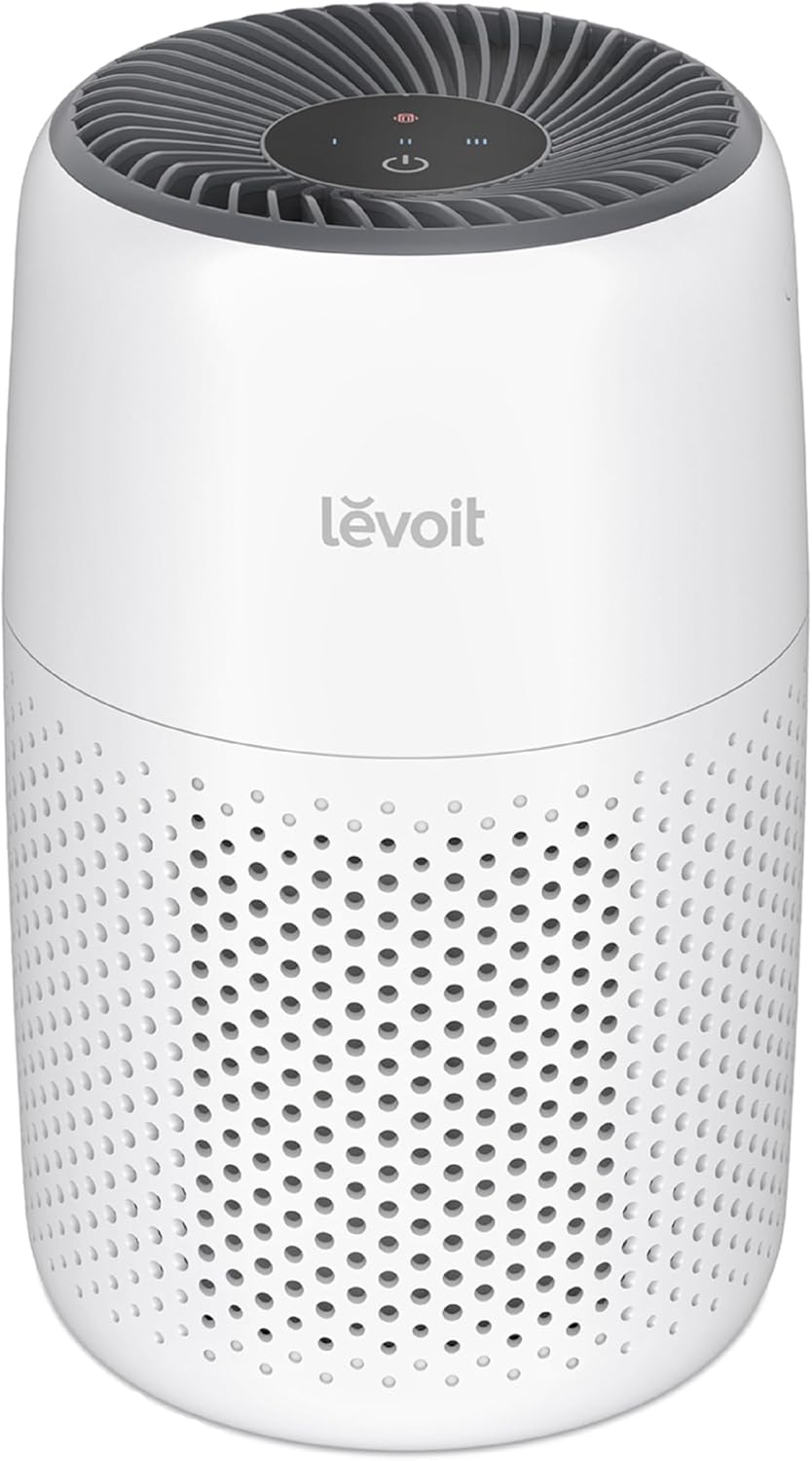
LEVOIT made the Core Mini-P the default answer to the bedroom-purifier question by making it impossible to notice. On low speed, buyers consistently use the phrase 'I forgot it was on' without prompting. Not 'it was quiet.' Forgotten entirely. That's a different level of achievement.
The aroma pad gets mentioned spontaneously by buyers who discovered it works - not because the listing pushed it, but because they added oil and liked the result. Pipe smokers living with non-smokers report it handles stale tobacco odor without being conspicuous about it.
It's small. Nightstand-small. 203 sq ft is the honest effective coverage at allergy-relief air change rates. Put it in a 200 sq ft bedroom and it works. Put it in an open-plan living room and it'll do something, just not enough. One buyer whose first unit they kept in their camper bought a second for the bedroom - that's the use pattern.
One caveat worth knowing: some buyers report it doesn't restart after a power cut. If your house has regular outages, check on it after the power comes back.
We earn a commission on purchases via these links. It does not change the price you pay or our ranking.
Afloia Air Purifier
Three filter types; use Medium, not High
Afloia Air Purifier
Three filter types; use Medium, not High
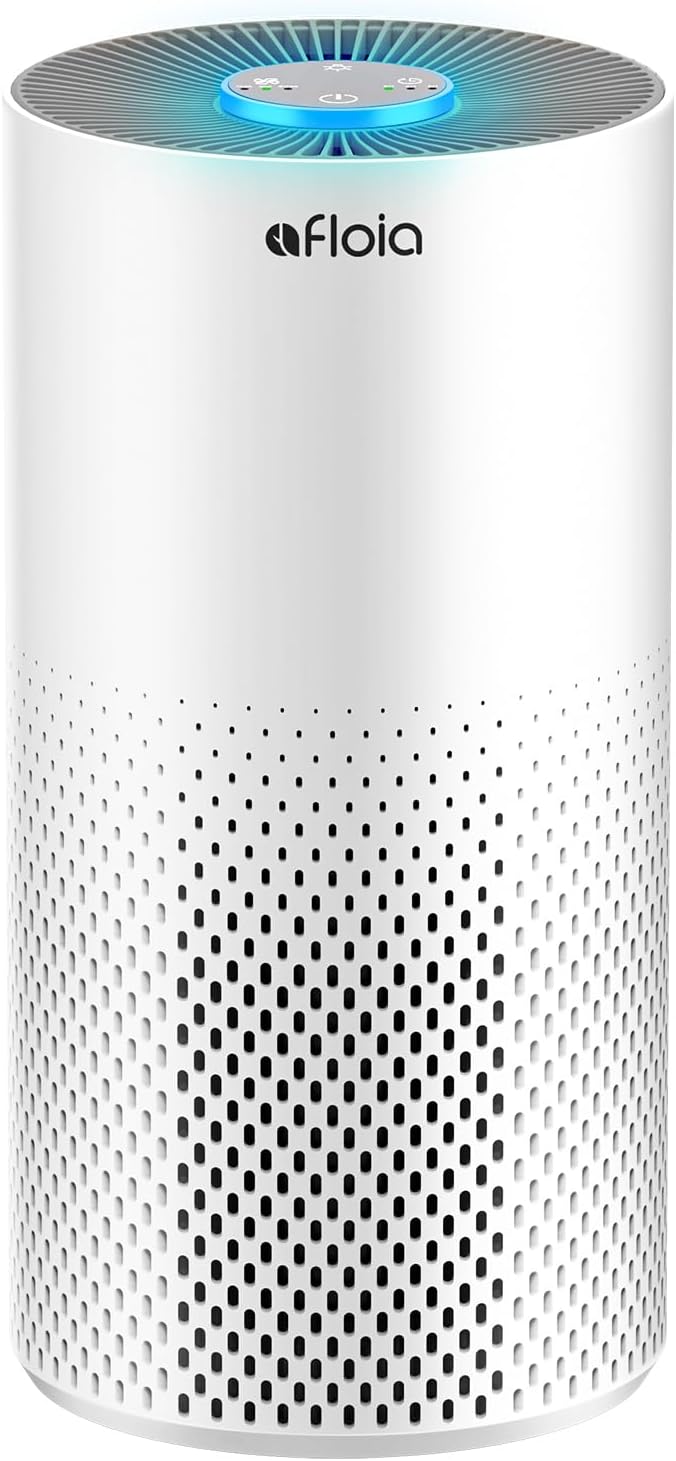
Afloia has a detail most competitors at this price don't: three filter types (original, pet allergy, antibacterial). Most purifiers offer one. Being able to swap in a pet-specific filter when the dog is shedding or an antibacterial one during cold season is a genuine feature, not a gimmick.
A buyer with a golden retriever described checking their glass dining table the morning after first use. Previously covered in a daily layer of dust. The next day: almost none. The day after: barely any. Specific, visual, verifiable.
High speed is noisy - buyers are consistent on this. Use Medium. The 22 dB sleep-mode claim applies at the lowest setting; medium is where the actual air cleaning happens at this price point, and it's more like background fan noise than silence.
We earn a commission on purchases via these links. It does not change the price you pay or our ranking.
Best Value Pair AIRTOK 2-Pack
Two units for $70; placement strategy is the real advantage
AIRTOK 2-Pack
Two units for $70; placement strategy is the real advantage
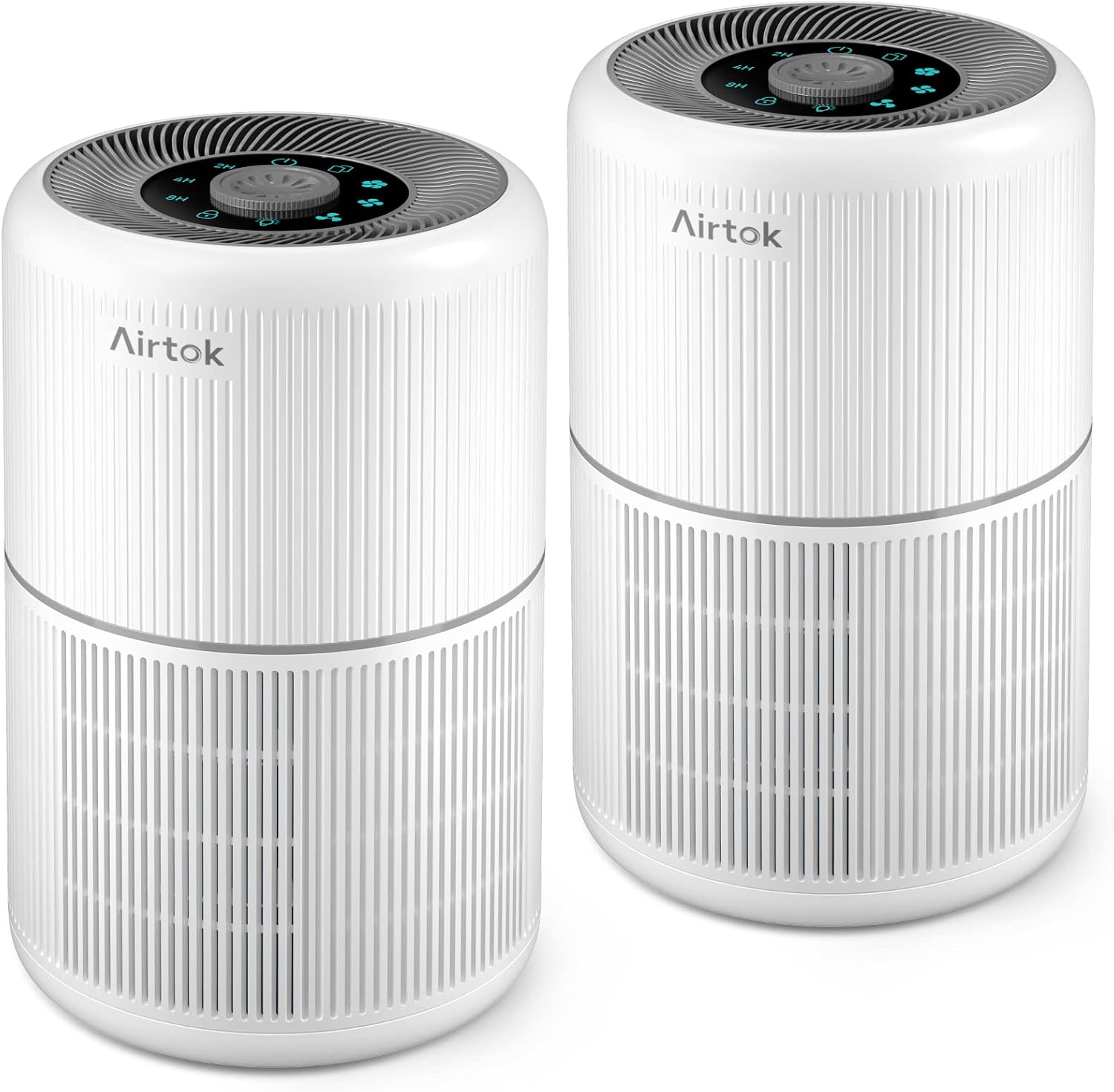
Two units for $70 is the obvious pitch, but the more interesting thing is how buyers figure out where to put them. One buyer placed the first unit by the front door and the second in the far corner - treating the pair as a circulation system rather than two redundant units. Incoming outdoor allergens at the door, residual particles in the corner. It's a real strategy, not just buying two.
Buyers with severe multi-allergen profiles - the kind who get shots in both arms because no single vial holds their full allergen list - report fewer headaches within hours of running both units in a living room. That's a specific, credible result.
Each unit covers about 100 sq ft effectively at allergy-relief air exchange rates. Two units handles a room, not a house. High speed hits 50 dB - stay on low for anything sleep-adjacent.
We earn a commission on purchases via these links. It does not change the price you pay or our ranking.
VOOPNU Compact
Six certifications at under $30; personal-space scale only
VOOPNU Compact
Six certifications at under $30; personal-space scale only
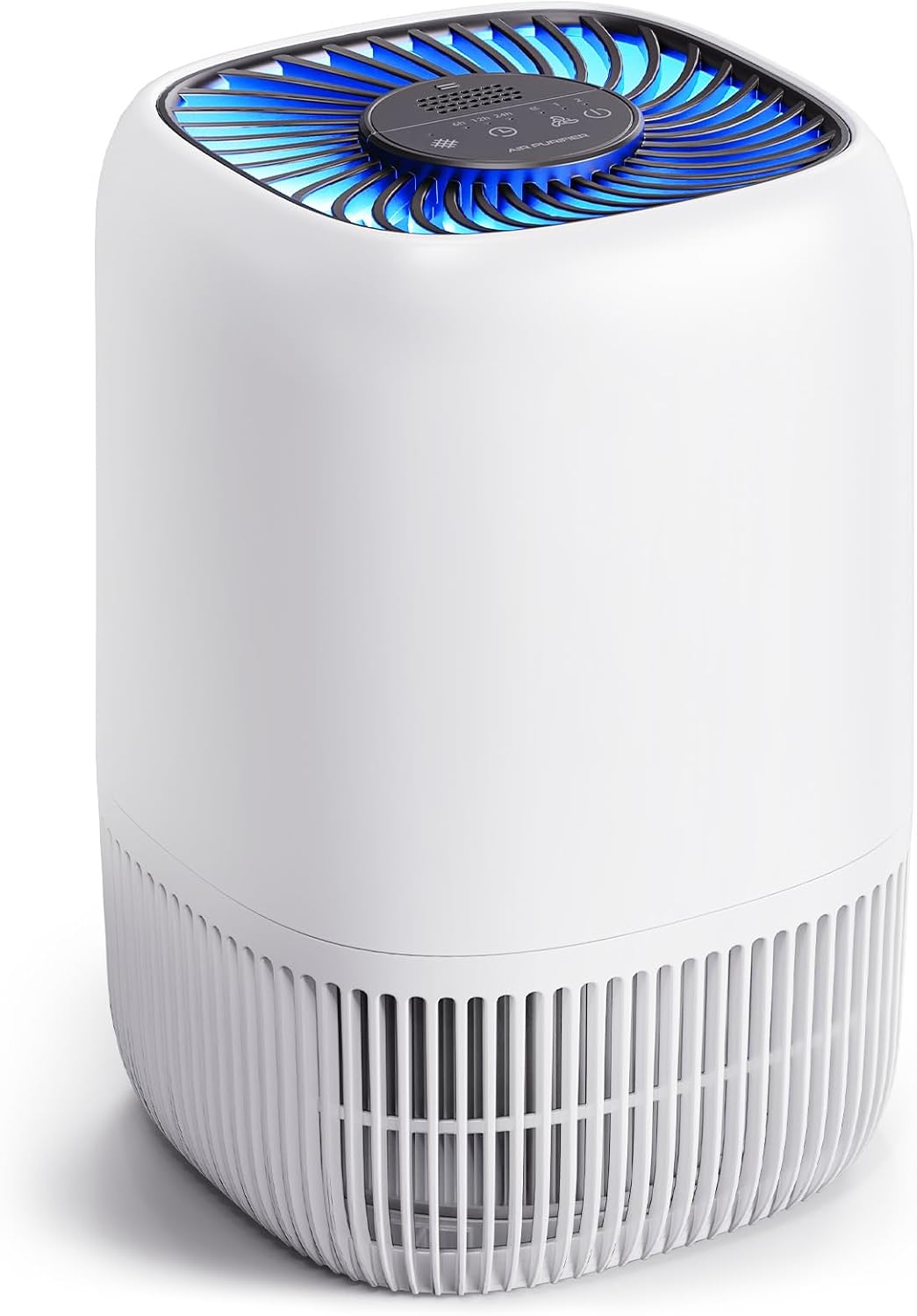
The certification list at under $30 is legitimately unusual: DOE, ETL, FCC, CARB, CE, and ROHS. Most no-name budget units get one or two of those. Six at this price means someone cared about the compliance process.
A buyer who works on their feet puts their work boots in their bedroom. The room smelled bad. They bought this, and the smell is gone. That's as honest a use-case description as this category gets.
Dog owners report no visible dust floating in sunlight after two months of use - that specific image, dust particles in a sunbeam, is something buyers notice and remember. The unit is personal-space scale. 1,076 sq ft is the listing maximum; 250 sq ft is where it performs.
We earn a commission on purchases via these links. It does not change the price you pay or our ranking.
Purivortex AC400
1.5x oversized filter for sub-$35; good longevity per buyers
Purivortex AC400
1.5x oversized filter for sub-$35; good longevity per buyers
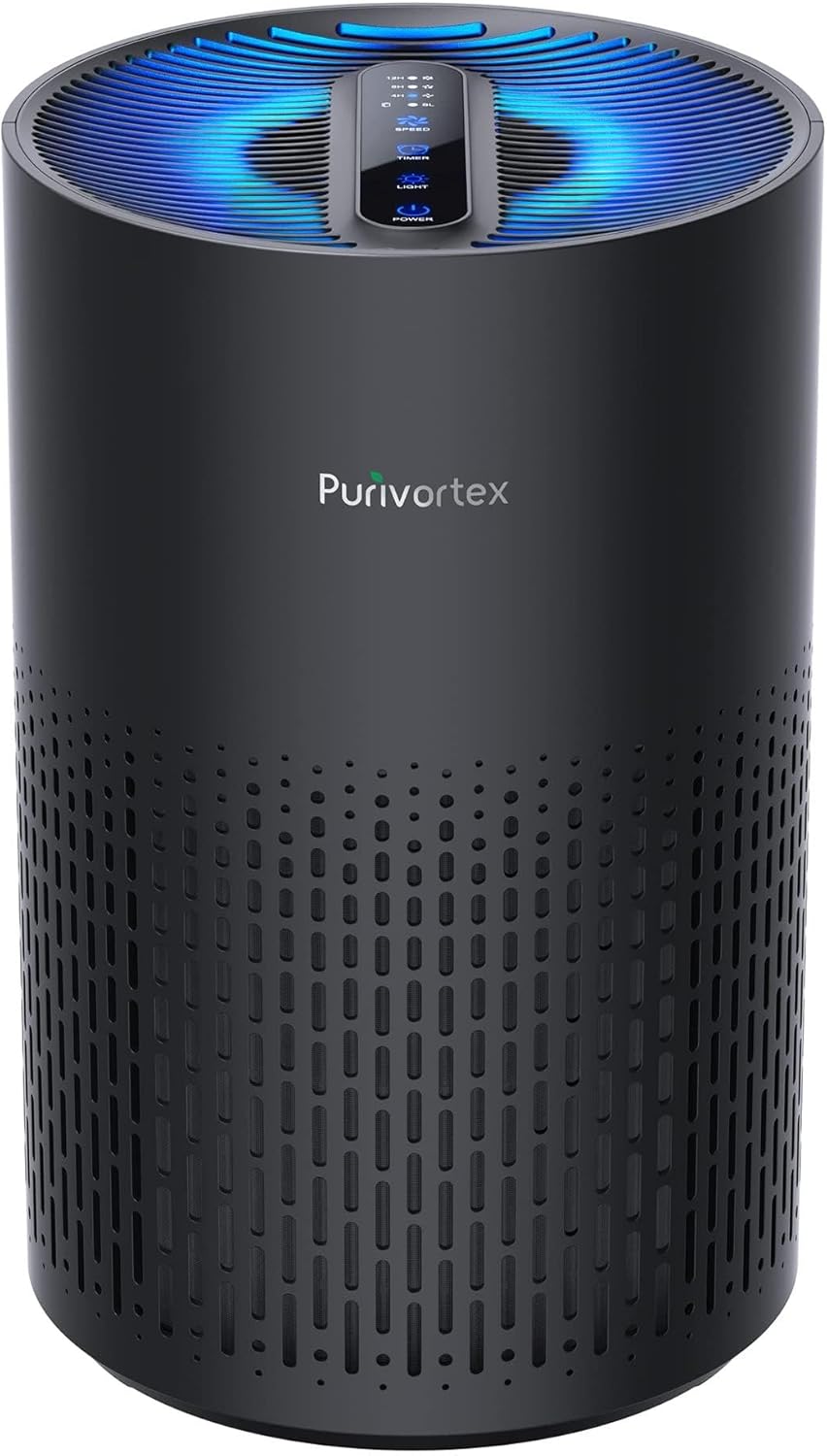
The HEPA filter in this unit is 6.6 inches tall. The standard for this form factor is 4.2 inches. That's 1.5x more filter surface for the same price - not a marketing claim, a physical dimension. More surface area means slower clogging, which means the fan doesn't have to work as hard to push air through.
One buyer tracked near-continuous use for almost four months before the replacement indicator lit up. For a $33 unit, that's respectable filter longevity - and it's consistent with the filter size argument.
Buyers use this in nurseries alongside humidifiers, specifically noting the noise level is compatible with infant sleep. The multi-color night light can be turned fully off, which matters for actual bedroom use. If you need absolute silence, high speed won't give it to you - one buyer described it as 'skipping high and going to extra high.'
We earn a commission on purchases via these links. It does not change the price you pay or our ranking.
Aroma Room H13
Compact; outperformed a larger expensive unit per buyers
Aroma Room H13
Compact; outperformed a larger expensive unit per buyers
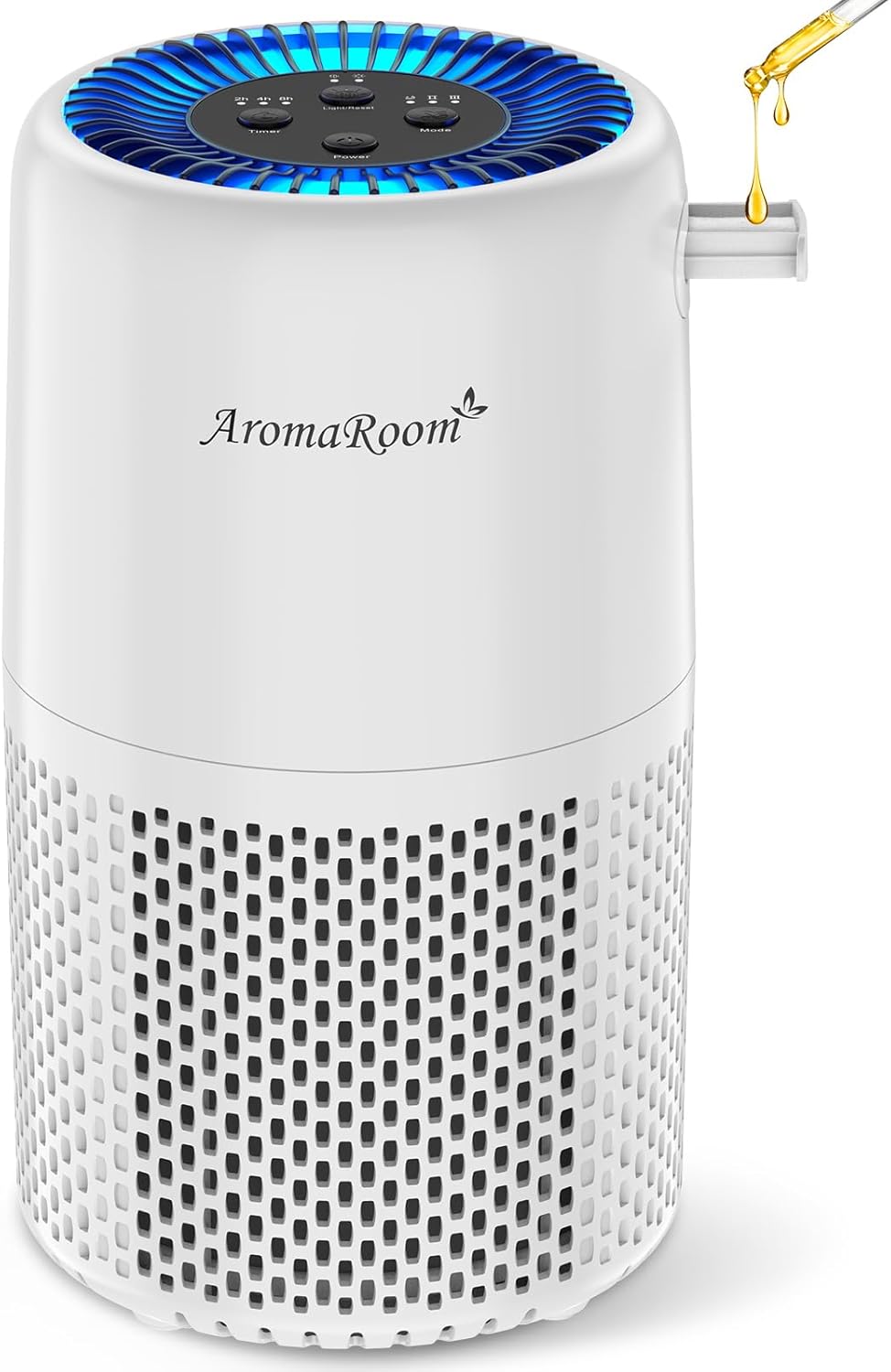
A buyer replaced a larger, more expensive purifier with this one and found it more effective in the same space. Smaller filter surface area typically means worse performance, so this is a counterintuitive result worth paying attention to.
The honest coverage is 323 sq ft - which matches the use cases buyers actually describe: single bedrooms, nurseries, a room with four guinea pigs. At that scale, the H13 HEPA is doing real work. The fragrance pad adds odor management on top of particle filtration, which matters more in small rooms with pets.
At $27 it's the cheapest entry in this segment. Buyers give it credit it didn't initially seem to deserve - sleep mode runs quietly enough that it disappears into the background of a small room, which is all you're really asking for at this price.
We earn a commission on purchases via these links. It does not change the price you pay or our ranking.
Mid-Size Room Picks
Effective at allergy-relief exchange rates for roughly 300-700 sq ft. These balance real airflow capacity with noise you can tolerate during a movie or a work call. Each has verifiable CADR data or extensive buyer feedback - not just marketing specs.
Quietest Large Room KNKA APH4000
Best CADR documentation here; dual-cartridge design reduces noise
KNKA APH4000
Best CADR documentation here; dual-cartridge design reduces noise
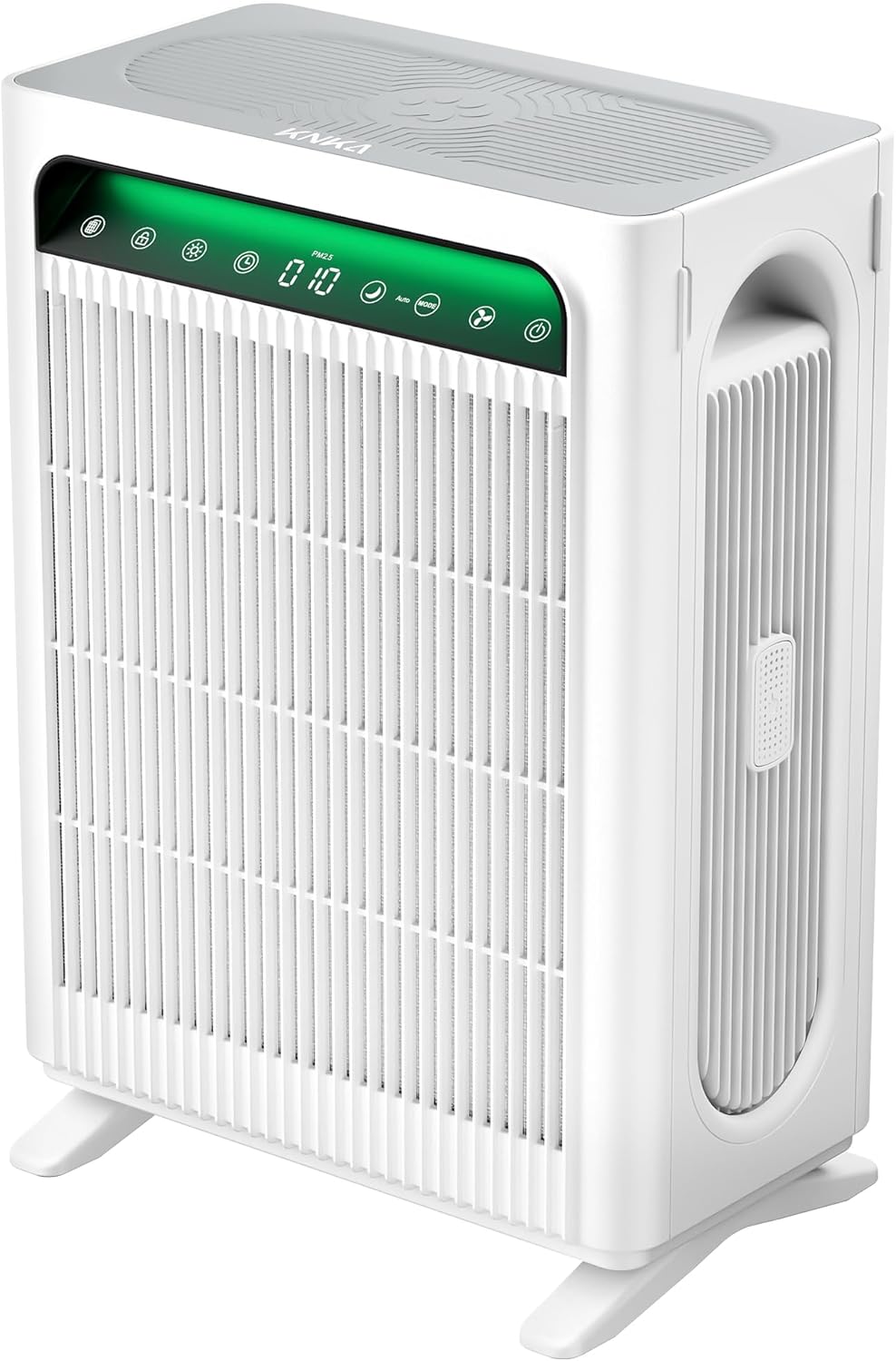
The KNKA APH4000 is the only product here with published CADR data you can actually use: 226 CFM for smoke and dust, 244 CFM for pollen. Those numbers come from AHAM-methodology testing, not manufacturer marketing. It's the difference between a spec you can compare and a spec you can't.
Two filter cartridges, front and back, each with a three-stage system. Double the filter surface area at equivalent airflow means the fan can run quieter for the same cleaning rate. The 22-24 dB claim is still manufacturer-stated, but it's mechanically more plausible here than on single-filter competitors.
A self-described skeptic - 'how pure can your air really be?' - ran it overnight and came around. They describe noticing fresher air quality in a way that surprised them. Their spouse, a light-sensitive sleeper, could run it in complete darkness with ECO mode turning off the display. That combination - quiet, dark, responsive - addresses the 2am auto-mode problem directly.
Optimal coverage at 4-5 air changes per hour is 350-700 sq ft. The 1,695 sq ft listing figure assumes 45% efficiency at one air change per hour. Use the right number for your room.
We earn a commission on purchases via these links. It does not change the price you pay or our ranking.
MOOKA PR1
Pet Mode distinguishes it from generic auto mode; 26 dB is honest
MOOKA PR1
Pet Mode distinguishes it from generic auto mode; 26 dB is honest
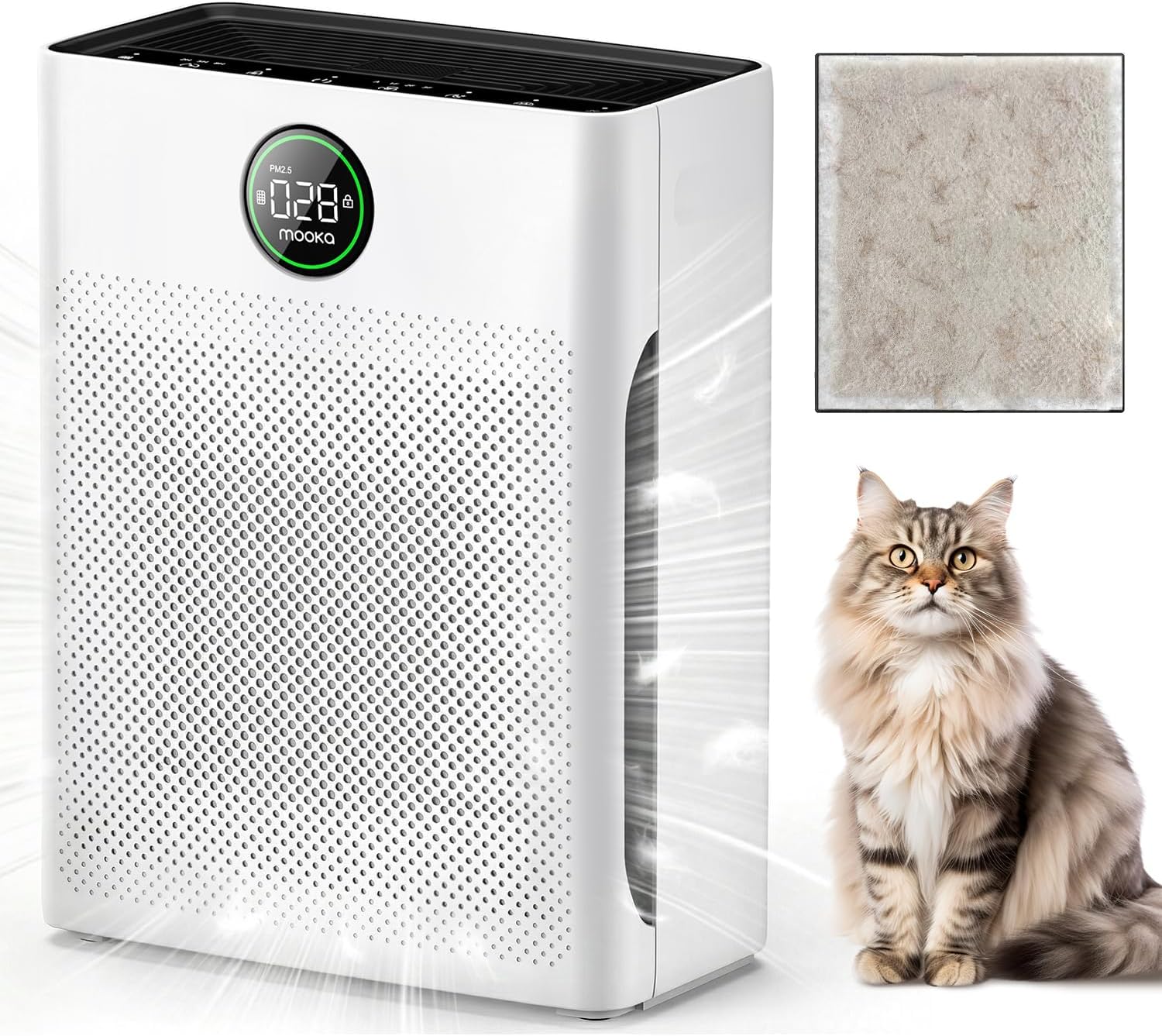
This is the purifier for pet owners who've been burned by a machine that cleared cat hair on day one and smelled like wet dog by month three. The Pet Mode is a distinct operating mode - not 'high speed renamed' but a specific fan pattern designed to capture floating hair and dander faster than auto mode does. Buyers who own dogs report watching the PM2.5 display number drop after the dog comes in from outside.
Two buyers bought a second unit for another room without any prompting. When someone goes back to buy the same thing for a different space, that's a better signal than any spec comparison.
The 26 dB claimed sleep mode is a little higher than the 20-22 dB range that floods listings. Buyers consistently describe the sound as a small, quiet fan - not silence, but not intrusive. That's consistent with the spec. It's quiet for a mid-size room unit - just not quite as quiet as the desktop picks in the bedroom section.
We earn a commission on purchases via these links. It does not change the price you pay or our ranking.
PuroAir 240
Strong allergy feedback; no sleep-mode dB spec published
PuroAir 240
Strong allergy feedback; no sleep-mode dB spec published
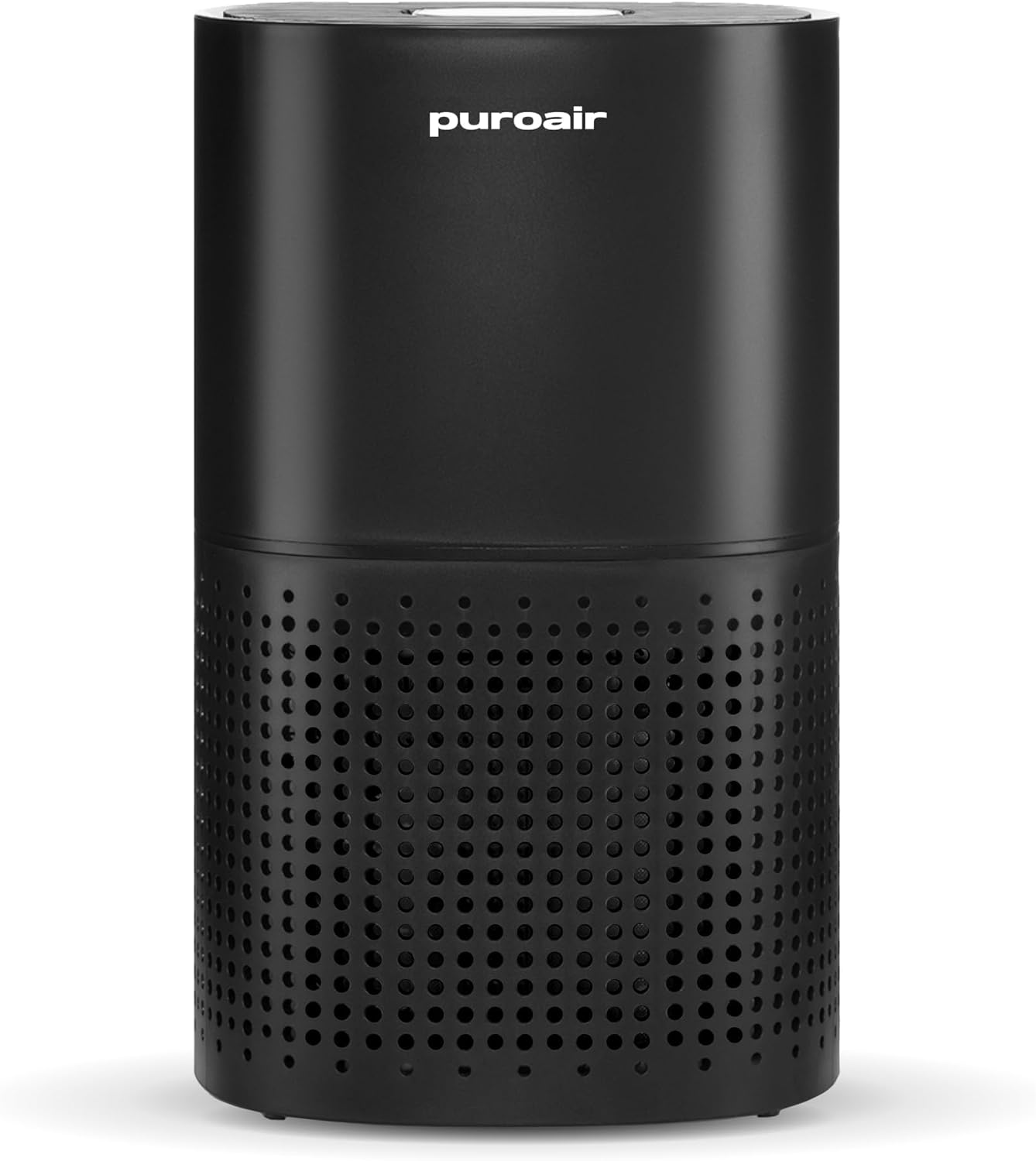
The 240 doesn't publish a sleep-mode dB number. For a purifier that markets itself to people who care about quiet, that's a transparency gap worth naming. Buyers consistently describe it as quiet across speeds - on medium, on low, and when auto mode kicks up because someone opened a window - but there's no number to anchor that description.
What backs the PuroAir claims instead: ISO 17025 certified independent lab testing, a 2-year warranty, and a US-based support team. That's the strongest manufacturer accountability structure on this page. A deep pool of buyer feedback is consistent with the claims.
A buyer in Florida running it through allergy season with a dog reports less morning congestion after several weeks. The particle sensor kicks up fan speed when doors are open or after cooking, then steps back down once the display shows green. The casters and carrying handle make room-to-room use practical.
We earn a commission on purchases via these links. It does not change the price you pay or our ranking.
Most Trusted GermGuardian AC4825E
Level 1 near-silent; Level 3 is audible white noise. Decade of field data.
GermGuardian AC4825E
Level 1 near-silent; Level 3 is audible white noise. Decade of field data.
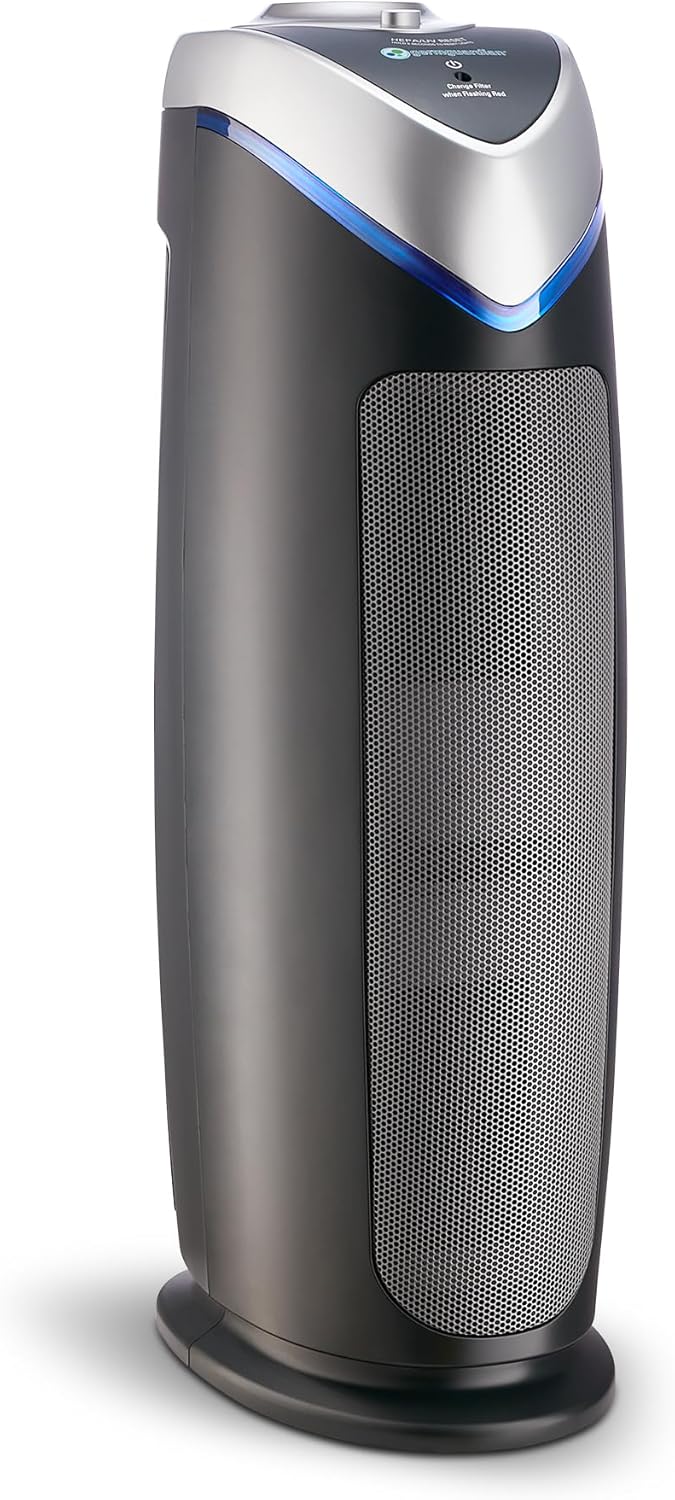
No purifier here has been bought, replaced, re-bought, and reviewed by as many real households over as long a run. More than a decade of field data from a wide range of homes. When the feedback pool is that deep, the noise story gets nuanced: Level 1 is described by multiple buyers as quieter than a tower PC fan, something they don't notice over ambient sound. Level 3 is audible white noise, which some buyers like (they mention it explicitly as a feature) and some don't.
The UV-C light is optional and adds something the HEPA filter alone can't: germicidal reduction of airborne bacteria, mold spores, and viruses. You can leave it on or off. At $100, no other unit here offers it.
A buyer cooked fish in a kitchen with an open doorway to the den. Running this on high, they couldn't smell it cooking. They also tested nail polish remover in the den and had the same result. That's a real test, not a lab condition, reported after a year of ownership.
For bedroom use: Level 1 only. Don't expect silence at Level 3 - one buyer specifically says they could hear it in the hallway from medium. The UV-C light does emit a faint glow through the unit. Light-sensitive sleepers should keep it out of direct line of sight.
We earn a commission on purchases via these links. It does not change the price you pay or our ranking.
Large-Room and Whole-Floor Picks
For open-concept spaces, basements, or anyone who wants one unit to handle a lot of air. The honest tradeoff: at the fan speeds that move large volumes, these are noticeably louder than the bedroom picks above.
SIESEAN Large-Room Purifier
235 CFM CADR; 30 dB is appropriate for a living room, not a bedroom
SIESEAN Large-Room Purifier
235 CFM CADR; 30 dB is appropriate for a living room, not a bedroom
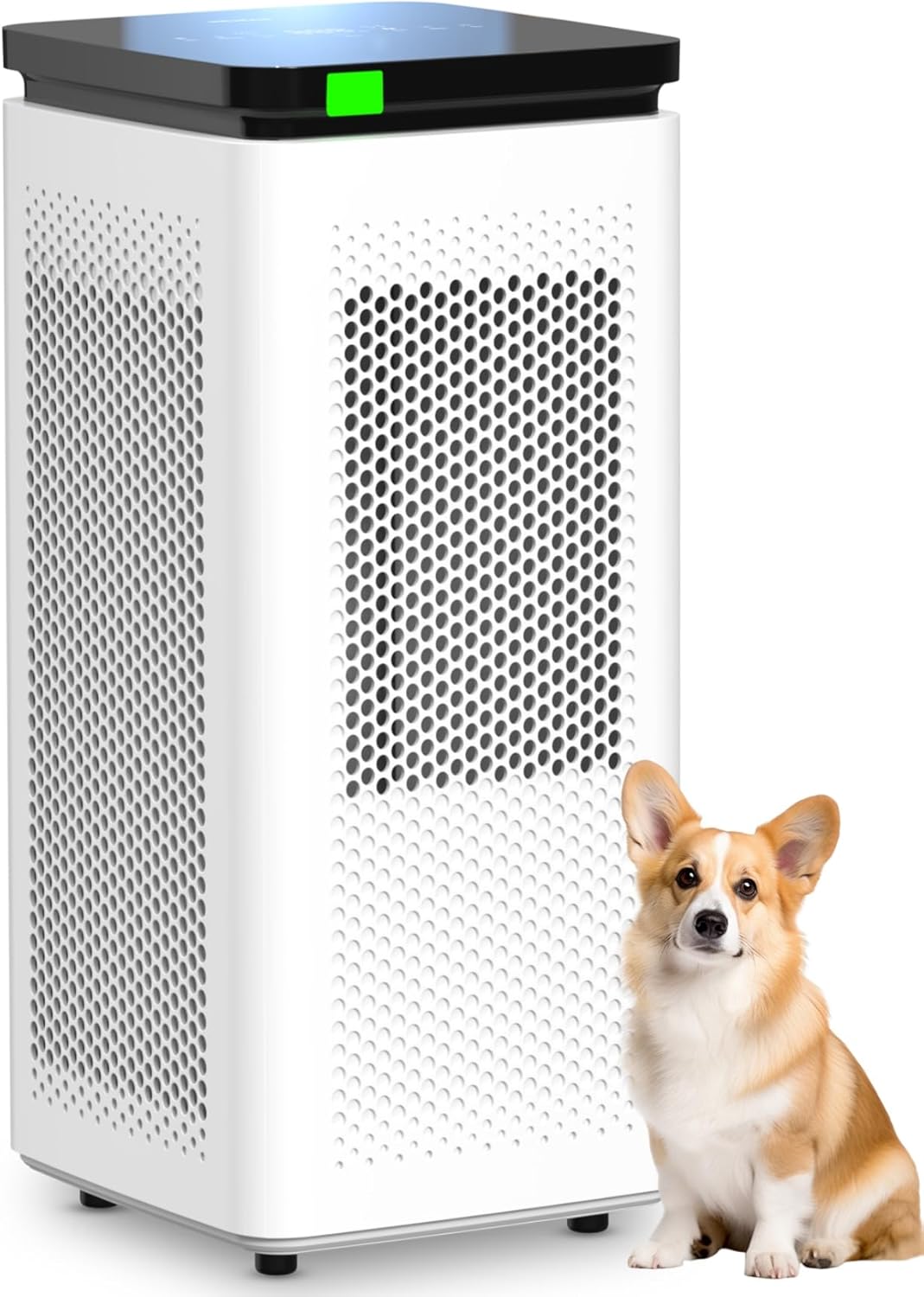
The SIESEAN is the only unit here rated for more than 2,000 sq ft, with 235 CFM CADR and a dual-inlet design that moves air faster than single-intake competitors. For an open-concept living room or a finished basement, nothing else on this page keeps up.
The 30 dB sleep-mode figure is higher than the 20-22 dB claims elsewhere, and that's appropriate - this is not a bedside purifier. At the distance you'd place it in a large room, 30 dB at the unit translates to something noticeably quieter at your couch or desk. Physics and distance work in your favor here.
A homeowner in Florida - high humidity, dog, pollen - reports controlled pet odor and reduced morning congestion after several weeks. The PM2.5 display shows improvement after cooking or when pollen count spikes outdoors, which is the kind of feedback loop that makes buyers trust the machine is doing something.
One note on the price comparison: at $150, it directly competes with the KNKA APH4000. If your priority is quiet in a medium-size room, the KNKA has better noise documentation and a more efficient coverage range. If you genuinely need 2,000+ sq ft of coverage, this is the pick.
We earn a commission on purchases via these links. It does not change the price you pay or our ranking.
Honeywell HFD-120-Q
Not HEPA - permanent IFD filters. Best long-term cost math of anything here.
Honeywell HFD-120-Q
Not HEPA - permanent IFD filters. Best long-term cost math of anything here.
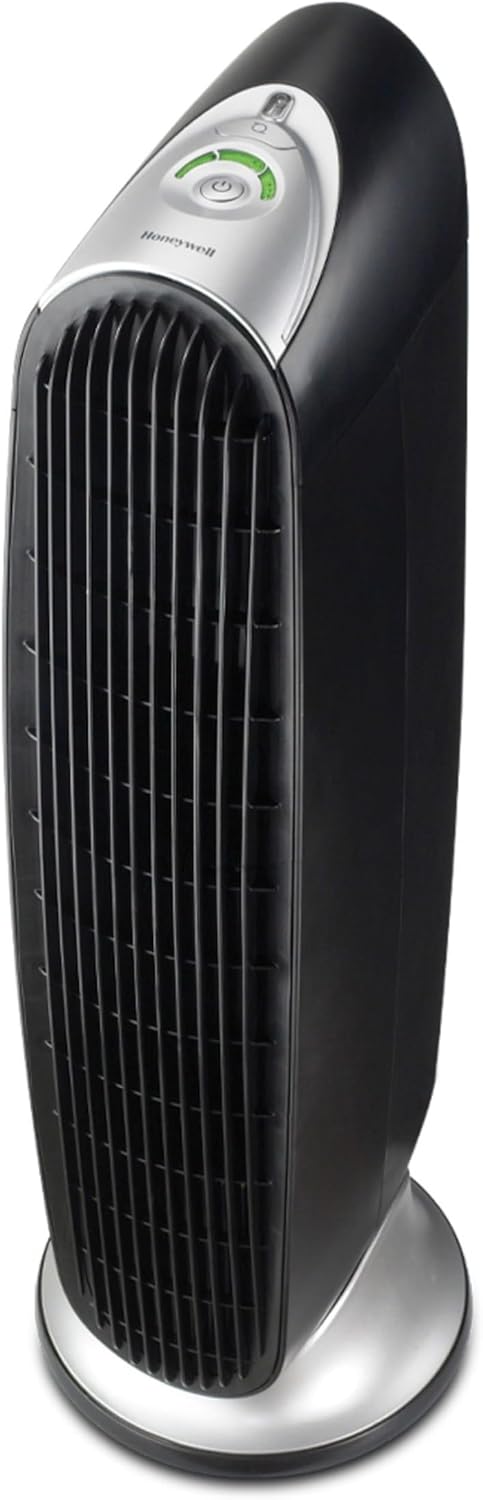
This doesn't use HEPA. Worth stating plainly, because the rest of this page does. The Honeywell HFD-120-Q uses IFD - Ionic Filtration Device - which charges particles so they stick to the washable IFD filter rather than filtering them through fiber. IFD captures particles down to 1 micron; True HEPA captures down to 0.3 micron. For smoke and very fine particles, HEPA wins. For dust, pollen, pet hair, and dander, IFD works well.
The practical advantage: the filters are permanent and washable. No consumable cost after purchase. A buyer who bought this in 2015 and ran it near-daily for six years reports it still performing with regular cleaning. At 36 actual watts measured by buyers (vs 43 advertised), it draws less power than most competitors. The lifetime economics are strong.
Oscillation distributes air across a room in a way most tower purifiers don't bother with. The oscillating airflow is why some buyers specifically chose this over units with higher filter specs. Noise on high is not bedroom-suitable - keep it in a hallway or living room and let it circulate. On low it's genuinely unobtrusive.
We earn a commission on purchases via these links. It does not change the price you pay or our ranking.
Before you buy
Match coverage to your room, not the box
AHAM's coverage figures assume one air change per hour. For allergy-grade cleaning you need four to five. Divide the advertised sq ft by four and use that number. A unit rated for 1,000 sq ft is doing real work in a 250 sq ft bedroom - and will underperform in anything much larger than that.
Sleep mode vs auto mode
Sleep mode locks the unit to its lowest fan speed and dims or kills indicator lights. Quiet, consistent, minimal cleaning. Auto mode adjusts fan speed based on particle detection - useful during the day, but it can spike to medium or high at 2am when a pet moves or humidity changes. Pick intentionally. Quiet sleepers want Sleep mode running overnight, not Auto.
The dB reality check
Reference points for context:
| Reference | Approx. dB |
|---|---|
| Calm bedroom at night | 30 dB |
| Purifier on sleep/low | 20-26 dB |
| Purifier on medium | 40-50 dB |
| Purifier on high | 55-65 dB |
| Background conversation | 55-65 dB |
The gap between sleep mode and medium is 20-30 dB. Every doubling of perceived loudness is roughly 10 dB. Medium is genuinely louder than sleep mode - not slightly louder.
Filter cost math
A $40 purifier with $25 replacement filters every three months costs $140/year to run. A $130 purifier with a washable pre-filter and a $18 HEPA filter every six months costs $166 in year one and $36/year after. By year three, the $130 unit has cost less. Units with washable pre-filters extend HEPA life by catching large particles first - the economics are real.
HEPA, IFD, and HEPA-type
H13 True HEPA captures 99.97% of particles at 0.3 microns - the size that's hardest to capture. H11 is less efficient. "HEPA-type" and "HEPA-like" are not certified and should be read as marketing. IFD (like the Honeywell HFD-120-Q) charges particles so they stick to washable filters - effective for large particles down to 1 micron, less effective than HEPA for smoke and very fine particles. Ionizers generate trace ozone and are increasingly absent from newer units for that reason.
Placement matters
Floor units are further from ear level than a bedside unit, which helps. Distance reduces perceived loudness - every doubling of distance drops the perceived level by about 6 dB. Don't put a 360-degree intake unit in a corner; it needs clearance on all sides. For bedroom use, place it 3-6 feet from the bed, not directly next to your head.
Filter replacement timing
Six months under normal use is the standard HEPA replacement interval. Homes with pets, smokers, or high dust loads should expect three to four months. A clogged filter increases fan resistance, which raises noise - so replacing on schedule isn't just about air quality, it's also about keeping the unit quiet. If you notice yours getting louder, check the filter before assuming anything is broken.
FAQ
- What dB level is quiet for an air purifier?
- Under 30 dB is near-inaudible in a quiet room - most people can't distinguish it from ambient silence. 30-45 dB is noticeable but not disruptive, similar to a quiet desk fan. Above 50 dB starts competing with conversation. The catch: these thresholds only describe the speed you're measuring. A "24 dB" purifier on sleep mode is inaudible. The same unit on medium might be 45-50 dB.
- What is the difference between sleep mode and auto mode?
- Sleep mode locks the fan to its lowest speed and dims or turns off indicator lights. Quiet, consistent, predictable. Auto mode uses a particle sensor to adjust fan speed in real time - when air quality drops (cooking, pets, dust), it ramps up. Auto mode can spike to medium or high at inconvenient times. Light sleepers should run Sleep mode overnight, not Auto.
- Should I run my air purifier on high or low?
- Depends on the goal. For overnight quiet in a correctly-sized room: low or sleep mode. For clearing cooking smoke: high briefly, then step back down. Running a correctly-sized unit on medium for 12 hours moves more clean air than running an oversized unit on low for the same duration. Consistent, lower-speed use in the right room size beats intermittent high-speed bursts in an oversized space.
- Do air purifiers actually help with allergies?
- Yes, when sized correctly and run consistently. The key word is sized. A 200 sq ft unit in a 600 sq ft open-plan space won't achieve the air exchange rate needed for meaningful allergen reduction. Get the coverage calculation right first - divide the advertised sq ft by four for allergy-grade cleaning - then the answer is yes.
- Why does my new air purifier smell strange?
- Two common causes. First and most common: the plastic filter packaging is still inside the unit. Nearly every first-time buyer misses this. Second: new filter off-gassing, which fades in 24-48 hours of continuous use with windows cracked. If the smell persists beyond 48 hours of continuous use, contact the manufacturer - it shouldn't.