Bathroom Fans · 2026 edition
Quietest bathroom fans that actually work (2026)
The exhaust fan in your bathroom is a mold-prevention device that happens to make noise. If the noise is bad enough that you stop running it, you have traded a minor annoyance for a future remediation bill. That is the real argument for a quiet bathroom fan - not audio comfort, though that matters too.
Most pages on this topic sort by sone rating and stop there. We did that, then read what buyers said after living with these fans. Duct diameter affects noise more than most spec sheets acknowledge. DC motors sound different from AC motors at the same sone rating. And a few fans that looked fine on paper had reviews worth flagging. Thirteen fans in, ten made the cut.
All 10 Picks: Quietest First
Sorted by sones, lowest first. Sones are the HVI standard for bathroom fan noise - more meaningful than dB for this category because they map directly to perceived loudness. Every product on this list has an editorial noise tier and a one-sentence verdict. This table is the fastest route to finding your category.
The "dB" column shows sone values for this category. A 0.8-sone fan is near-inaudible; a 2.0-sone fan is clearly audible but not annoying by modern standards.
| Product | dB | Category | Price | Badge | Verdict |
|---|---|---|---|---|---|
| Panasonic WhisperFit Retrofit Ceiling Mount Bathroom Exhaust Fan | whisper quiet | Premium | $136 | Best Retrofit Pick | The contractor default. DC motor, Pick-A-Flow 50/80/110 CFM, and proven in thousands of installs. |
| Panasonic WhisperFit Ceiling Mount Bathroom Exhaust Fan with Dimmable LED Light | whisper quiet | Premium + Light | $189 | Best Retrofit with Light | Same DC platform as the WhisperFit with a dimmable LED and night-light mode added. |
| Panasonic WhisperFit Ceiling Mount Bathroom Exhaust Fan with Humidity Sensor | whisper quiet | Premium + Humidity | $177 | Best for Humidity Control | Whisper-quiet DC motor with a humidity sensor that turns itself on before mold gets started. |
| Panasonic WhisperChoice 0.8 | 0.8 sones | Premium | $189 | Quietest Overall | 0.8 sones at 150 CFM. The quietest and highest-airflow fan on this list. |
| Amico Bathroom Exhaust Fan with Light | 0.9 sones | Budget + Light | $57 | Best Budget Pick | 0.9 sones and 5 light color temperatures at $57. Changed one buyer's bathroom habits entirely. |
| Roodike Bathroom Exhaust Fan for Ceiling Mount | 1.0 sones | Budget | $38 | 1.0 sone spec and 40 dB claimed. Good value if the spec holds in your duct setup. | |
| Gopper 12" Ultra Quiet Bathroom Exhaust Fan with 6500K LED Light | 1.0 sones | Fan + Light | $70 | 1.0 sone and 1500 lumens of daylight white. Fast install, but light is cool-only. | |
| JOEAONZ Bathroom Exhaust Fan 110 CFM Very Quiet with Matel Housing | ~1.5 sones | Budget | $47 | Motor module pulls out with two screws for future replacement. Smart design for the price. | |
| OFANKU 2 | 1.5 sones | Fan + Light | $80 | 130 CFM with 3 adjustable light temperatures. Quieter than the Nu-Tones it replaces. | |
| Tech Drive Very Quiet Bathroom Exhaust Fan | 2.0 sones | Budget | $28 | 2.0 sones at $28. Not whisper quiet, but a genuine upgrade from builder-grade. |
Premium Retrofit Fans
Four Panasonic fans on the same DC/ECM motor platform. The DC motor is why contractors keep specifying them. They cost more; they sound noticeably different from everything else on this list. If budget allows, start here.
Quietest Overall Panasonic WhisperChoice 0.8
0.8 sones at 150 CFM. The quietest and highest-airflow fan on this list.
Panasonic WhisperChoice 0.8
0.8 sones at 150 CFM. The quietest and highest-airflow fan on this list.
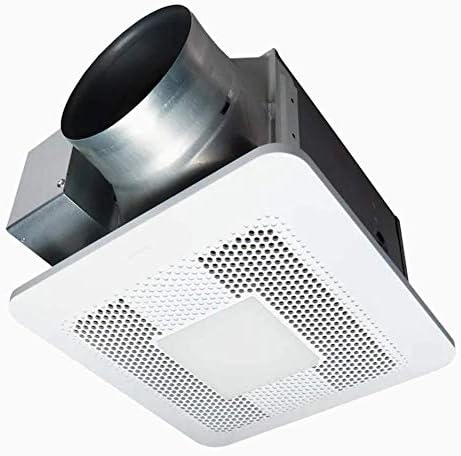
The 150 CFM at 0.8 sones combination is the point. Most fans trade airflow for quiet or vice versa. The WhisperChoice does both, which is why it belongs in this position.
Buyers who've replaced builder-grade fans in master baths describe a specific before-and-after: their old fan took 20-30 minutes to clear steam and you could hear it three rooms away. This one clears the same space in under a minute, and you have to actively listen to know it's running. That's not marketing copy - that's a pattern that repeats across the review base.
A few practical notes. The joist-to-joist bracket design works differently from a standard housing swap, and existing ceiling configurations occasionally complicate it. Read the installation manual before assuming it's a direct plug-in replacement. Also: the DC motor ramps up slowly to full speed (about 60-90 seconds). This is by design. The gradual startup reduces mechanical vibration, which is part of how the noise stays low. It's not broken.
For bathrooms under 100 sq ft, the WhisperFit DC at $136 handles the job. The WhisperChoice earns its price premium in large master baths, steam showers, and anywhere 150 CFM of airflow actually matters.
We earn a commission on purchases via these links. It does not change the price you pay or our ranking.
Best Retrofit Pick Panasonic WhisperFit Retrofit Ceiling Mount Bathroom Exhaust Fan
The contractor default. DC motor, Pick-A-Flow 50/80/110 CFM, and proven in thousands of installs.
Panasonic WhisperFit Retrofit Ceiling Mount Bathroom Exhaust Fan
The contractor default. DC motor, Pick-A-Flow 50/80/110 CFM, and proven in thousands of installs.
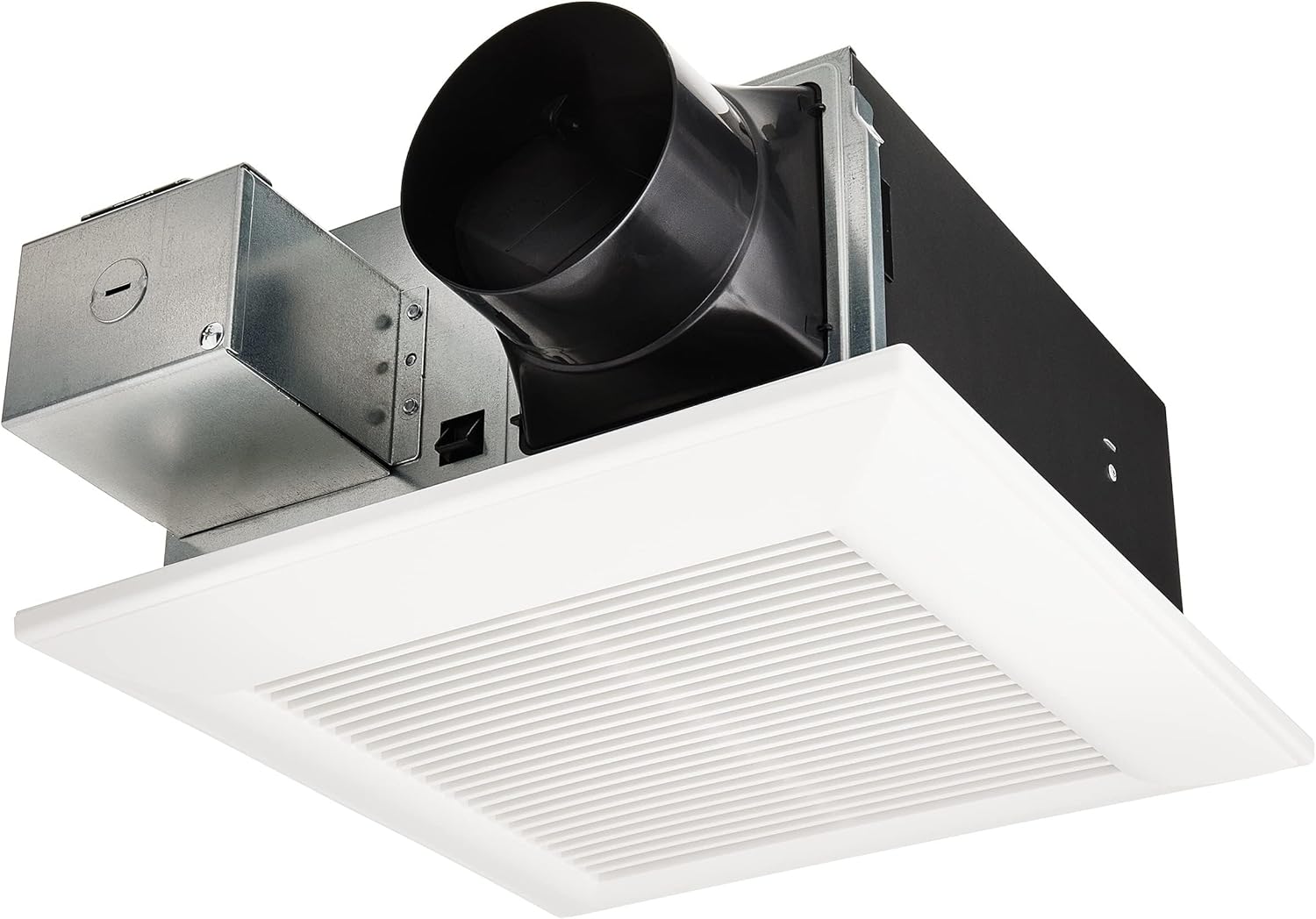
Contractors keep coming back to this fan. One long-form reviewer has done seven installations across two houses, all Panasonic, all the same reason: the installation system works, the motor is quiet, and they don't come back to fix them.
The Pick-A-Flow switch on the housing sets the fan to 50, 80, or 110 CFM. That single feature makes it the right SKU for anything up to a 110 sq ft bathroom. Contractors buy one model, spec it for the room, flip the switch, done. For homeowners doing a single install, it means you're not locked into one airflow rate if your duct configuration performs differently than expected.
Two things worth knowing before you buy. First, duct diameter matters significantly here. A buyer who installed this in seven rooms compared 4-inch duct results to a case where 3-inch duct was unavoidable. The 3-inch run produced more noise and less airflow. Use 4-inch or larger when you have any choice at all. Second, the ramp-up to full speed takes about a minute. That's the DC motor behaving as designed. If you're used to an old fan snapping to full blast, the gradual start can feel wrong. It isn't.
No light, no humidity sensor, no extras. If you want those, there are variants in this segment. This one is for people who want the best ventilation performance at a reasonable price without the complexity.
We earn a commission on purchases via these links. It does not change the price you pay or our ranking.
Best Retrofit with Light Panasonic WhisperFit Ceiling Mount Bathroom Exhaust Fan with Dimmable LED Light
Same DC platform as the WhisperFit with a dimmable LED and night-light mode added.
Panasonic WhisperFit Ceiling Mount Bathroom Exhaust Fan with Dimmable LED Light
Same DC platform as the WhisperFit with a dimmable LED and night-light mode added.
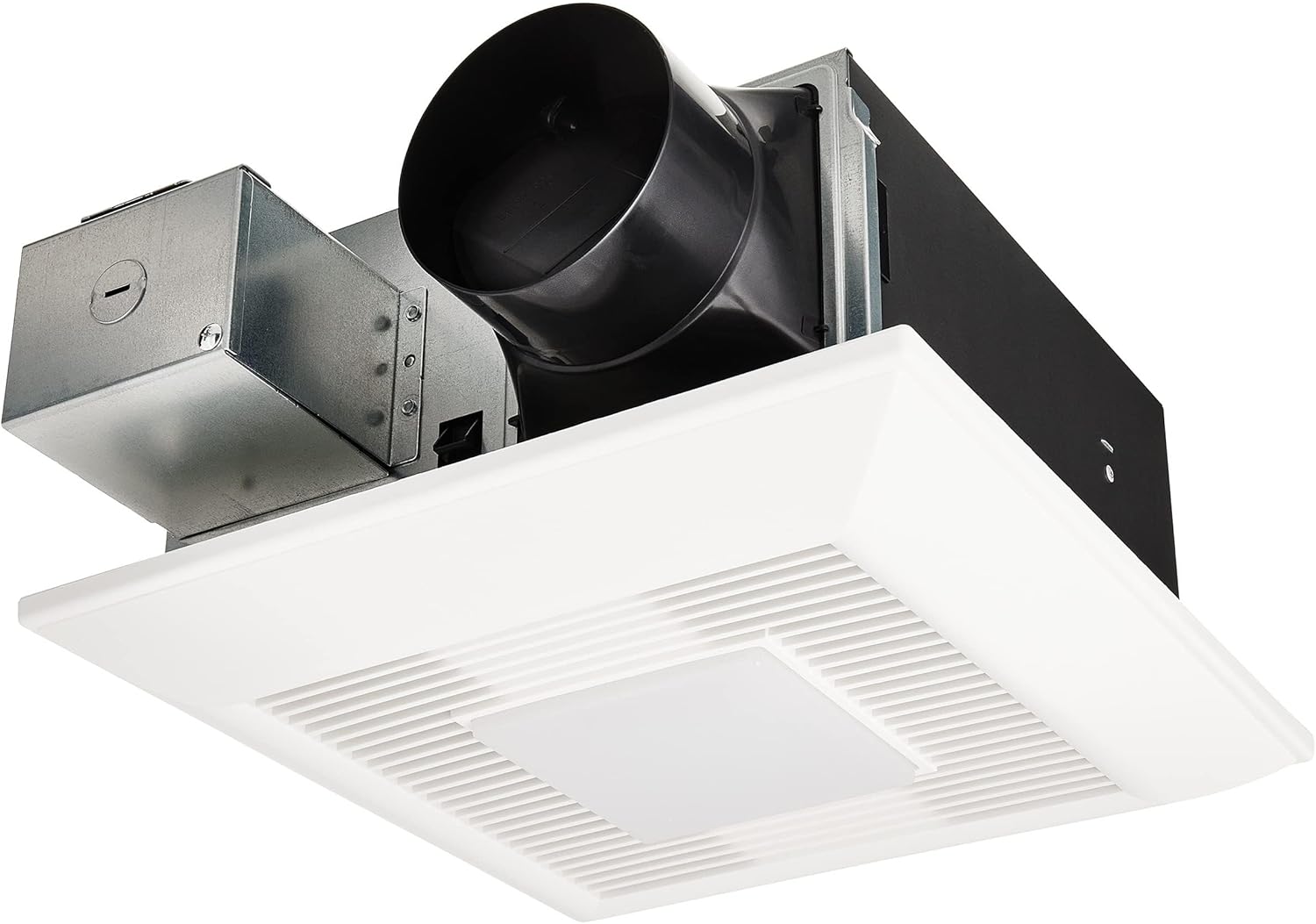
The same DC motor platform as the WhisperFit, with a dimmable 10W LED and night-light mode added. If you need ventilation and a ceiling light from the same fixture, this is how you get both without compromising on the fan.
The LED dims across a wide range. Buyers specifically mention the night-light setting: dim enough for 3 AM bathroom visits without waking anyone, bright enough to navigate safely. The fan operates identically to the base model - same Pick-A-Flow CFM selection, same DC ramp-up, same noise profile.
A few things to keep in mind. The LED panel is proprietary - not a standard bulb format you can replace at the hardware store. Factor that into your long-term cost expectations. The light and fan do not have to be on the same circuit; check your wiring situation before assuming you need two switches. And installation benefits from having done a Panasonic retrofit before - the bracket system is efficient once you understand it, less obvious the first time.
If you don't need ceiling lighting from this fixture, the base WhisperFit DC saves about $50 and performs identically as a fan.
We earn a commission on purchases via these links. It does not change the price you pay or our ranking.
Best for Humidity Control Panasonic WhisperFit Ceiling Mount Bathroom Exhaust Fan with Humidity Sensor
Whisper-quiet DC motor with a humidity sensor that turns itself on before mold gets started.
Panasonic WhisperFit Ceiling Mount Bathroom Exhaust Fan with Humidity Sensor
Whisper-quiet DC motor with a humidity sensor that turns itself on before mold gets started.
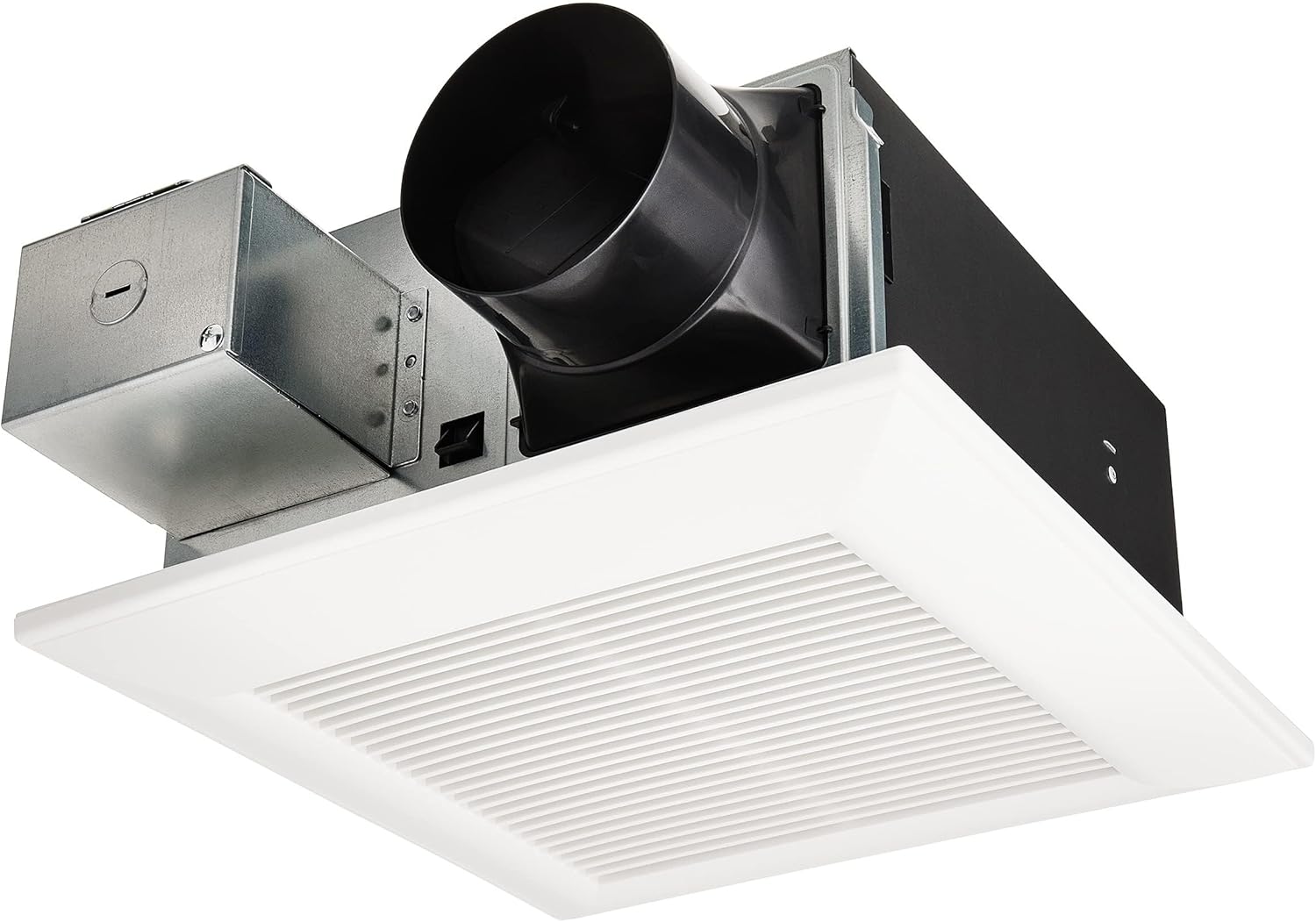
Same whisper-quiet DC motor, but this version turns itself on. A humidity sensor detects when condensation starts rising and activates the fan automatically. For households where someone reliably forgets to run the exhaust fan after a shower, the sensor removes the dependency on habit.
Buyers who installed after finding mold describe a clear outcome: the sensor kicks on during showers, runs until humidity drops, and mold hasn't been a problem since. The auto-on functionality isn't a gadget feature; it directly addresses the behavioral failure mode that leads to moisture damage.
One honest flag: wiring for full humidity-sensor functionality is not straightforward. At least one buyer rewired it three times before the sensor worked as intended. Panasonic's installation instructions for this model have drawn specific criticism for being unclear on the sensor wiring sequence. If you're not comfortable with electrical work, budget time for an electrician or plan for a learning curve. Once correctly configured, it works well. The friction is in the setup.
The CFM range and noise profile are identical to the base WhisperFit DC. You're paying the price premium for the sensor functionality, not different fan performance.
We earn a commission on purchases via these links. It does not change the price you pay or our ranking.
Fan and Light Combos
One ceiling hole, two functions. When the bathroom has a single switch loop or no separate lighting near the fan location, a combo unit handles both. The trade-off is that both the ventilation and the light have to satisfy independently.
Best Budget Pick Amico Bathroom Exhaust Fan with Light
0.9 sones and 5 light color temperatures at $57. Changed one buyer's bathroom habits entirely.
Amico Bathroom Exhaust Fan with Light
0.9 sones and 5 light color temperatures at $57. Changed one buyer's bathroom habits entirely.
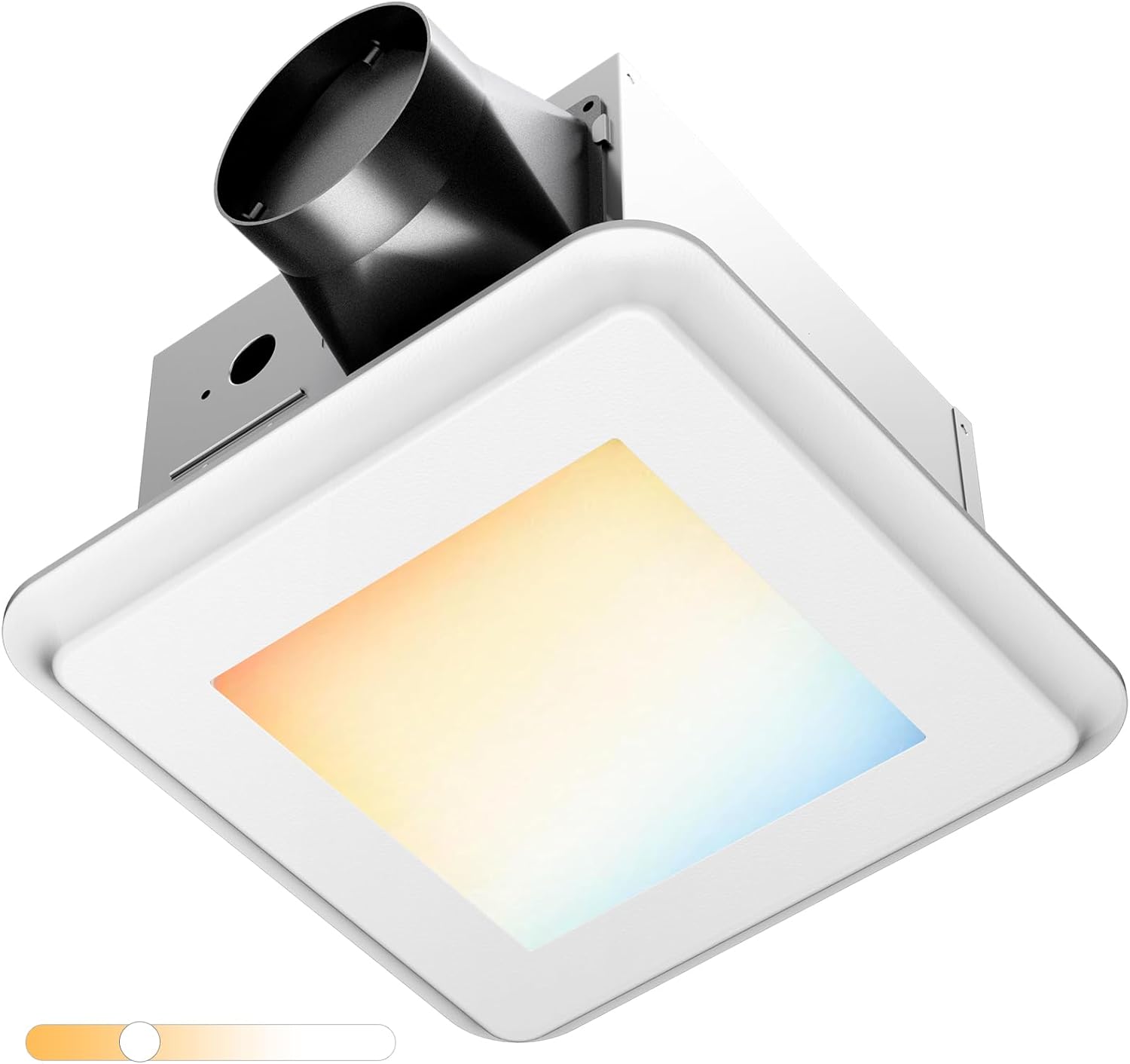
Here's the story that explains why noise level matters for something as mundane as a bathroom fan. A buyer found a mold colony growing in their bathroom. Not because they didn't have a fan - because the fan sounded like a leaf blower and they'd stopped running it. Two years of "I'll just air it out." After installing this one, they run it every single time. It doesn't intrude on the experience, so it gets used.
At 0.9 sones and $57, the Amico fits the gap between budget options (2.0 sones) and Panasonic's premium tier ($136+). The five color temperatures cover both functional needs: 5000K cool white for makeup and shaving, 2700K warm white for late-night ambient light. The dimming range goes from full illumination to near-off. That's more flexibility than most dedicated bathroom light fixtures offer at this price.
Two practical limits. First, 80 CFM is the ceiling for this fan. It handles bathrooms up to about 80 sq ft well; larger spaces need more airflow. Second, the installation instructions confused multiple buyers. Watching video tutorials before starting reduces frustration significantly. If you're not used to ceiling electrical work, factor in time or get help. Once in, buyers consistently report it's worth the install effort.
We earn a commission on purchases via these links. It does not change the price you pay or our ranking.
Gopper 12" Ultra Quiet Bathroom Exhaust Fan with 6500K LED Light
1.0 sone and 1500 lumens of daylight white. Fast install, but light is cool-only.
Gopper 12" Ultra Quiet Bathroom Exhaust Fan with 6500K LED Light
1.0 sone and 1500 lumens of daylight white. Fast install, but light is cool-only.
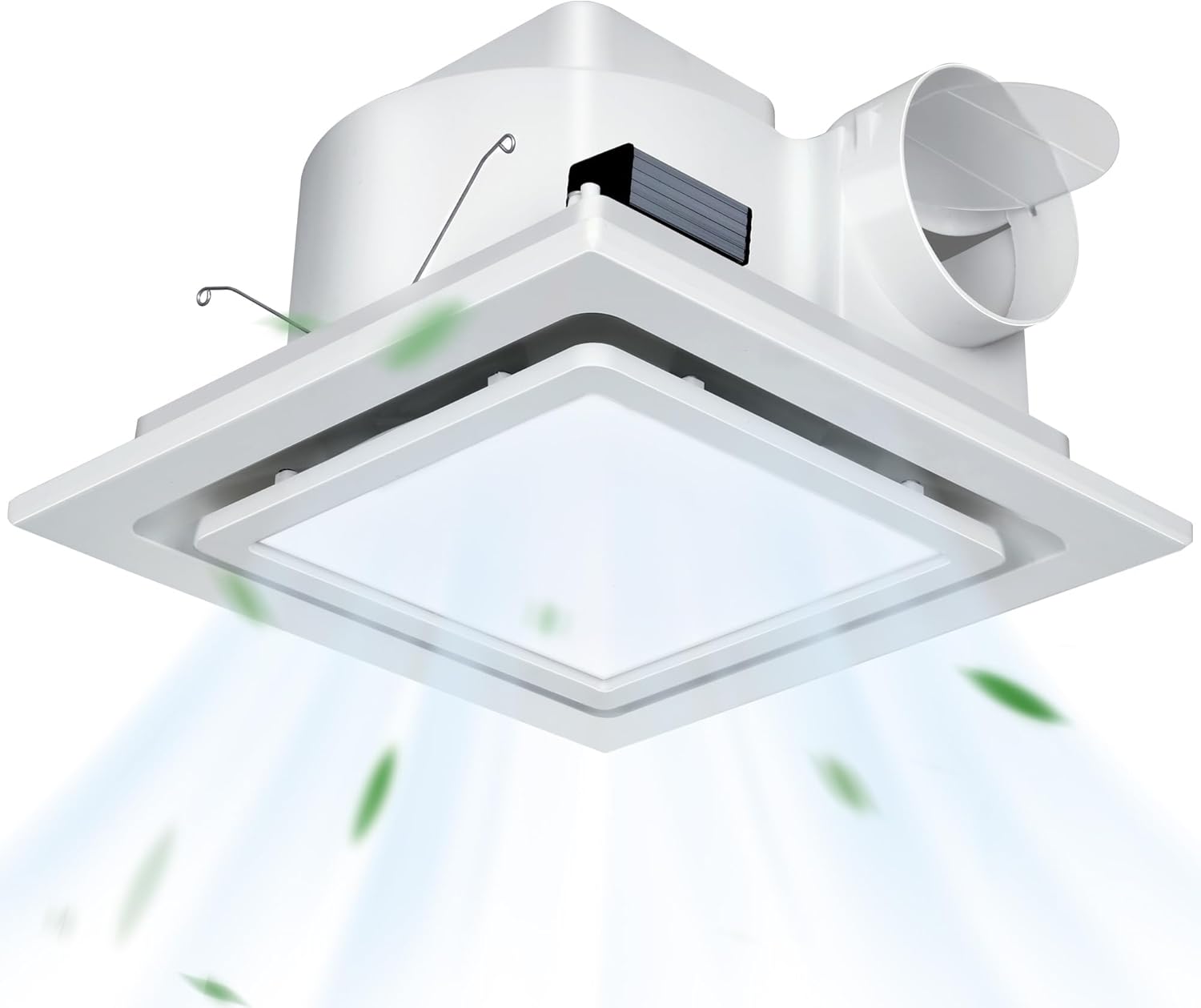
Most bathroom fan installations require working with two separate sections: the housing goes in first (usually from above), then the motor unit drops in from below. The Gopper uses a plastic housing that turns that into one step. Buyers report under a minute of actual installation work once the ceiling opening is cut. That's a real difference for DIY installers who've wrestled with traditional two-piece fan housings.
The light runs at 1500 lumens, which is enough to serve as the room's primary ceiling fixture. The 6500K color temperature is daylight white - clear and accurate for mirror tasks. That's a meaningful functional benefit if you're doing this bathroom fix partly to improve task lighting.
The fixed 6500K is also the main limitation. If you want warm ambient light in your bathroom, this isn't the right combination. The temperature doesn't adjust. Buyers who knew this going in are happy; buyers who expected warmth and didn't check are not. Additionally, check the backdraft preventer flap after tightening the hose clamp during installation - on both units one reviewer installed, the clamp had bound the flap slightly. Easy to correct if you catch it; a problem if you don't.
We earn a commission on purchases via these links. It does not change the price you pay or our ranking.
OFANKU 2
130 CFM with 3 adjustable light temperatures. Quieter than the Nu-Tones it replaces.
OFANKU 2
130 CFM with 3 adjustable light temperatures. Quieter than the Nu-Tones it replaces.
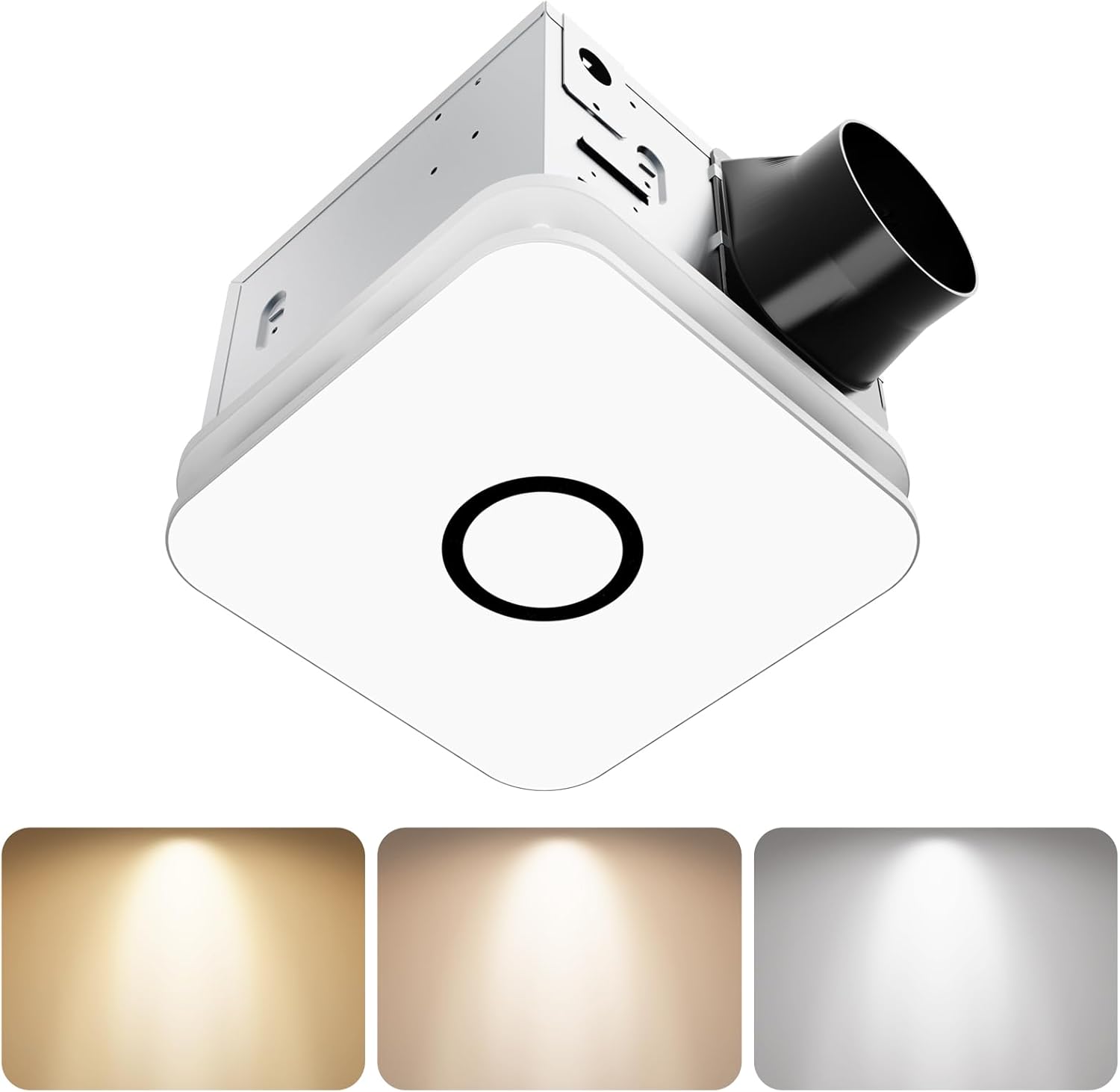
Two buyers replaced older Nu-Tone fans with this one. Both describe it as better engineered and noticeably quieter. At 1.5 sones it's not the quietest fan on this list, but it's a significant step from what most people are replacing.
The 130 CFM gives it range. Where the Amico tops out at 80 sq ft, this handles larger bathrooms with steam loads. The three color temperatures (3000K/4000K/5000K) adjust by quickly toggling the switch off and on. That's not intuitive before you know it, but once you do it's a workable system.
A few things to flag. If the existing ceiling opening is larger than this unit's footprint, patching is required before installation. The installation instructions are adequate but not excellent - watch available video guides. The unit handles most standard bathroom sizes and most lighting preferences, which is why it appears here, but it's a solid mid-range option rather than an exceptional one.
We earn a commission on purchases via these links. It does not change the price you pay or our ranking.
Budget Picks Under $50
You don't need to spend $150 to upgrade from a builder-grade exhaust fan. These three deliver real improvement at prices that make replacing multiple secondary bathrooms reasonable.
Roodike Bathroom Exhaust Fan for Ceiling Mount
1.0 sone spec and 40 dB claimed. Good value if the spec holds in your duct setup.
Roodike Bathroom Exhaust Fan for Ceiling Mount
1.0 sone spec and 40 dB claimed. Good value if the spec holds in your duct setup.
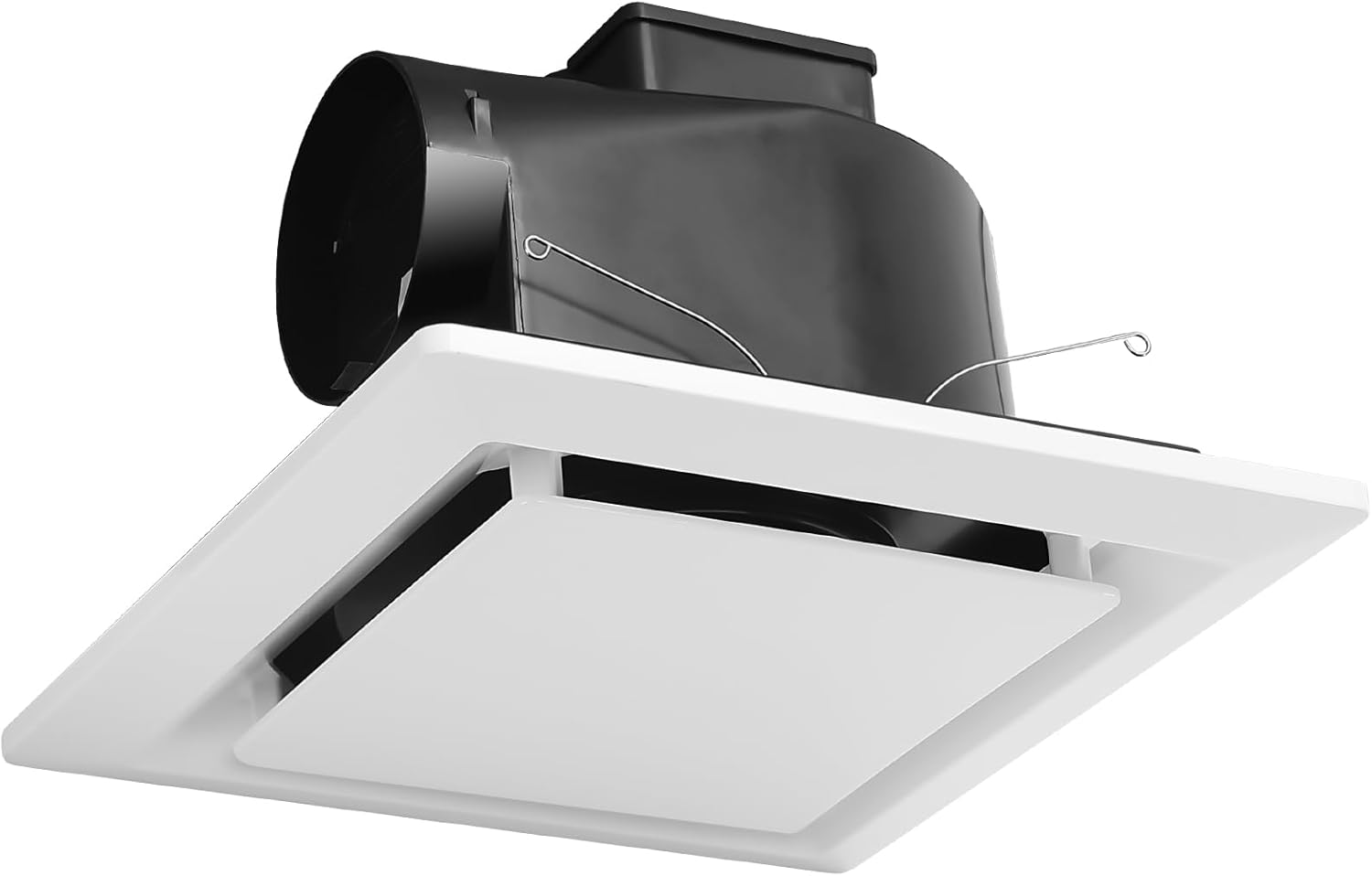
The spec says 1.0 sone and 40 dB at 110 CFM for $38. If that holds up in your actual installation, it's competitive with fans costing three times more.
The review base is moderate, not deep. Buyers who've installed it report quiet operation and adequate airflow without complaints about noise exceeding the rating. Nobody's done a long-form comparison to Panasonic. Nobody has two years of runtime data posted. The short reviews are positive; the uncertainty is what's missing, not what's present.
The Roodike makes sense as a secondary bathroom upgrade where you want meaningfully better than builder-grade without committing Panasonic money. The MTBF spec (10,000+ hours) is lower than what Panasonic lists, which is worth knowing for a fan you'll run daily for a decade. Consider it a capable option with limited track record rather than a proven one.
We earn a commission on purchases via these links. It does not change the price you pay or our ranking.
JOEAONZ Bathroom Exhaust Fan 110 CFM Very Quiet with Matel Housing
Motor module pulls out with two screws for future replacement. Smart design for the price.
JOEAONZ Bathroom Exhaust Fan 110 CFM Very Quiet with Matel Housing
Motor module pulls out with two screws for future replacement. Smart design for the price.
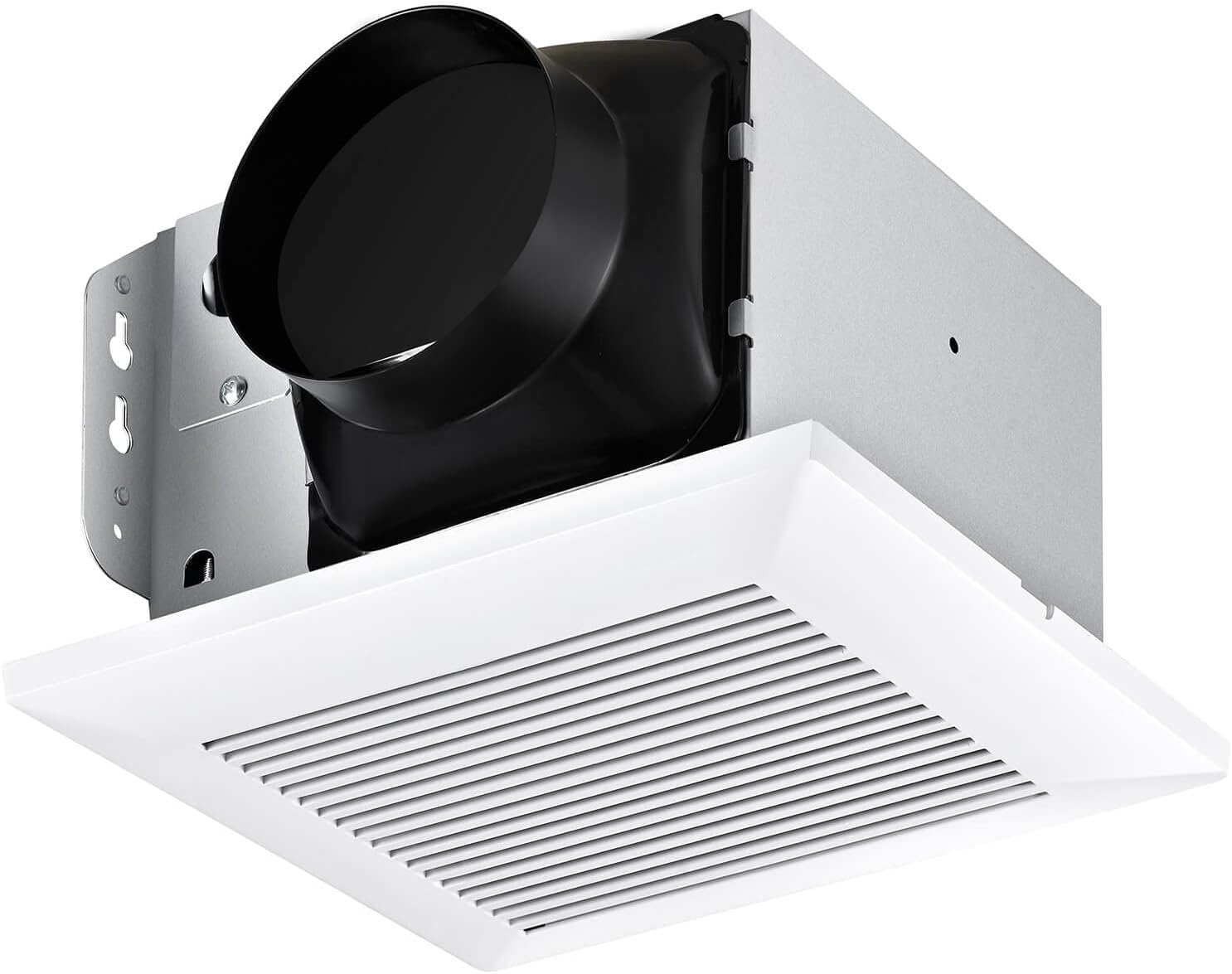
Most budget exhaust fans treat motor replacement as a disposal event. When the motor dies, you replace the whole unit. JOEAONZ built this one differently: the motor module detaches from the housing with two screws. Future motor replacement doesn't require removing the ceiling housing, which in an established install means no patching, no repainting, no disrupting whatever is above the ceiling.
Whether that matters depends on your expectation of long-term use and your confidence in the brand. One detailed reviewer compared it to Panasonic on noise and came away saying it matches a 1.0-sone Panasonic fan in real-world listening. The quick-connect duct adapter and electrical connectors drew repeated praise for installation speed. The fan is running 24/7 in one buyer's laundry room without measurable electricity increase.
The caveat is the brand itself. JOEAONZ doesn't have the track record Panasonic does. The design is thoughtful; the longevity data doesn't exist yet at the scale needed to say with confidence that it'll last ten years. If the replaceable motor concept matters to you and you're comfortable with a brand on the upswing rather than a proven institution, this is the most interesting budget option on this list.
We earn a commission on purchases via these links. It does not change the price you pay or our ranking.
Tech Drive Very Quiet Bathroom Exhaust Fan
2.0 sones at $28. Not whisper quiet, but a genuine upgrade from builder-grade.
Tech Drive Very Quiet Bathroom Exhaust Fan
2.0 sones at $28. Not whisper quiet, but a genuine upgrade from builder-grade.
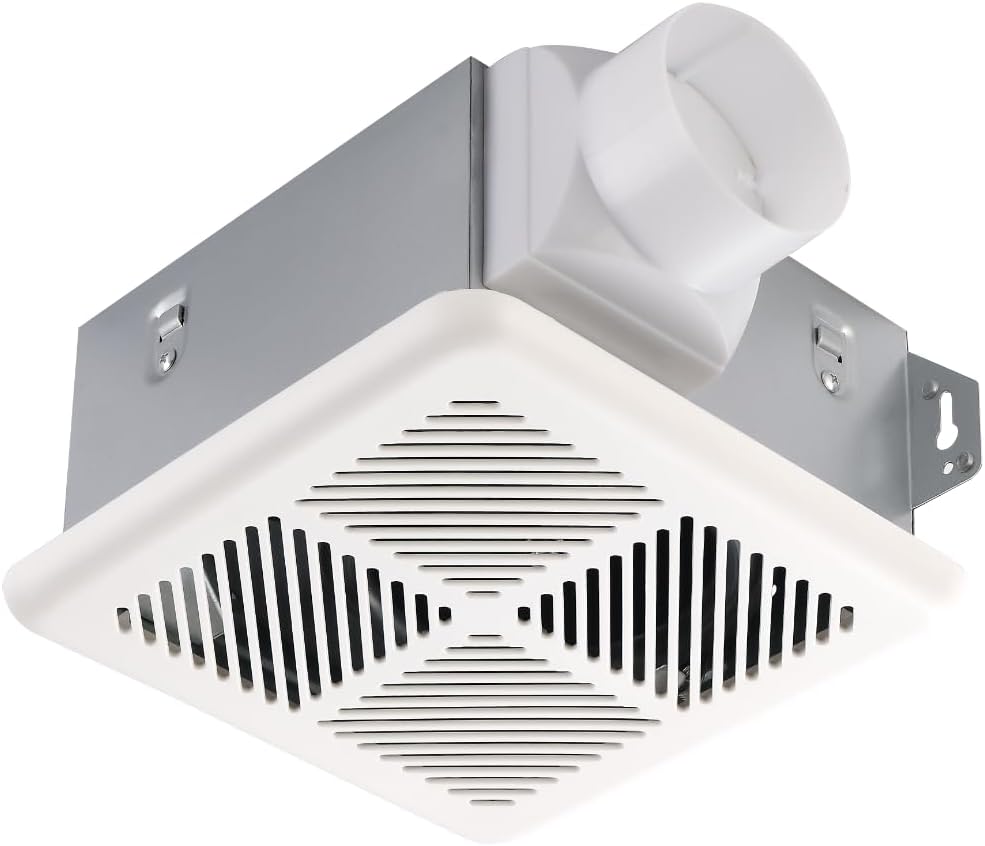
Twenty-eight dollars. That's the number. For a guest bathroom or secondary bath where you're replacing a two-decade-old builder-grade fan that sounds like an aircraft engine, this is the math that works.
Buyers replacing old loud fans describe it as dramatically quieter - some ordered two or three units on the first install. The comparison isn't to Panasonic; the comparison is to what came out of the ceiling. By that measure, it's a substantial upgrade at minimum cost. At 2.0 sones it's clearly audible. If you're listening for it, you hear it. That's different from the 0.8-sone Panasonic at one end of this list, but for a $28 guest bathroom fan that gets used weekly, it's a reasonable trade.
The 70 CFM ceiling sets the scope clearly. This is a fan for bathrooms under 75 sq ft. It's not for master baths, steam showers, or any space that needs more air movement. The 3-inch duct is standard for this class of fan; an upgrade to 4-inch provides modest improvement. The 25,000-hour motor life spec is standard for this tier. It does the job it's sold for.
We earn a commission on purchases via these links. It does not change the price you pay or our ranking.
Buying Guide
What the spec sheets don't explain, and the decisions most buyers get wrong.
Sones vs dB: the metric that matters for fans
Bathroom fans are rated in sones by the HVI (Home Ventilation Institute), the independent body that sets standards for residential ventilation products. A sone is a unit of perceived loudness calibrated to human hearing - 2 sones sounds roughly twice as loud as 1 sone. This makes sone values more useful than decibels for comparing fan noise, because the scale maps directly to what you experience, not just what a microphone measures.
Practical anchors: 0.8 sones is near the threshold of perception in a normal room. 1.5 sones is present but not intrusive. 2.0 sones is what most people mean when they say "not annoying." Anything above 3.0 sones is the old builder-grade fan you want to replace.
One honest gap in this review: the Panasonic WhisperFit DC models (FV-0511VF1 and variants) don't have a published HVI-certified sone number in our data. Panasonic markets them as "whisper quiet," and the buyer feedback confirms it. We use that language rather than inventing a sone number we can't verify.
| Sones | Tier | What it sounds like |
|---|---|---|
| < 0.5 | Inaudible | You have to listen for it |
| 0.5 - 1.0 | Whisper quiet | Present but not intrusive |
| 1.0 - 2.0 | Quiet | Clearly audible, not annoying |
| 2.0 - 3.0 | Moderate | Background noise you notice |
| 3.0+ | Loud | The old fan you want to replace |
CFM sizing: the decision most buyers get wrong
CFM (cubic feet per minute) measures how much air the fan moves. Code minimum is 1 CFM per square foot of floor space, with a 50 CFM floor for any bathroom. That's adequate for a half bath with a 10-second hand-washing visit. It's not adequate for a master bath with a steam shower.
In practice, size up. Ceiling height above 8 feet increases the air volume the fan has to move. Longer duct runs and additional elbows reduce the fan's effective airflow at your ceiling (each 90-degree elbow costs roughly 5 feet of equivalent duct length). Plan for those losses, not the rated CFM in an ideal test setup.
A simple sizing baseline: under 80 sq ft, 80 CFM. 80-110 sq ft, 110 CFM. Large master bath or steam shower, 150 CFM minimum. When in doubt, size up - an overpowered fan running at a lower speed is quieter than an underpowered fan running at its limit.
DC vs AC motors: what the spec sheets don't say
All four Panasonic fans on this list use DC/ECM motors. Budget fans use AC motors. The difference in real-world noise is significant.
AC motors run at fixed speed. They reach full speed in under 10 seconds. They're cheaper to manufacture and work fine. DC motors run at variable speeds, ramp up gradually over 60-90 seconds, and use shock-mounting to decouple vibration from the housing. The slow ramp is not a defect - it's the mechanism that reduces startup noise.
DC motors also use roughly 30-50% less electricity than equivalent AC motors. A fan that runs for 8 hours a day (an automated or forgetful household) will show that difference on the power bill over time.
Duct diameter and noise: the installation variable most guides ignore
Installing a 4-inch fan on a 3-inch duct increases static pressure. The fan motor works harder to push air through the restricted opening. The result: higher noise and lower effective CFM. This is the most common reason a fan that tested quiet in a showroom sounds louder than expected in a real bathroom.
Use 4-inch duct minimum for any fan on this list rated under 150 CFM. Use 6-inch duct for the WhisperChoice or any fan above 120 CFM. Smooth rigid metal duct retains more CFM over distance than flexible duct; if you're running more than 10 feet, rigid is worth the extra work. Always verify the backdraft damper moves freely after installation - a partially bound damper reduces airflow and can cause airflow noise.
When to choose a fan-light combo
A combo unit makes sense when the bathroom has a single switch loop, no separate lighting circuit near the fan, or when you're replacing two ceiling fixtures with one during a remodel. It's the wrong choice when you want to control fan and light on separate switches and the combo model doesn't support dual switching - check the wiring diagram before buying.
Light quality trade-offs are real. Combo fan lights are typically diffuse panels, not directional fixtures. Color temperature varies by model: the Amico offers 5 temperatures (2700K-5000K), the OFANKU offers 3 (3000K-5000K), the Gopper is fixed at 6500K daylight white. Match the color temperature to your actual use before buying.
HVI certification and Energy Star
HVI-certified fans have been independently tested for airflow and noise under standardized conditions. Sone ratings on HVI-certified fans are comparable across brands. Without HVI certification, sone numbers are self-reported and unchecked. Energy Star requires minimum efficiency and maximum noise levels (2.0 sones or less for most categories). Both certifications are worth confirming; they indicate the specs have been independently verified, not just printed on the box.
Neither certification tells you about long-term reliability. No standardized durability certification exists for residential fans. Track record and brand reputation are your best proxies for that.
FAQ
- What sone level is actually quiet for a bathroom fan?
- Under 1.0 sone is excellent. You'll hear it if you're specifically listening for it, but it won't intrude on conversation or disturb sleep through a wall. 0.8 sones (the Panasonic WhisperChoice) is near the practical limit of what home fans achieve. 1.0-1.5 sones is the sweet spot for most buyers: genuinely quiet without the premium price. Above 2.0 sones, the fan is clearly present. That's "not annoying," not "quiet."
- How many CFM does my bathroom actually need?
- The code minimum is 1 CFM per square foot, with 50 CFM as the floor for any bathroom. In practice, size up: 80 CFM for bathrooms under 80 sq ft, 110 CFM for bathrooms up to 110 sq ft, 150+ CFM for master baths or steam showers. Ceiling height above 8 feet and long duct runs increase the effective requirement. An overpowered fan running at partial capacity is quieter than an underpowered fan running flat out.
- Can I install a bathroom fan without attic access?
- Yes. Most modern retrofit fans are specifically designed for room-side installation. The Panasonic WhisperFit uses a bracket system that mounts between joists from below without going above the ceiling. Several budget options on this list use the same approach. The ceiling opening dimensions matter - confirm the new fan's housing fits your existing opening before cutting anything.
- Why does my fan sound louder than the sone rating suggests?
- Three common causes. First, duct diameter is too small for the fan's CFM - a 4-inch fan installed on a 3-inch duct increases static pressure and noise measurably. Second, the duct run is too long or has too many elbows, reducing airflow and forcing the motor harder. Third, the housing isn't fully seated in the ceiling, which creates vibration that bypasses the motor's shock mounting. A correctly installed fan sounds like its spec rating. A poorly installed one doesn't.
- Should I get a fan with a humidity sensor?
- Only if your household forgets to run the fan consistently. The sensor solves a behavior problem, not a noise problem. The Panasonic FV-0511VFC1 is the pick if you go this route, but the wiring configuration for full sensor functionality is genuinely tricky. If you're comfortable with electrical work, plan for the extra setup time. If not, consider getting an electrician for that part of the install.
The One to Get
If you're replacing a builder-grade fan in a standard bathroom (under 110 sq ft) and budget isn't the primary constraint, the Panasonic WhisperFit DC is the right answer. It's the model contractors reorder, the DC motor is genuinely quieter than AC alternatives at the same price, and Pick-A-Flow means it handles a range of room sizes without guessing at the right CFM. Nothing on this list combines those three things at $136.
If you have a master bath or a bathroom with a steam shower that needs 150 CFM, step up to the Panasonic WhisperChoice. The extra $50 gets you meaningfully more airflow at the same noise level.
If budget is the constraint, the Amico 0.9 Sone is the pick - 0.9 sones with five light color temperatures at $57, for bathrooms under 80 sq ft. It's not Panasonic, but the noise level is in the same tier and the buyer feedback is consistent.