Bedroom Fans · 2026 edition
Quietest bedroom fans (2026)
Most fans aren't built for bedrooms. They're built for offices, garages, and open-plan living rooms where a little background hum doesn't matter. When you're lying 18 inches from one at 2am, that calculation changes completely. A fan that's fine in a warehouse can be genuinely disruptive next to a pillow.
This page tracks quiet fans for sleeping specifically. DREO's 20 dB DC motor spec appears across four products here and holds up in buyer reports from thousands of people who paid for the fans and slept next to them. That's more reliable than a single lab measurement. The Honeywell HT-900 at $15 has no dB spec at all, but the buyer consensus across a very large dataset says the low setting is fine for sleep. We explain both.
All 7 picks at a glance
Every product on this page. dB values are manufacturer-stated at minimum speed for DC motor fans. The two Honeywell models have no published spec - "No spec" means we won't invent one. Noise tier is our editorial call based on the verified data we have.
| Product | dB | Fan Type | Price | Badge | Verdict |
|---|---|---|---|---|---|
| DREO Smart Fan for Bedroom | 20 dB | Smart Pedestal | $130 | Quietest Smart Fan | 20 dB with smart home integration. Best spec on this page. |
| DREO Fan for Bedroom | 20 dB | Pedestal | $93 | Same 20 dB as the 508S. No app required. | |
| B0DR2L41WS | 20 dB | Desk Circulator | - | 20 dB desk circulator. Good for indirect room airflow. | |
| B0DQDQVTT3 | 20 dB | Pedestal | - | Best Value | 2026 upgraded motor at $70. Best noise-per-dollar here. |
| B0BVZFQ4DF | 28 dB | Tower | - | 28 dB tower with auto temp mode. Louder than DREO. | |
| Honeywell HT | No spec | Desk/Floor | $15 | Best Budget Pick | No dB spec. Low speed is sleep-tolerable for most buyers. |
| B00YU1O15U | No spec | Personal | - | No spec. Bright blue LEDs are a problem next to a bed. |
Smart fans that stay quiet
Smart fans that integrate with Alexa or Google Home deserve skepticism. Most sacrifice silence for feature count. These three hold 20 dB on low while giving you app control and scheduling, without waking a light sleeper.
Quietest Smart Fan DREO TurboPoly Fan 508S
20 dB with smart home integration. Best spec on this page.
DREO TurboPoly Fan 508S
20 dB with smart home integration. Best spec on this page.
The intersection of 20 dB and full smart home integration is unusual. Most smart fans are moderately noisy. This one isn't.
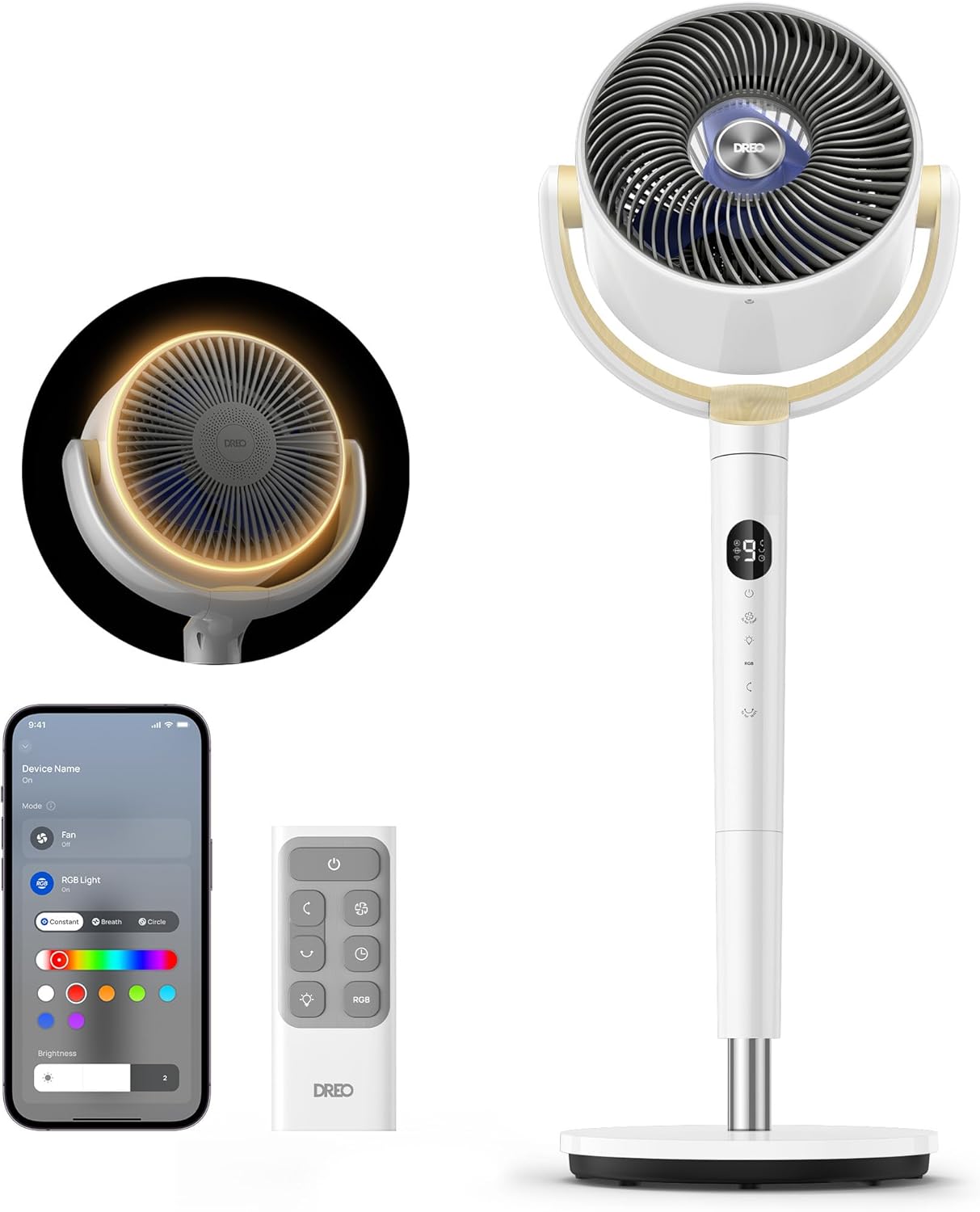
The intersection of 20 dB and full smart home is unusual. Most smart fans are moderately noisy. This one isn't. Buyers with experience swapping from large blade fans consistently report the 508S quieted their bedroom while maintaining equivalent airflow - and several household setups describe completely replacing two older fans with one of these.
The simultaneous horizontal and vertical oscillation matters for bedroom use. Couples who want air aimed differently can configure the coverage via app to avoid direct blow at one person. That's a real feature, not marketing. The RGB ambient light is mostly decorative; sleep-concerned buyers confirm it dims automatically in sleep mode.
Worth noting: Turbo mode exists for hot nights and confirms the 20 dB spec is on normal modes, not a best-case-only figure. Nine speed levels mean the lowest setting is genuinely slow - DC motors don't fake "quiet mode" by just reducing airflow on the same RPM curve.
The honest caveat: $130 is real money for a fan. If Alexa integration isn't a need, the DREO 353 below does the same 20 dB for $60 less.
We earn a commission on purchases via these links. It does not change the price you pay or our ranking.
DREO TurboPoly Fan 502
Same 20 dB as the 508S. No app required.
DREO TurboPoly Fan 502
Same 20 dB as the 508S. No app required.
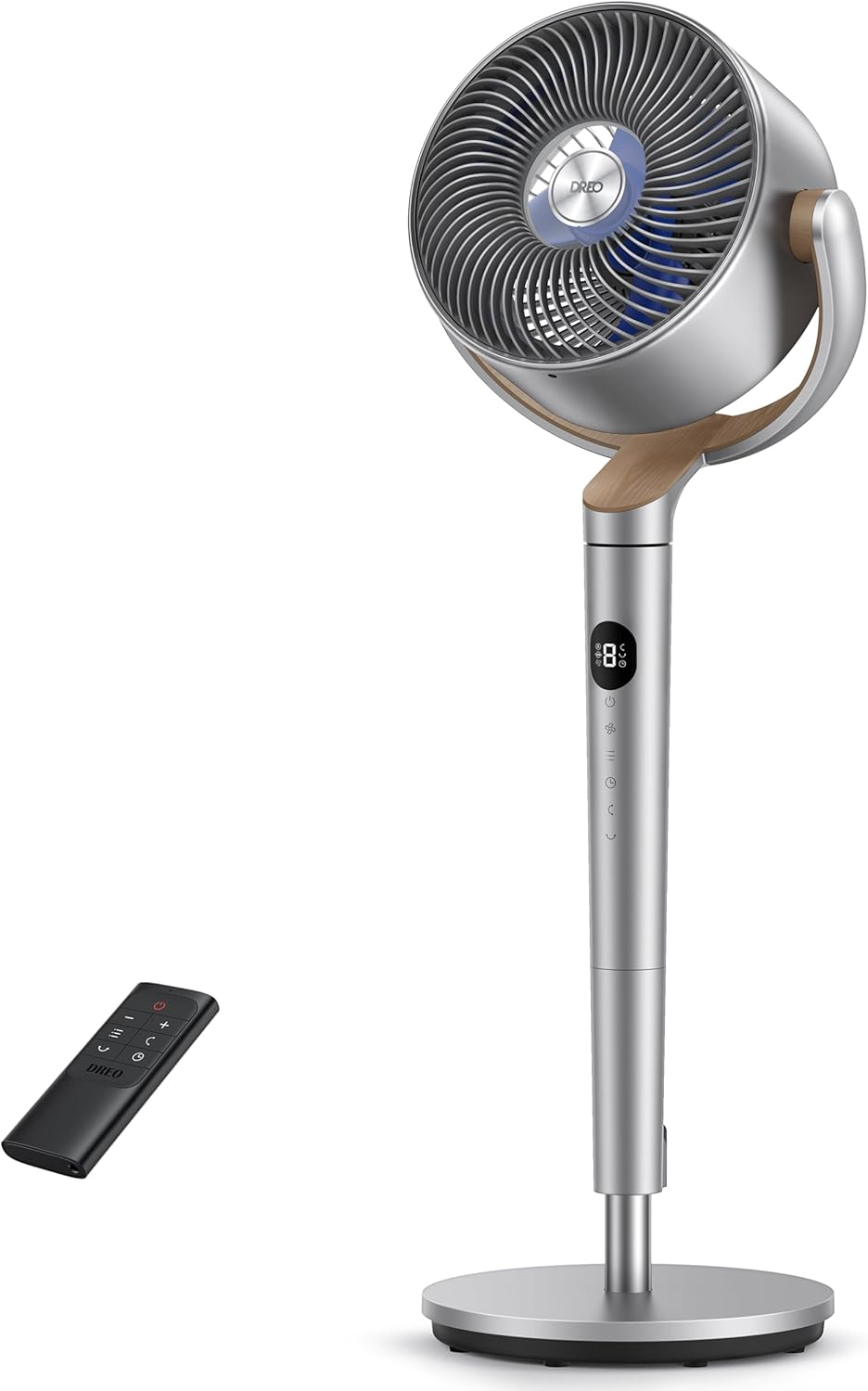
The 502 is the non-smart version. Same 20 dB spec, same simultaneous omni-directional oscillation, $40 cheaper than the 508S. No Wi-Fi, no Alexa, remote-only - which is genuinely the right call for buyers who don't want app setup or smart home dependencies.
The DC motor with bionic blade design is the same story as the rest of DREO's lineup. Buyers who've switched from conventional AC-motor pedestal fans describe a meaningful step down in perceived noise - not subtle, noticeable. Multiple buyers who pulled this out during a heat wave specifically mention running it overnight as the thing that made the room usable.
Adjustable height 35-40 inches. The upper end positions the airflow above pillow level when the fan is beside a bed - useful if you want air circulation without direct blow at face level while lying down.
We earn a commission on purchases via these links. It does not change the price you pay or our ranking.
DREO Table Circulator
20 dB desk circulator. Good for indirect room airflow.
DREO Table Circulator
20 dB desk circulator. Good for indirect room airflow.
Twenty-nine dollars and 20 dB. No remote, no app, mechanical dial for three speeds. For some buyers that's the whole argument - no features to set up, no display to accidentally leave on, nothing to troubleshoot at midnight.
The circulator use case is pointing it at a wall corner rather than directly at a sleeping person. Indirect airflow reduces perceived noise even when the actual dB is identical. The 120-degree manual tilt range supports this well - aim it at the ceiling or a corner to bounce air around the room.
One honest limitation: the tilt has four fixed positions, not continuous adjustment. The gap between position 2 (0 degrees) and position 3 (30 degrees) is meaningful, and some buyers found neither angle ideal for their setup. This is documented clearly in buyer feedback and worth knowing before purchase. No oscillation either - this is a stationary circulator, not a sweeping fan.
Tower and standing fans
Standing fans with tower profiles keep the noise source away from bed level and distribute airflow more gently. Both picks here hit sub-30 dB on low and oscillate wide enough to cover a full bedroom without pointing at one person.
Best Value DREO TurboPoly Fan 353 (2026)
2026 upgraded motor at $70. Best noise-per-dollar here.
DREO TurboPoly Fan 353 (2026)
2026 upgraded motor at $70. Best noise-per-dollar here.
The 2026 upgrade improves the motor. Same 20 dB spec as DREO's premium models. The value argument is straightforward.
The 2026 upgrade matters here: improved motor, same 20 dB spec, at $70. That's the value argument in one sentence. Buyers in desert climates confirm it runs as an AC substitute on moderate nights - not hyperbole from the listing, buyer reports from Phoenix and similar.
Auto mode adjusts fan speed as room temperature rises. For bedroom use this solves a real problem: you fall asleep comfortable, the room warms up, the fan adjusts without you waking to change it. That's more useful than it sounds at 3am.
Small but notable: There's a detachable front grill and blade design for cleaning. On fans you run every night for months, dust accumulation on blades eventually creates both noise and imbalance. A fan you can actually clean stays quieter longer.
Essential oil aroma pad: Real buyers mention it, so it's worth noting. Remove the front cap, add drops to the washers. It's there if you want it, completely ignorable if you don't.
Remote is included but basic: power, speed, oscillation, timer, mute for button beeps. Assembly takes under five minutes. Height adjusts 38-42 inches.
LEVOIT Tower Fan
28 dB tower with auto temp mode. Louder than DREO.
LEVOIT Tower Fan
28 dB tower with auto temp mode. Louder than DREO.
28 dB is genuinely quiet. The gap between 20 dB and 28 dB is a doubling of perceived loudness in acoustic terms - worth flagging. This is not as quiet as the DREO pedestal fans, and a buyer who did a direct comparison with DREO confirmed the LEVOIT was louder on equivalent settings. That's the honest starting point.
What the LEVOIT does well: the temperature sensor auto-mode is responsive, the 1044 CFM airflow is high for a tower fan, and the Wi-Fi + remote combination is more feature-rich than the $55 price suggests. Buyers without AC found this moved more air than comparably priced alternatives in head-to-head testing.
The 36-inch tower profile distributes airflow along a taller column than a pedestal fan, which some buyers prefer for a softer, less "directed" feel. If the tower aesthetic or the gentler airflow distribution matters to you, this is the pick. If maximum quiet is the only criterion, the DREO 353 is cheaper and quieter.
Budget picks under $35
Cheap fans are usually loud fans. These two are exceptions - neither publishes a dB spec, but buyer feedback across tens of thousands of purchases consistently calls them sleep-tolerable on low speed.
Best Budget Pick Honeywell TurboForce HT-900
No dB spec. Low speed is sleep-tolerable for most buyers.
Honeywell TurboForce HT-900
No dB spec. Low speed is sleep-tolerable for most buyers.
Honeywell doesn't publish a dB spec. What it has instead: a very large buyer dataset that says low speed is fine next to a sleeping person.
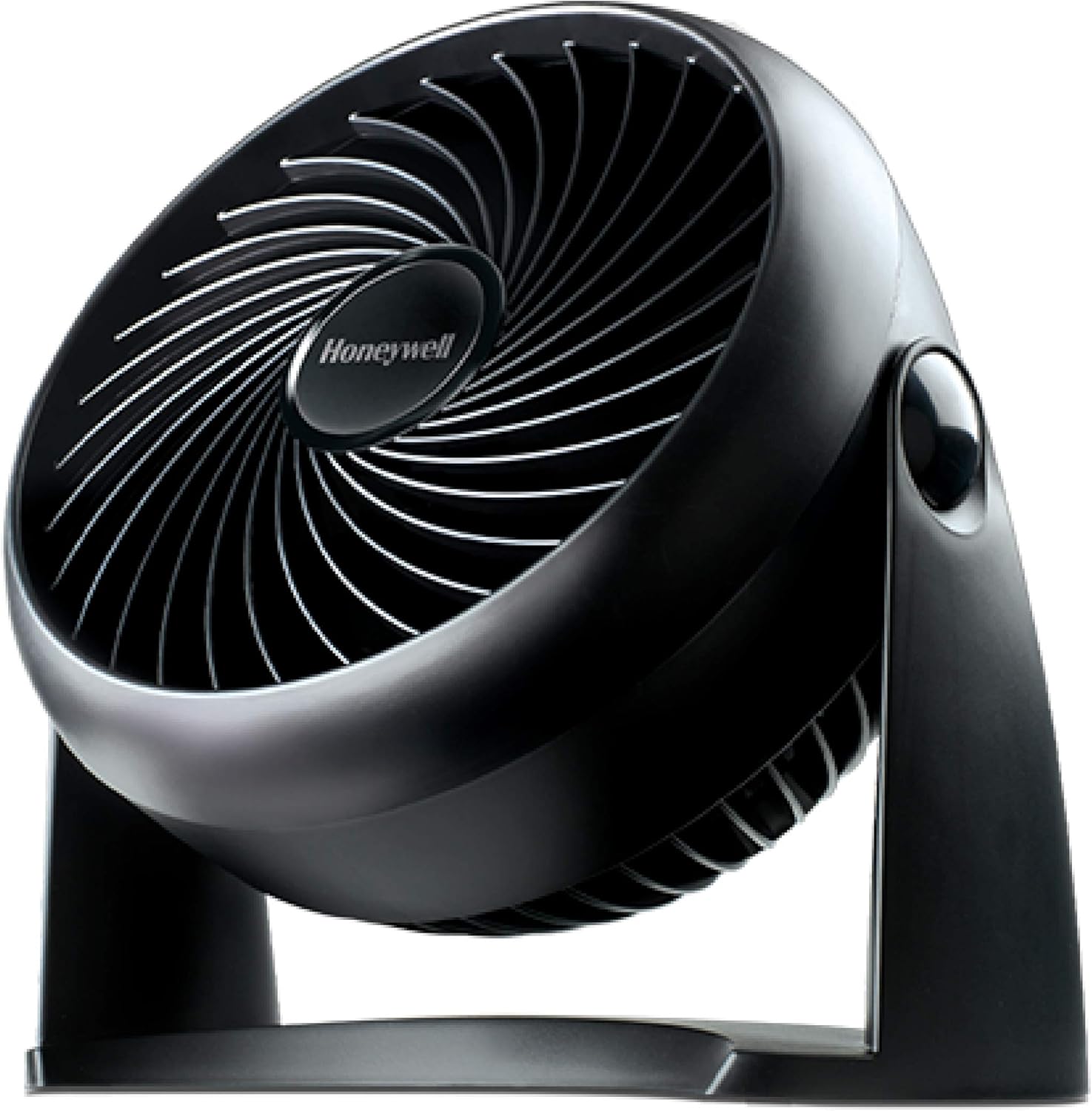
Honeywell doesn't publish a dB spec for this model. That's the honest starting point. At $15, it probably isn't 20 dB at any speed - but what it has instead is a buyer dataset that dwarfs everything else on this page combined. The consensus is clear: low speed produces tolerable background white noise, not a disruptive fan sound. Medium and high are louder. This is a low-speed-only bedroom recommendation.
The 90-degree pivot is more useful in a bedroom than it sounds. Point it at a ceiling corner for indirect airflow instead of directly at a sleeping person - reduces the perceived directness of the sound even at the same actual noise level. Compact enough for a nightstand or desk, lightweight enough to move between rooms without effort.
The realistic picture: At $15 this isn't competing with DC motor fans on silence. It competes with the alternative of sleeping hot because you didn't want to spend $70 on a fan. On that comparison it wins easily. If verified 20 dB is the requirement, the DREO 353 at $70 is the right answer.
We earn a commission on purchases via these links. It does not change the price you pay or our ranking.
Honeywell HTF210B QuietSet
No spec. Good desk fan; bright blue LEDs are a problem at night.
Honeywell HTF210B QuietSet
No spec. Good desk fan; bright blue LEDs are a problem at night.
The LED issue comes first because it's the most relevant thing for bedroom use. Multiple buyers specifically flag the bright blue status LEDs as disruptive for sleep. One buyer went as far as disassembling the unit to replace LEDs with less intrusive ones. If you're a light-sensitive sleeper, this is a genuine disqualifier unless you plan to tape over the display.
Set that aside: for desk use during the day this is a well-reviewed personal fan. Oscillation is useful for desks where you don't want papers disturbed. The auto-shutoff timer is a legitimate sleep feature. Buyers who've run it for a year or more at a work desk report consistent performance.
At $33, the value math is awkward. The HT-900 does the same job for $18 less. The DREO 353 does it significantly better - verified quiet, auto mode, proper DC motor - for $37 more. This occupies a position between two better options. It's here because the buyer data is solid, not because it's the obvious pick.
What to look for in a quiet bedroom fan
The 20 dB threshold
20 dB is near-silence. Not "quiet" in the marketing sense - genuinely near-silent. The ambient noise floor in a bedroom with HVAC running is typically 30-35 dB. That means a 20 dB fan is quieter than the background before it turns on. Light sleepers in a very quiet room will notice a 20 dB fan. Most won't.
28 dB is a whisper at arm's length. Still genuinely quiet; notably louder than 20 dB in acoustic terms. 35 dB is library ambient - fine for most sleepers, noticeable for light ones. 40 dB is quiet office hum - you hear it. 50 dB is conversational distance: this is a loud fan for bedroom use.
DC motors are why modern fans hit 20 dB
Every fan on this page that claims sub-25 dB uses a DC brushless motor. DC motors run at genuinely lower RPM on minimum settings, produce less vibration, and have smoother torque delivery. AC motors are cheaper and fine for garages or common areas; in a bedroom they typically add 5-10 dB over equivalent DC fans at minimum speed.
How to spot a DC motor fan: 9+ speed settings, fine-grained speed control, often 20-35% more expensive than comparable AC fans. How to spot an AC fan: 3 speeds, discrete settings, under $20 usually. The Honeywell HT-900 is an AC fan. The DREO lineup is DC. That's why the price gap is what it is.
Bladeless fans are not inherently quieter
The "bladeless equals quieter" belief is widespread and wrong. Bladeless fans (Dyson and similar) push air through a narrow slot at higher velocity. Dyson's AM07 runs 38-40 dB at low. DREO's bladed DC pedestal fans run 20 dB. The visible blade has nothing to do with noise output - the motor type and RPM do.
LED displays and sleep
This is more important than most fan reviews acknowledge. Blue LEDs on status displays are disruptive for sleep at the brightness most consumer electronics use. Fans that run near a bed need either: an auto-display-off feature (DREO's fans kill the display after 5 minutes in sleep mode), a physical display switch, or no display at all.
The Honeywell HTF210B has bright blue LEDs with no easy off switch. Multiple buyers have documented this. It's a real limitation for bedroom use, not a minor footnote.
Fan placement matters more than the spec sheet suggests
A 20 dB fan aimed directly at a sleeping person sounds different from the same fan pointed at a wall. Indirect airflow - bouncing air off a corner or ceiling - reduces perceived noise and the "wind in your face" quality that disrupts sleep. Most DC pedestal fans with adjustable tilt support this. The DREO table circulator is designed for it specifically.
Common questions
Is 20 dB quiet enough for sleeping?
Yes, for almost everyone. The ambient noise floor in a typical bedroom with HVAC running is 30-35 dB - meaning a 20 dB fan is quieter than the background noise that's already there. Light sleepers in a very quiet room with no HVAC will notice it. Most people won't.
Are bladeless fans quieter than regular fans?
No. The motor type is what determines noise, not whether there's a visible blade. Dyson's bladeless AM07 runs 38-40 dB at low speed. DREO's DC-motor bladed fans run 20 dB. The bladeless aesthetic costs more and doesn't buy you quiet.
What fan speed is quietest for sleeping?
Always the lowest available. DC fans at speed 1 of 9 are dramatically quieter than AC fans at speed 1 of 3 because the actual RPM is much lower. For AC fans, "low" is still relatively loud compared to DC fan minimums. If you find yourself turning a fan up to speed 3 just to get enough airflow, the fan is probably underpowered for the room - not a noise problem, a sizing problem.
How do I make my bedroom fan quieter?
Three options that work: place it on carpet or a rubber mat to reduce vibration transfer to the floor, point it at a wall or ceiling for indirect airflow (lower perceived noise at same dB), and clean the blades if the fan has been running for months (dust accumulation on blades creates wobble and noise). None of these replace a quieter fan if the motor itself is loud.
Tower fan or pedestal fan for a quiet bedroom?
DC pedestal fans (DREO's lineup) are quieter at equivalent airflow than tower fans. Tower fans distribute air along a taller column and may feel less "directed," which some people prefer for sleep even if the dB is slightly higher. Pick by preference: pedestal for maximum measured quiet, tower if you want gentler, more diffuse airflow.