Blenders · 2026 edition
Quiet blenders: what the noise claims actually mean
The word “quiet” appears on roughly one in three blender listings. It means something, technically. It just does not mean what most buyers expect. The only blenders that are genuinely quiet use a soundproof enclosure. Everything else is marketing.
We looked at 14 blenders. Nine made the cut. The ones that did not had too little real-world buyer history to trust any claim. What remained breaks into three groups: shield-equipped commercial blenders that actually reduce noise, everyday home blenders with no noise claims but enormous validation records, and two outliers worth knowing about.
The myths about quiet blenders
Four things the blender industry has quietly let buyers believe. None of them are true.
Myth 1
More watts means a quieter blend
Wrong. Wattage is blending power. Decibels are noise. They are not related. A 2200W motor inside a soundproof enclosure runs quieter than a 600W motor in an open plastic cup. The enclosure is doing the noise work. The motor is doing the blending work. They are separate problems.
The Vitamix 5200 has roughly 1640W and it is loud. The WantJoin shield blender has 2200W and it is quiet. That is not a coincidence. It is the entire point of this page.
Myth 2
A premium blender is a quiet blender
The Vitamix 5200 at $475 is loud. The Vitamix Quiet One at $1,158 is quiet - not because Vitamix makes quiet blenders, but because the Quiet One has a sound enclosure. The same logic applies to Blendtec. The commercial models with enclosures are quiet. The open-frame residential models are not.
You can get the same enclosure mechanism for $200 from WantJoin or CRANDDI. Premium price buys materials and longevity, not silence.
Myth 3
Commercial blenders are too loud for home use
True for open-frame commercial blenders. False for enclosure-equipped commercial blenders, which were designed specifically to operate in public spaces - coffee shops, juice bars, smoothie counters - without disrupting the customer environment.
The Vitamix Quiet One has been the commercial bar standard since the mid-2000s. WantJoin and CRANDDI adapted the same approach for home prices. Commercial-with-enclosure equals quiet.
Myth 4
Blender noise is just unavoidable
Unavoidable if you buy a traditional open-frame blender. Not unavoidable at all if you choose an enclosure model. The technology works and has worked for two decades.
The reason most buyers never hear about it: editorial blender coverage focuses on performance and price, not noise. Finding a genuinely quiet blender requires knowing to look for the enclosure. That is the only thing this page is here to tell you.
All 9 blenders compared
Sorted by noise tier. Most products in this category have no independently verified dB spec - the labels reflect design type (Shield) or manufacturer claims where available.
| Product | dB | Type | Price | Badge | Verdict |
|---|---|---|---|---|---|
| WantJoin Professional Commercial Blender With Shield Quiet Sound Enclosure 2200W Industries Strong and Quiet Professional | Shield | Commercial Shield | $200 | Quietest Overall | 2200W with soundproof shield. The enclosure is the point. |
| CRANDDI Quiet Commercial Blender with Soundproof Shield | <70 dB | Commercial Shield | $200 | Best dB Claim | Only model with a specific <70 dB claim. Tall - check cabinet clearance. |
| Vitamix 36019 36019 | ~65 dB | Commercial Shield | $1158 | Commercial Standard | Commercial bar standard. Quiet because of the enclosure, not the brand. |
| Hijolla Commercial Blender with Soundproof Shield | Shield | Commercial Shield | $180 | Budget shield blender. Cafe buyers confirm it works. Thin long-term data. | |
| WantJoin Commercial Blender | Shield | Commercial Shield | $184 | Solid shield blender with real commercial track record. Lower review volume. | |
| Magic Bullet Blender | No spec | Personal | $40 | Budget Pick | 250W personal. Works for shakes. Do not use for ice crushing. |
| nutribullet Personal Blender | No spec | Personal | $62 | 600W personal blender. Fine for daily smoothies from soft fruit. | |
| nutribullet Full | No spec | Full-Size Home | $100 | Best for Home Use | Best all-around home blender. Not quiet - just reliable and well-proven. |
| Vitamix 5200 Professional Grade Blender for Smoothies | Loud | Full-Size Home | $475 | Skip for Quiet | Excellent blender. Loud. Here as an honest warning, not a recommendation. |
Shield blenders
These use a soundproof enclosure to contain noise at the source. It is a commercial approach that home buyers can now get under $200. If quiet blending is the actual goal, this is where to look.
Quietest Overall WantJoin Professional with Shield
2200W commercial motor with a soundproof enclosure. The shield is why this blender belongs on a quiet-blenders page.
WantJoin Professional with Shield
2200W commercial motor with a soundproof enclosure. The shield is why this blender belongs on a quiet-blenders page.
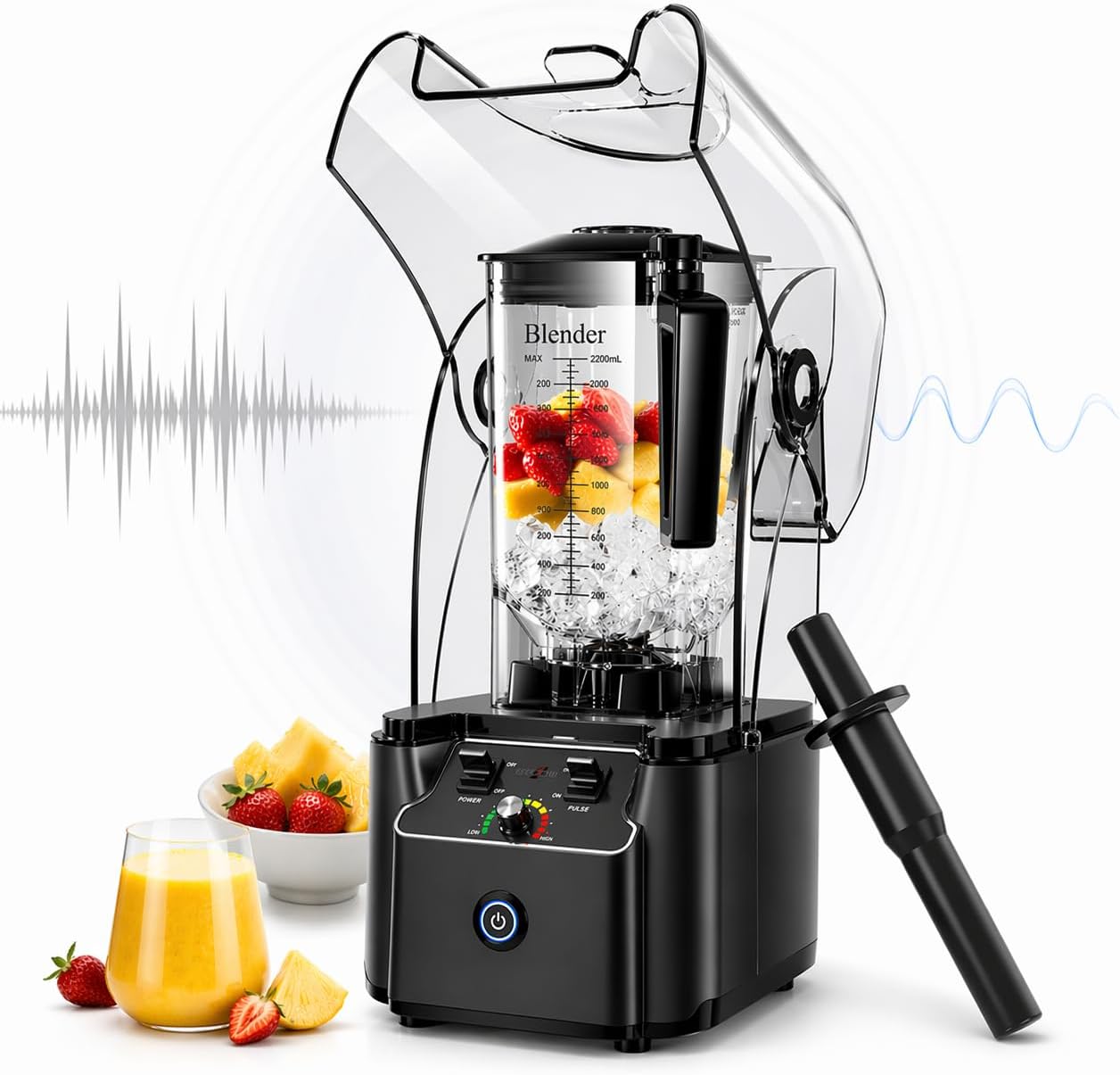
The mechanism here is simple: a thick polycarbonate shield traps the motor and container noise before it reaches your ears. WantJoin did not invent this approach - commercial bars have used it since the early 2000s. What changed is the price. This is $200. The Vitamix equivalent was $1,000+.
Buyers who have run this in restaurants confirm the difference. Used side-by-side against unshielded blenders in food service, the noise reduction is described as substantial - not whisper quiet, but a different category of loud. For home use in an apartment or near a sleeping area, that distinction matters.
2200W and 15 speeds handle everything: smoothies, milkshakes, salsa, frozen drinks. The 80oz pitcher is large - more than most households need for a single blend, which is useful if you make batches. The 10-year warranty claim from WantJoin is worth noting with some skepticism, but the track record in food service is the stronger evidence.
Counter space caveat: this is a commercial-grade appliance. It is larger than a typical home blender. Measure before you order.
We earn a commission on purchases via these links. It does not change the price you pay or our ranking.
Best dB Claim CRANDDI K90 Soundproof
The only model here with a specific manufacturer dB commitment: under 70 dB at 1 meter.
CRANDDI K90 Soundproof
The only model here with a specific manufacturer dB commitment: under 70 dB at 1 meter.
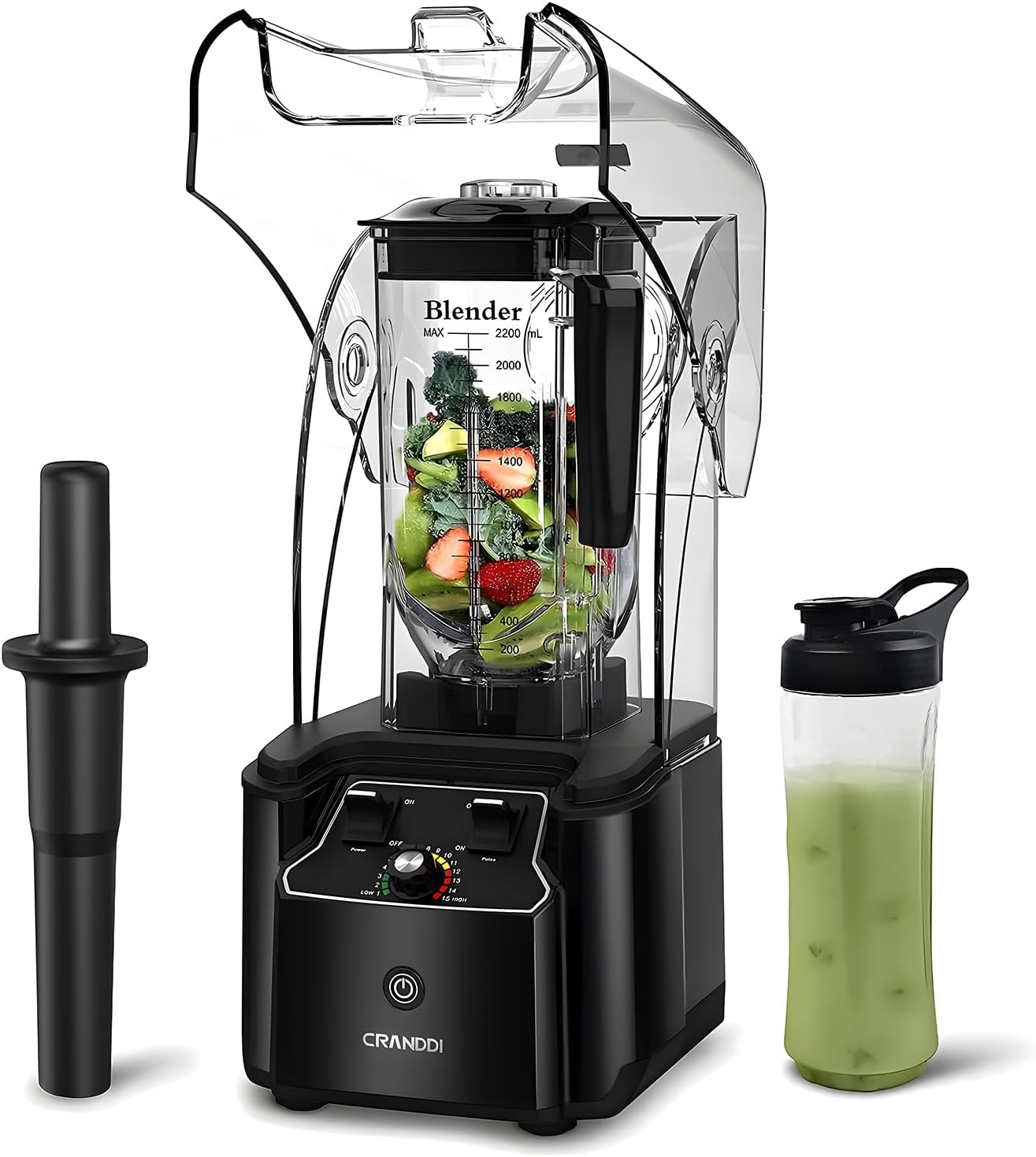
A specific dB claim from a manufacturer is meaningful. Not because you should trust it blindly, but because it is a commitment you can hold them to. CRANDDI says the K90 runs under 70 dB at 1 meter. For context: 70 dB is roughly a vacuum cleaner operating at the far side of a room. Not silent - but genuinely different from the 80-90 dB range of a standard home blender.
Buyers with noise sensitivity specifically call this one out. People who bought it because of noise concerns came away satisfied. That pattern, across the review record, is the validation behind the manufacturer's claim.
One thing to know before you order: the K90 is 19.8 inches tall. The product listing says this explicitly, and buyers confirm it. Standard kitchen cabinets leave 18 inches of clearance above the counter. The K90 will not fit under most kitchen cabinets. This is not a dealbreaker for everyone, but it is worth knowing before the box arrives.
Same 2200W, 38,000 RPM performance tier as the WantJoin above. Self-cleaning works. 80oz capacity.
We earn a commission on purchases via these links. It does not change the price you pay or our ranking.
WantJoin 80oz Shield 1800W
Solid shield blender at a slightly lower price than its sibling. The commercial track record is the selling point.
WantJoin 80oz Shield 1800W
Solid shield blender at a slightly lower price than its sibling. The commercial track record is the selling point.
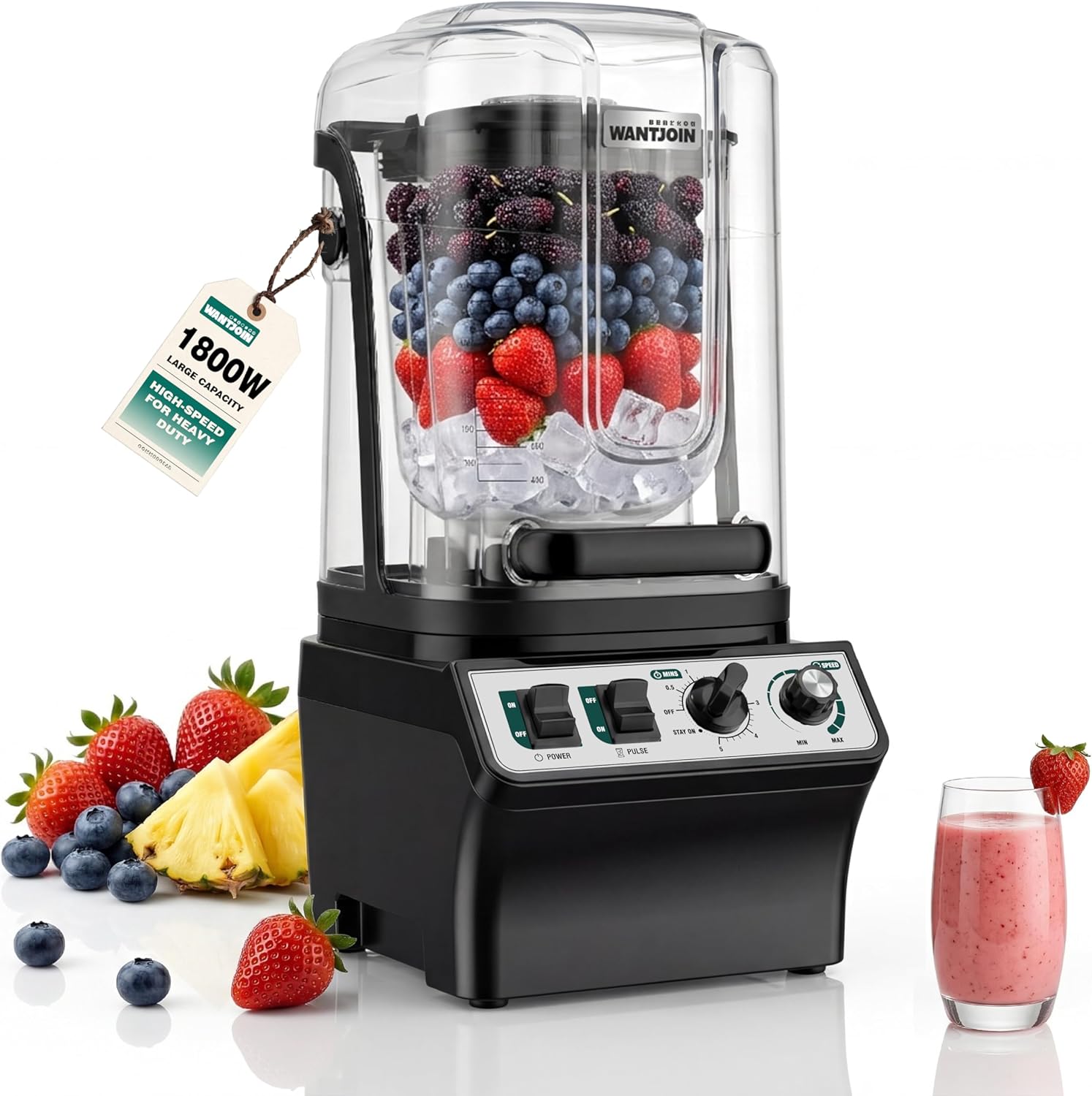
The durability argument for this one comes from people running it in coffee shops and juice bars. One buyer replaced a series of cheaper blenders that failed every few months; this one was still going after nearly two years of commercial use. For heavy daily use, that track record matters more than any spec.
The shield claims roughly 20% noise reduction - less specific than CRANDDI's number, but consistent with what the enclosure design should deliver. Moderate review volume relative to the professional model above. If the main WantJoin is sold out or you want a slightly lower price, this is a reasonable alternative.
We earn a commission on purchases via these links. It does not change the price you pay or our ranking.
Hijolla Soundproof 2200W
Budget entry into shield blender territory. Works under real commercial pressure - but the review record is thin.
Hijolla Soundproof 2200W
Budget entry into shield blender territory. Works under real commercial pressure - but the review record is thin.
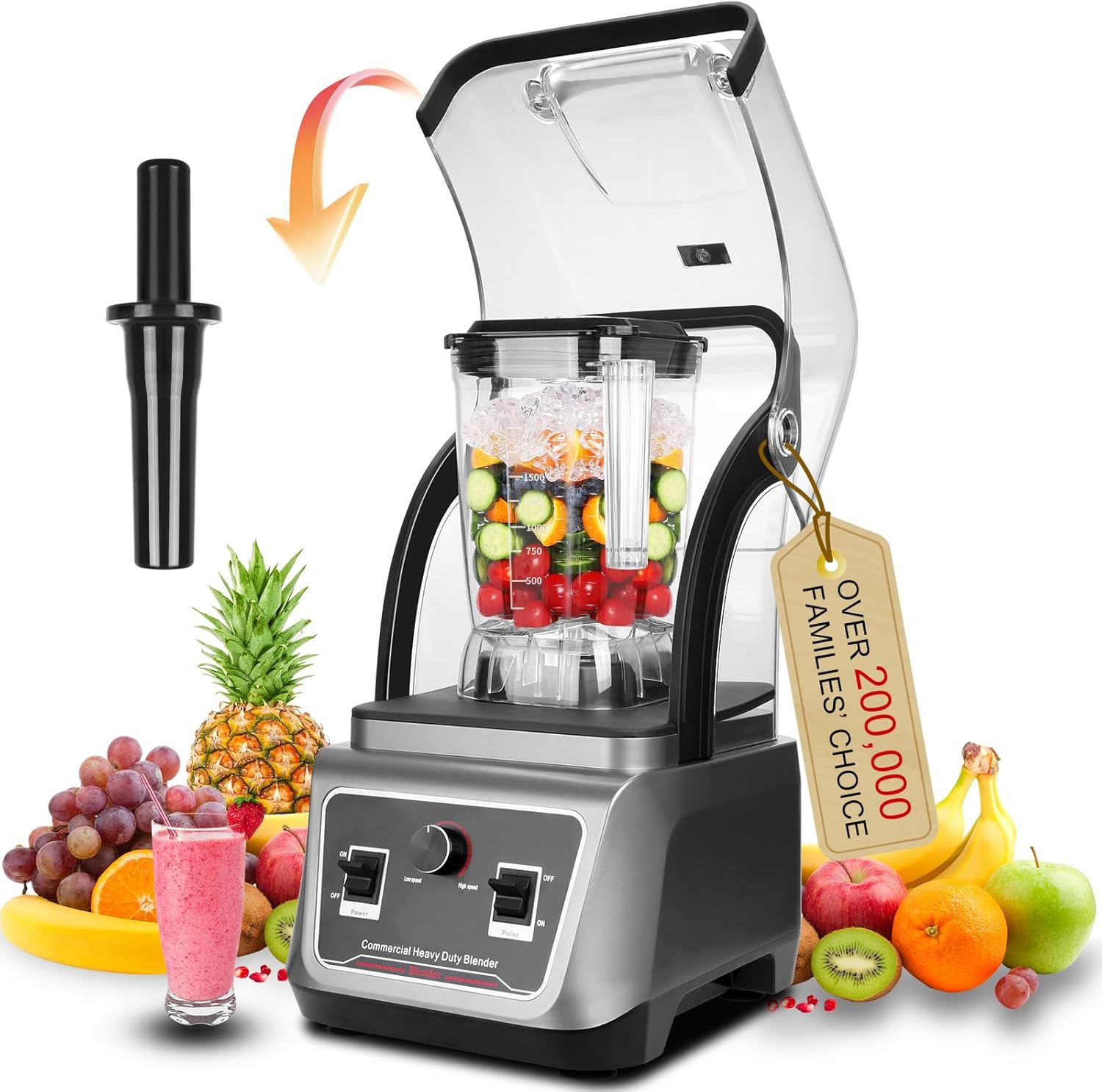
Cafe operators running smoothies, frappes, and boba tea drinks confirm this handles the work. The sound cover reduces noise during busy service hours. For a $180 shield blender, the performance reports are positive.
The caveat is sample size. The buyer history here is thin - not enough to establish a clear pattern either way. One buyer had a failure and received a replacement. Both the failure and the customer service response are useful data points - the company resolved the issue quickly, but the failure itself suggests the long-term track record is not yet established. If you buy this, do it with realistic expectations about what thin data means.
We earn a commission on purchases via these links. It does not change the price you pay or our ranking.
Everyday home blenders
No enclosures, no noise claims. What these have: reliability proven by large buyer populations and honest performance for daily use. They are not quiet. They are the right answer for most people.
Best for Home Use NutriBullet Full-Size 1200W Combo
Not quiet. The best all-around home blender under $150 - the right choice if noise is not your constraint.
NutriBullet Full-Size 1200W Combo
Not quiet. The best all-around home blender under $150 - the right choice if noise is not your constraint.
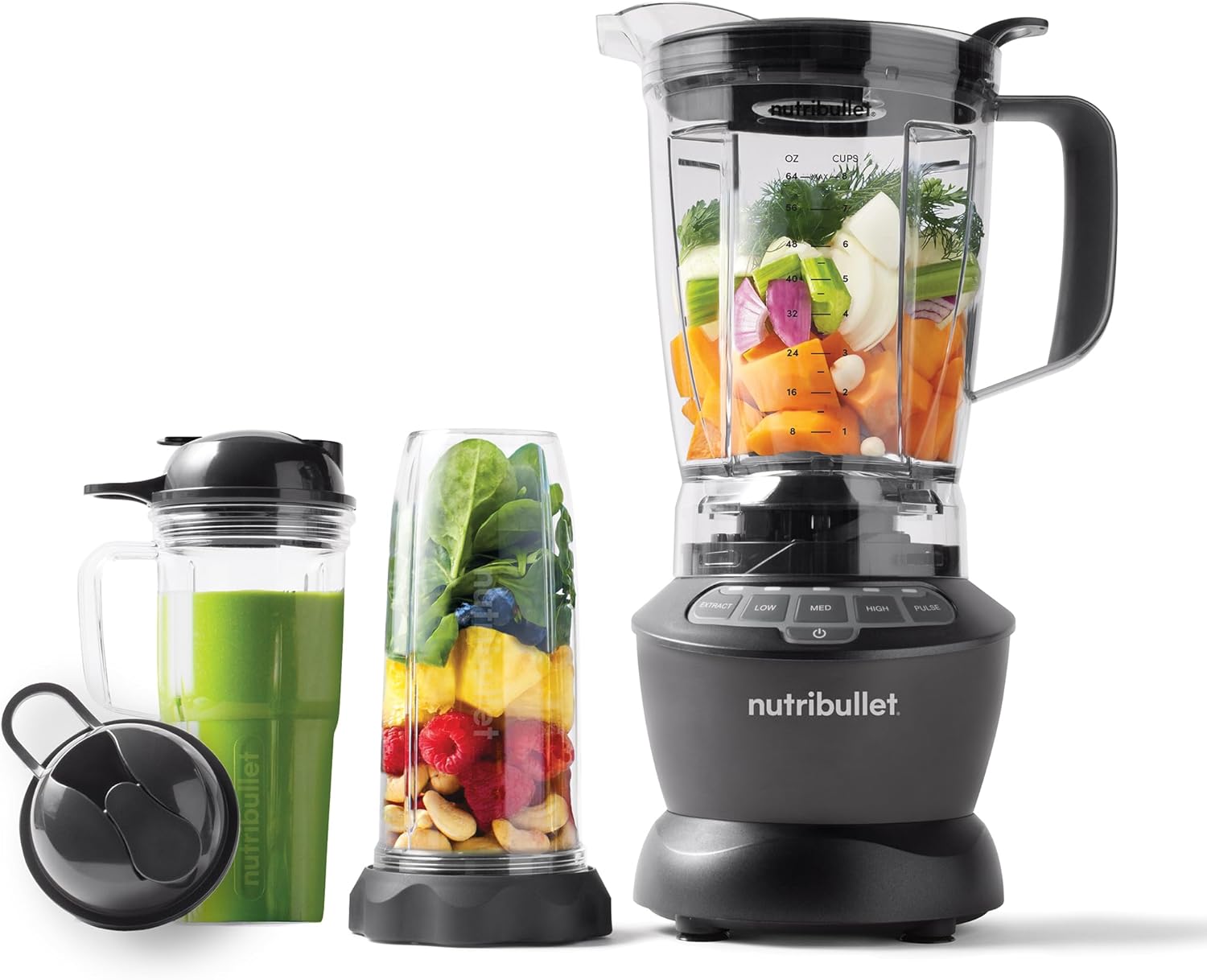
Let's be direct: this blender is not quiet. It has a 1200W open-frame motor in a polycarbonate container, which is exactly as loud as that sounds. If you are buying a blender specifically because you cannot make noise, look at the shield blenders above.
For everyone else, the 1200W NutriBullet is the answer the data supports. When thousands of people have used a product over years, the pattern failures surface clearly. The patterns here are consistent: it blends everything well, the sealing and leakage issues that affected older 600W and 900W models are fixed in this version, and cleanup is fast.
The combo design - 64oz pitcher plus personal cups - is genuinely versatile. Soups, smoothies, nut butters, protein shakes; it handles all of them. The pitcher is dishwasher-safe.
We earn a commission on purchases via these links. It does not change the price you pay or our ranking.
NutriBullet 600W Personal
The personal blender most households already know. Fine for daily smoothies. Not for heavy frozen loads.
NutriBullet 600W Personal
The personal blender most households already know. Fine for daily smoothies. Not for heavy frozen loads.
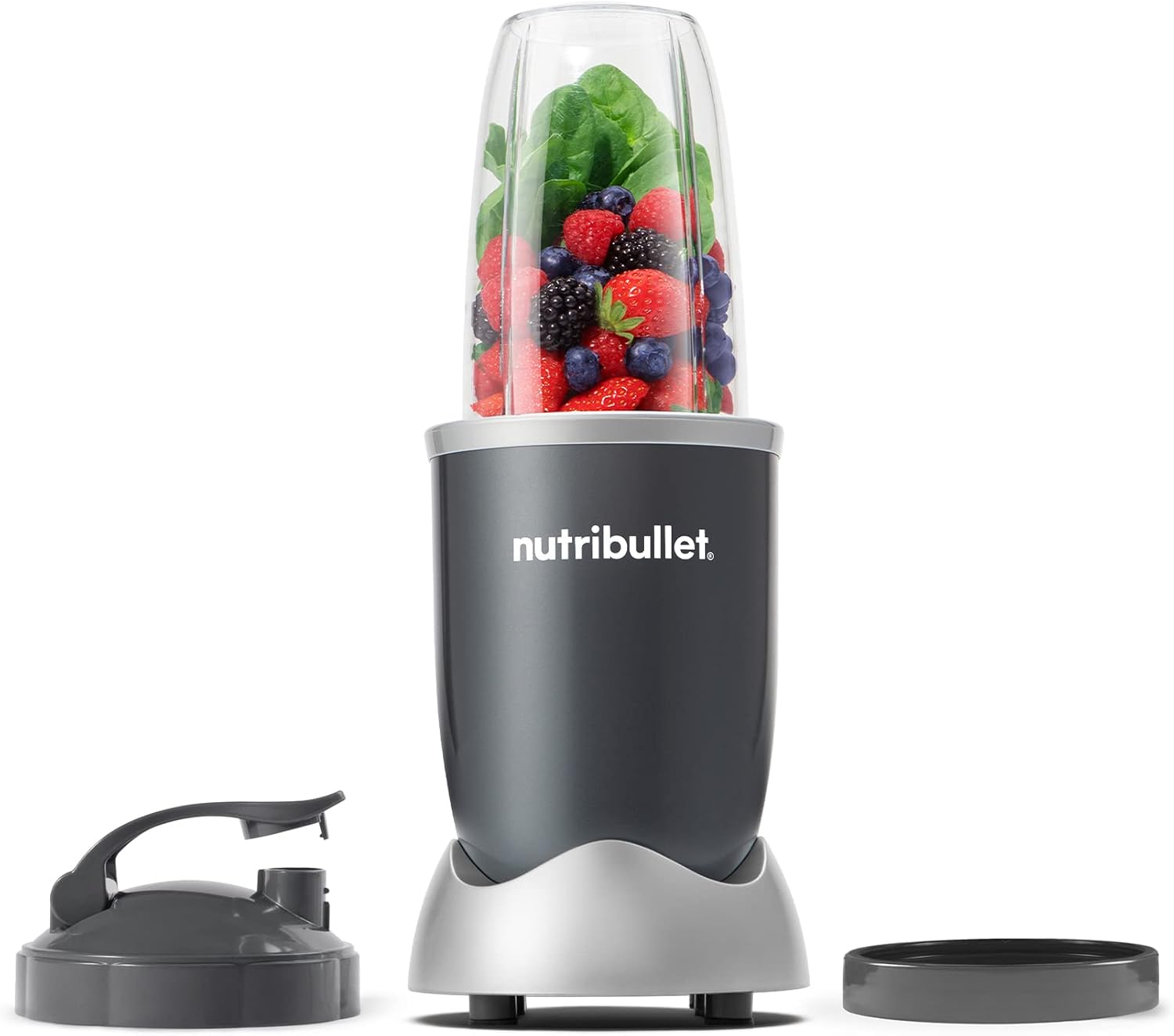
600W puts a ceiling on what you can ask of this blender. Soft frozen fruit, fresh fruit, protein powder, leafy greens - yes. Dense frozen ingredients, dry ice cubes, very hard nuts - no. Work within that range and it delivers reliably for daily morning use.
Buyers switching from cheaper personal blenders note two improvements: cups seal properly (no leaking while blending), and the compact footprint fits the counter without dominating it. The to-go lid design gets consistent criticism for being awkward to drink from directly - functional but not graceful.
We earn a commission on purchases via these links. It does not change the price you pay or our ranking.
Budget Pick Magic Bullet 250W
250W personal blender for light smoothies and shakes. Works. Do not ask it to crush ice.
Magic Bullet 250W
250W personal blender for light smoothies and shakes. Works. Do not ask it to crush ice.
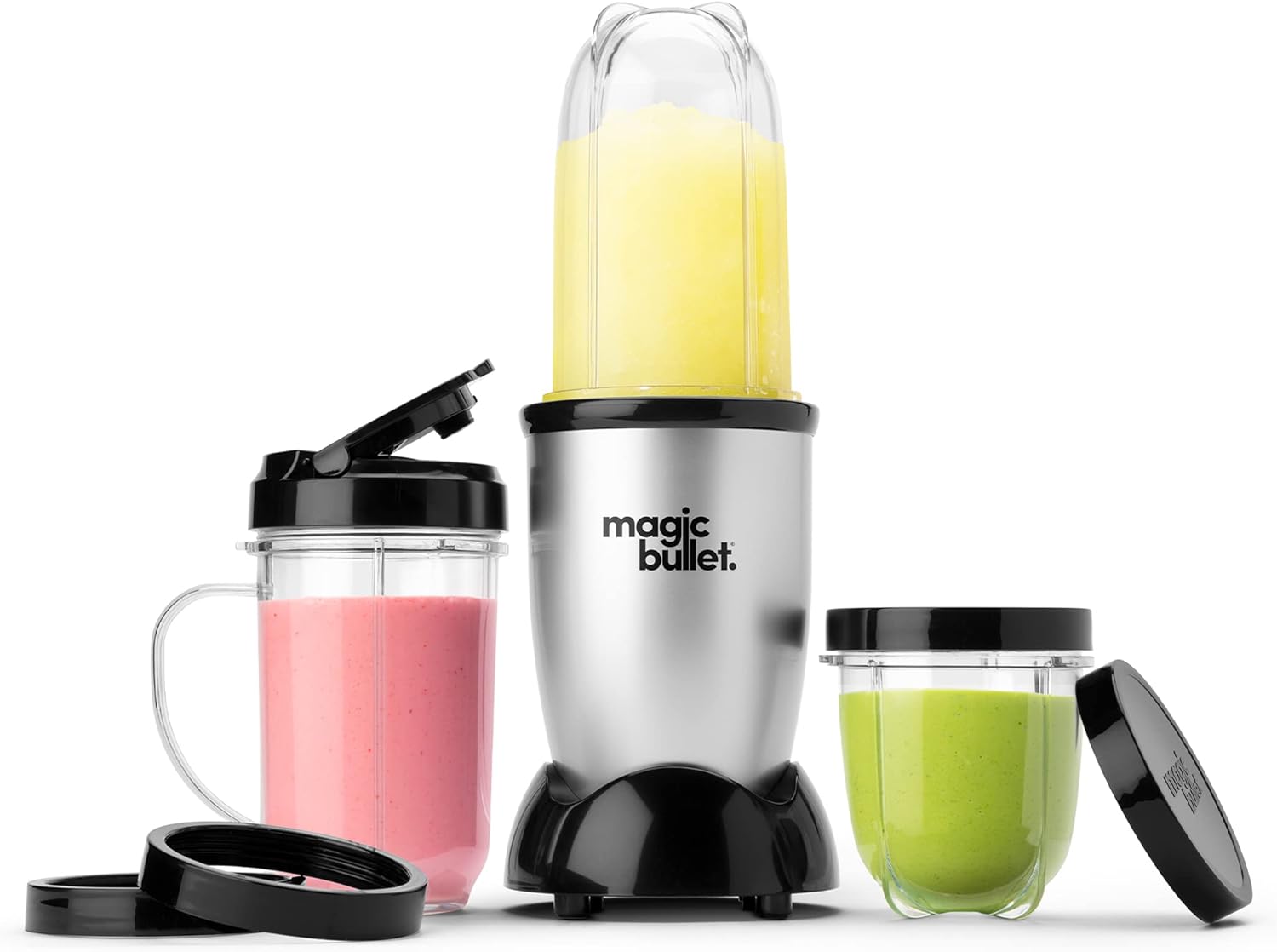
At $40, the Magic Bullet is what it is: an 11-piece light-duty personal blender. For protein shakes made with fresh or room-temperature ingredients, it works without complaint. Compact, fast to clean, easy to store.
The limit to know: one buyer specifically noted a burning smell when grinding ice. That is the motor working past its design point. For blending that stays within its range - soft fruit, leafy greens, powders, yogurt - it handles daily use reliably. The 11-piece set gives you multiple cup sizes and storage lids, which adds practical value at this price.
We earn a commission on purchases via these links. It does not change the price you pay or our ranking.
The outliers
One costs over a thousand dollars and runs in actual smoothie bars. The other costs $475, is excellent at blending, and is loud. Both have devoted buyers. Know what you are buying.
Commercial Standard Vitamix Quiet One
The commercial bar standard for quiet blending. $1,158 is commercial pricing for commercial use.
Vitamix Quiet One
The commercial bar standard for quiet blending. $1,158 is commercial pricing for commercial use.
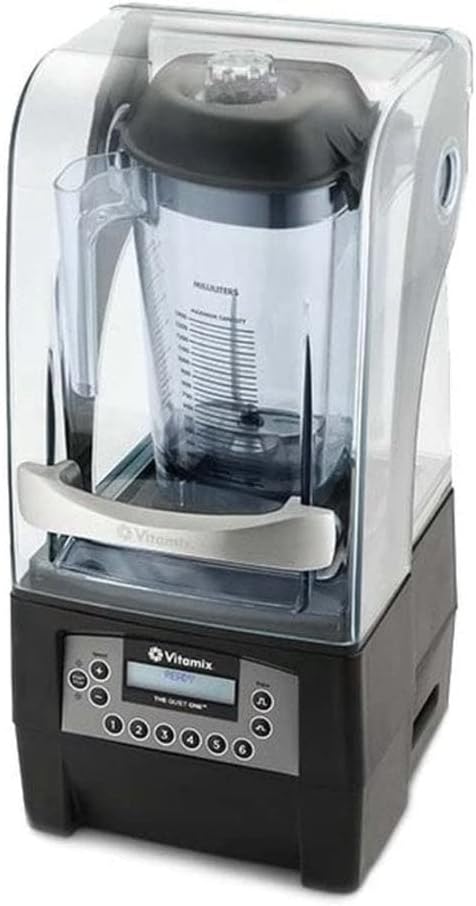
This is the reference point for quiet-with-performance blending. Smoothie bars, coffee shops, hotel lobbies - the Quiet One is what they run when they need to blend in a public space without disrupting the environment. It has been the commercial standard for over a decade.
The mechanism is the same as the WantJoin and CRANDDI above: sound enclosure. What you get for the extra $900: Vitamix build quality, 6 programmed blend cycles, made in the US, and the brand confidence that comes from two decades of commercial deployment.
For home use, the math is hard to justify. The WantJoin and CRANDDI deliver 80% of the result for 15% of the price. The Quiet One makes sense if you run a business, blend at high commercial volume, or simply want the category reference and have the budget. Everyone else can spend $200.
We earn a commission on purchases via these links. It does not change the price you pay or our ranking.
Skip for Quiet Vitamix 5200
Outstanding blender. Genuinely loud. Not a recommendation on a quiet-blenders page - an honest warning.
Vitamix 5200
Outstanding blender. Genuinely loud. Not a recommendation on a quiet-blenders page - an honest warning.
The Vitamix 5200 is the blender the internet recommends as the best. It is. Aircraft-grade stainless blades, self-cleaning, 64oz container, powerful enough to make hot soup from friction alone. Buyers who own one are loyal.
It is also loud. One reviewer who has owned a 5200 for three years and recommends it without hesitation also warns, specifically, about late-night blending and sleeping household members. That is not a complaint about a bad product - it is an honest description of an open-frame 2.2HP motor in a polycarbonate container. That is what loud sounds like.
This card is on the page to name the product you have probably already searched for, and tell you the truth about it. If quiet is your priority, the 5200 is the wrong answer at any price. If performance is your priority and noise is manageable, it is one of the best blenders you can buy.
We earn a commission on purchases via these links. It does not change the price you pay or our ranking.
What actually makes a blender quiet
The enclosure principle
Every blender noise reduction approach that actually works uses the same mechanism: surround the container and motor with a soundproof enclosure. The sound waves hit the enclosure walls, get absorbed or reflected, and do not reach your ears at full intensity.
Commercial bars have done this since the early 2000s. The Vitamix Quiet One and Blendtec Stealth are the references. WantJoin, CRANDDI, and Hijolla have brought the same approach into the $150-$200 home market.
There is no motor technology that makes an open-frame blender quiet. "Low noise motor" as a marketing claim means nothing without an enclosure to contain what the motor produces.
The dB scale in context
Most home blenders operate at 80-90 dB during use, with peaks during ice crushing. Shield blenders typically bring this down to the 65-75 dB range.
- 60 dB: normal conversation
- 65 dB: approximate level of the Vitamix Quiet One (manufacturer spec)
- 70 dB: CRANDDI K90 manufacturer claim; vacuum cleaner at 3 feet
- 75 dB: what "quiet" home blenders typically deliver without enclosure
- 80 dB: typical home blender - food processor, garbage disposal level
- 90 dB: cheap blenders and peak noise during heavy ice crushing
The 10 dB gap between a shield blender and a standard home blender translates to roughly twice the perceived loudness in everyday experience. That is a real difference you can hear.
Load management reduces noise on any blender
Add liquid first, then soft ingredients, then hard frozen ingredients last. Dry ice directly on the blades causes cavitation noise - tiny bubbles forming and collapsing against the blade. Liquid cushions the impact. This applies to every blender, shield or open. It will not turn a loud blender into a quiet one, but it reduces peak noise on all of them.
The counter mat
A silicone anti-vibration mat under the blender base costs $10-15 and reduces the sound the blender transmits into the counter. The counter acts as a sounding board; dampening the transmission at the base reduces the overall noise profile. Cheap improvement on any blender.
Personal blenders are not meaningfully quieter
The Magic Bullet at 250W and the NutriBullet at 600W peak at lower absolute dB because the motors are less powerful. But they are still open-frame motors in plastic cups, and they still make noise. Do not buy a personal blender expecting a noise solution. Buy one because you want single-serve convenience.
Frequently asked
Are Vitamix blenders quiet?
The Vitamix 5200 and similar open-frame models are not quiet. They are loud - reviewers say so directly. The Vitamix Quiet One is quiet, because it has a sound enclosure. The enclosure is the variable, not the Vitamix name.
What is the quietest blender under $200?
WantJoin B07YDNCL3D at $199.99 or CRANDDI K90 at $199.99. Both use soundproof enclosures. CRANDDI has a specific manufacturer claim of under 70 dB. Either is the right answer if you need quiet blending without commercial-grade pricing.
Do blender sound enclosures actually work?
Yes. The mechanism is proven - commercial bars have used it since the mid-2000s. Buyers who switch from open-frame blenders to shield models consistently describe a meaningful difference. It is not silence, but it is a different category of loud.
How loud is a typical blender in decibels?
80-90 dB during operation, with peaks above 90 dB when crushing ice. That is similar to a food processor or garbage disposal. Shield blenders typically operate in the 65-75 dB range - closer to a vacuum cleaner at distance. The 10-15 dB difference is perceptible and significant.