Box Fans · 2026 edition
Quiet box fans that actually work for sleeping (2026)
Box fans sit in a strange category: they're cheap, they're everywhere, and they're marketed as quiet without anyone being required to prove it. The 42 dB claim on the Hurricane box isn't lying, exactly - it's just measured in conditions that have nothing to do with your bedroom at midnight. In practice, low speed is tolerable, medium is noticeable, and high sounds like a 747 at the end of the runway. (One buyer actually said this. We're not making it up.)
We looked at 6 box fans with enough buyer noise data to say something useful. Three of them made the cut. The other three had either too little data (too thin to be meaningful) or were the same product twice. This is a thin page by dBSkeptic standards, and we'd rather tell you that than pad it with fans we can't actually evaluate.
All 3 Picks: What You Need to Know
This is the entire list. If a box fan isn't here, we either don't have enough data to say anything useful, or the noise story doesn't justify the listing. That's the whole editorial standard.
| Product | dB | Type | Price | Badge | Verdict |
|---|---|---|---|---|---|
| Vornado Model 80X High Velocity Box Fan with Kick Stand | No spec | Premium Box Fan | $100 | Quietest Box Fan Pick | Variable speed dials to genuinely low noise. The pick if bedroom quiet is the goal. |
| Hurricane Classic Floor Mount Box Fan w/ 3 Quiet Speeds | 42 dB | Classic Box Fan | $40 | Best Budget Pick | The category workhorse. Fine on low, loud on high. Know what you're getting. |
| Hurricane Classic Floor Mount Box Fan w/ 3 Quiet Speeds | 45 dB | Classic Box Fan | $52 | Same fan as the white. Pay the $12 premium only if the color matters. |
*Manufacturer-claimed, unverified. Buyer experience suggests higher at practical speeds.
The Box Fan Noise Problem
Box fans move air by spinning big blades fast. That is not compatible with silence. The category has a dB measurement problem that makes comparison shopping harder than it should be. Here's what matters.
Why box fan dB claims are unreliable
There's no independent testing standard for consumer fans. Manufacturers measure at 1 meter in anechoic conditions, lowest speed, with no pressure differential. The 42 dB you see on the box was measured in a room that doesn't exist, at a speed you probably won't use, with the fan facing nothing. Real-world dB is consistently higher than claimed.
What to do instead: look for buyer feedback that specifically discusses noise at low speed. The low-speed noise floor is what matters for bedroom use, not the high-speed spec that's the easiest to game with a favorable measurement setup.
The speed-noise relationship
Box fans are loudest on high, most livable on low. If you're buying for sleep, the low-speed noise floor is what matters - not the high-speed spec. Variable speed vs 3-speed: variable lets you find the exact operating point; 3-speed forces you to pick from three noise levels. That difference is the entire story of why the Vornado costs $60 more than the Hurricane.
A fan you can dial to its quietest setting, rather than choosing between "off" and "low" as your two quiet options, is a fundamentally different product.
What causes box fan noise
- Blade turbulence - the "whoosh" you hear. Physics, can't eliminate it. Bigger blades at lower RPM help.
- Motor hum - mechanical noise from the motor itself. Quality varies significantly between cheap and premium fans.
- Vibration and rattle - often fixable. Tighten screws, put a rubber pad under the fan, check that nothing's touching the housing.
- Bearing noise - increases with age. Cheap fans get louder over time as bearings wear out.
dB reference scale for box fans
For bedroom sleep, most people are comfortable up to about 50 dB of consistent white noise. Above that, it becomes intrusive rather than soothing.
What buyers get wrong
The most common mistake: assuming the advertised dB applies at the speed you'll actually use. The 42 dB claim on a Hurricane is measured at the lowest speed with no obstacles. Turn it up to medium or high and the number means nothing. The fan you need depends on the speed you'll run it at - if you're always maxing it out for airflow, the low-speed spec is irrelevant.
Second mistake: not checking return policy before buying. Noise tolerance is personal. What one person calls background hum, another calls intrusive. A good return policy gives you an out if the noise doesn't work for your space.
If You Actually Need Quiet
One fan on this page earns the quiet label with evidence behind it. Variable speed control is what separates it from the 3-knob commodity market.
Quietest Box Fan Pick Vornado Model 80X Box Fan
Variable speed dials to genuinely low noise. The pick if bedroom quiet is the goal.
Vornado Model 80X Box Fan
Variable speed dials to genuinely low noise. The pick if bedroom quiet is the goal.
The key differentiator is the variable speed control - 99 settings means you can find the lowest noise floor that still moves air.
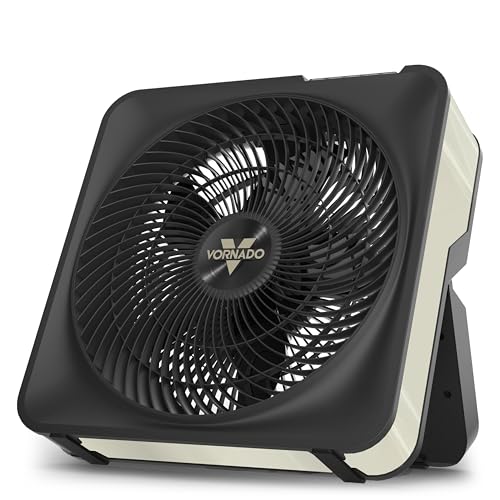
No manufacturer dB spec exists for this model - the noise data here comes entirely from buyer reports, not spec sheets. Buyers running it for sleep or as a DIY air purifier motor confirm low speeds are genuinely quiet. At speeds 10-40 of 99, those using it as a DIY purifier motor report it stays in the background. Bedroom users say it works well for sleep without being intrusive at lower settings.
Most box fans give you three jumps: off, low, medium, high. The Vornado lets you find the exact point where airflow and quiet intersect. That's the premium you're paying for - not silent operation, but the ability to dial down to the quietest setting that still does the job.
- 99-speed variable control - find your exact quiet/airflow balance
- Built-in shroud - unusual for a box fan, praised by DIY air purifier builders
- Kick stand adjusts airflow angle - practical detail most box fans lack
- 5-year warranty - notable for a category where most products are disposable after 2-3 seasons
At $99.99, it costs 2.5x the Hurricane. That premium buys variable speed and durability, not whisper-quiet performance. It's quiet relative to box fans at low speeds - that's a low bar, and even this fan gets loud when you turn it up. The quiet zone exists at low-to-medium settings only; some buyers were surprised by how loud it runs at high speed.
We earn a commission on purchases via these links. It does not change the price you pay or our ranking.
Budget Box Fans: What to Expect
Hurricane's Classic has more reviews than almost any box fan on Amazon. The noise story is mixed by design - these move serious air, and air movement makes noise.
Best Budget Pick Hurricane Classic White Box Fan
The category workhorse. Fine on low, loud on high. Know what you're getting.
Hurricane Classic White Box Fan
The category workhorse. Fine on low, loud on high. Know what you're getting.
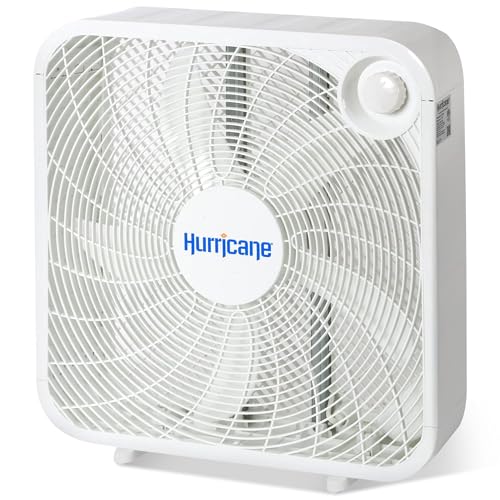
The 42 dB claim is a manufacturer spec with no independent verification. For a fan moving 2400 CFM at 1100 RPM, the physics of 42 dB are optimistic. The real story: low speed is tolerable for most purposes, medium and high are clearly loud. That's not a failure - that's what box fans do.
The honest framing: Extensive buyer feedback means we actually know something here. Noise discussion is mixed for a specific reason - low speed is acceptable, medium and high are loud. That's not a flaw; it's the physics of moving 2400 CFM.
Practical design details: Cord storage pocket in the housing, removable front grill for cleaning. These are functional, not marketing.
Durability concerns: Handle and housing can crack. Worth flagging for anyone who expects it to last years.
A buyer using it as a bedroom window exhaust fan found the airflow strong even on low. Another was frank that low speed was louder than their old fan on high - the airflow/noise tradeoff is real and documented. $39.99 is the price anchor for the category. If budget is the constraint, this is the pick with the most data behind it.
We earn a commission on purchases via these links. It does not change the price you pay or our ranking.
Hurricane Classic Black Box Fan
Same fan as the white. Pay the $12 premium only if the color matters.
Hurricane Classic Black Box Fan
Same fan as the white. Pay the $12 premium only if the color matters.
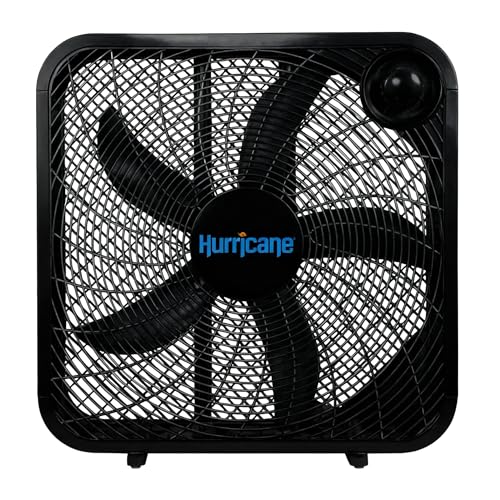
This is a color variant of the white Hurricane - same motor, same design, same review base. The 45 dB spec vs 42 dB on white is either a rounding difference or measurement methodology difference, not a real performance gap. It costs $12 more for the black finish.
The 45 vs 42 dB difference between the black and white models isn't evidence the black is louder - same fan, same buyer experience, likely a measurement rounding artifact. If black fits the room, that's the math. It's the white Hurricane in black.
We earn a commission on purchases via these links. It does not change the price you pay or our ranking.
Frequently Asked Questions
What is the quietest box fan?
Vornado 80X gets closest in this category via variable speed, but no box fan is truly quiet. The honest answer: the quietest is the one you can run on its lowest setting and still get useful airflow. Direct buyer feedback carries more weight than manufacturer specs here. Box fans are not designed for silence - they're designed to move large volumes of air cheaply.
How many decibels is a box fan?
Claimed specs range 42-65 dB but are typically unverified. Real buyer experience puts most 20-inch fans at 50-60 dB on medium. Genuinely quiet operation is possible only on low speed, and the low-speed floor varies significantly by model. If you see a 42 dB claim, read it as "42 dB at the lowest speed in ideal conditions," not as the noise level you'll experience in practice.
Is a box fan good for white noise for sleeping?
Yes, with caveats. The consistent motor hum works well for masking background noise. Run it on low to keep dB below 50 at your bed. Too loud is counterproductive - you want masking, not a second noise problem. The Vornado's variable speed makes this easier to dial in; 3-speed fans give you fewer options to find the right level.
Can I make a box fan quieter?
Yes, practical tips: rubber mat or pad underneath (reduces vibration transfer to the floor), tighten all screws (rattle is often loose housing), clean the blades (dust imbalance causes wobble and noise), run at lowest adequate speed (this is the biggest factor). Most box fan noise complaints come from running the fan at a higher speed than necessary.
Box fan vs tower fan for noise?
Tower fans often measure quieter (some below 30 dB) but move less air per dollar. If airflow volume matters, a box fan on low is often quieter than a tower fan at equivalent CFM output. Box fans are blunt instruments - they move a lot of air with simple mechanics. Tower fans are more refined but cost more for comparable airflow. The right choice depends on whether you prioritize absolute quiet or maximum airflow at a budget price point.
Our last word
If you made us choose
- Bedroom quiet is the goal
- Vornado Model 80X at $99.99. Variable speed gives you 99 chances to find the lowest noise floor that still moves air. No other box fan offers that control.
- Budget is the constraint
- Hurricane Classic White at $39.99. Extensively reviewed, noise behavior is well documented, low speed is tolerable. Just know that medium and high are loud - this isn't a quiet fan pretending to be budget, it's a budget fan with predictable noise characteristics.
- You need black instead of white
- Hurricane Classic Black at $51.99, but only if the color actually matters to you. It's the same fan as the white for $12 more. Don't pay the premium unless the aesthetics justify it in your space.
We update these picks when the underlying data moves. Three products isn't thin by accident - it's the honest count of box fans with enough noise data to recommend.