Dehumidifiers · 2026 edition
Quietest dehumidifiers for every room (2026)
Every dehumidifier manufacturer will tell you their unit runs quietly. The spec sheet says 40 dB, 45 dB, sometimes an optimistic 28. Here's what those numbers don't tell you: they're measured in a lab, under controlled conditions, in sleep mode, at one meter. Put the machine in your bedroom at night and the number goes up. Add reflective walls and a closed door, and you've just described the inside of a drum.
There's also a divide no other dehumidifier page explains: semiconductor units and compressor units don't just differ in capacity. They sound completely different. A semiconductor unit is a fan and nothing else - steady, predictable, genuinely quiet. A compressor unit has a refrigerant cycle that surges on, runs, and cuts off. Same average dB on paper. Different experience at 2 AM.
We analyzed 16 dehumidifiers across both types and kept 11. Some are here as picks. One is here as a durability benchmark. The answer to "which one should I buy" depends almost entirely on the size of your humidity problem - not the dB claim on the listing.
All 11 picks: at a glance
Semiconductor units first, then compressors. Noise tier is our editorial judgment based on buyer feedback - not the manufacturer's sleep-mode claim. Where no verified spec exists, we say so rather than invent a number.
| Product | dB | Type | Price | Badge | Verdict |
|---|---|---|---|---|---|
| KeepGlad Dehumidifier | 28 dB (sleep) | Semiconductor | $60 | Quietest in Class | Humidity display sets it apart. The bedroom pick. |
| Dehumidifier | <30 dB (sleep) | Semiconductor | $55 | Small-room workhorse. Damp bathroom cleared in hours. | |
| Dehumidifier | <30 dB (sleep) | Semiconductor | $60 | Temp and humidity display. Buyers feel the air change in days. | |
| NineSky Dehumidifier | Not specified | Semiconductor | $60 | Unusually strong quiet signal for the price. True silence reports. | |
| ToLife Dehumidifier for Home | <30 dB (sleep) | Semiconductor | $60 | Best-Selling Semiconductor | The category benchmark by volume. Buyers forget it's on. |
| Dehumidifier | Not specified | Semiconductor | $60 | RV-validated. Low steady hum, not silence. No display. | |
| FreAire 2500Sq.Ft Dehumidifier | 40 dB | Compressor | $140 | Best Mid-Size Pick | Compressor that earns its quiet claim. 34 pints per day. |
| 2500 Sq.Ft Dehumidifier for Basement with Drain Hose Max 34 Pints | Not specified | Compressor | $140 | The basement workhorse. Audible but effective. | |
| 1500 Sq. ft Dehumidifier for Basement and Large Room | Not specified | Compressor | $120 | Quieter than expected for a compressor at this price. | |
| hOmeLabs Dehumidifier | Compressor | Compressor | $240 | 8-Year Track Record | Eight years and still running. The durability story. |
| hOmeLabs Dehumidifier | 38 dB | Compressor | $190 | Smaller hOmeLabs. Fan-level noise with Wi-Fi control. |
Bedroom dehumidifiers (semiconductor, under $75)
Peltier units have no compressor. The noise floor is the fan speed and nothing else - no cycling, no startup surge, no refrigerant thump. The trade-off is capacity: these handle one room, not a basement. Expect to empty the tank daily in a genuinely humid space.
Quietest in Class KeepGlad Dehumidifier
Humidity display sets it apart. The bedroom pick.
KeepGlad Dehumidifier
Humidity display sets it apart. The bedroom pick.
It knows the humidity in real time. At 28 dB in sleep mode, buyers have nothing to complain about except the tank needs emptying.
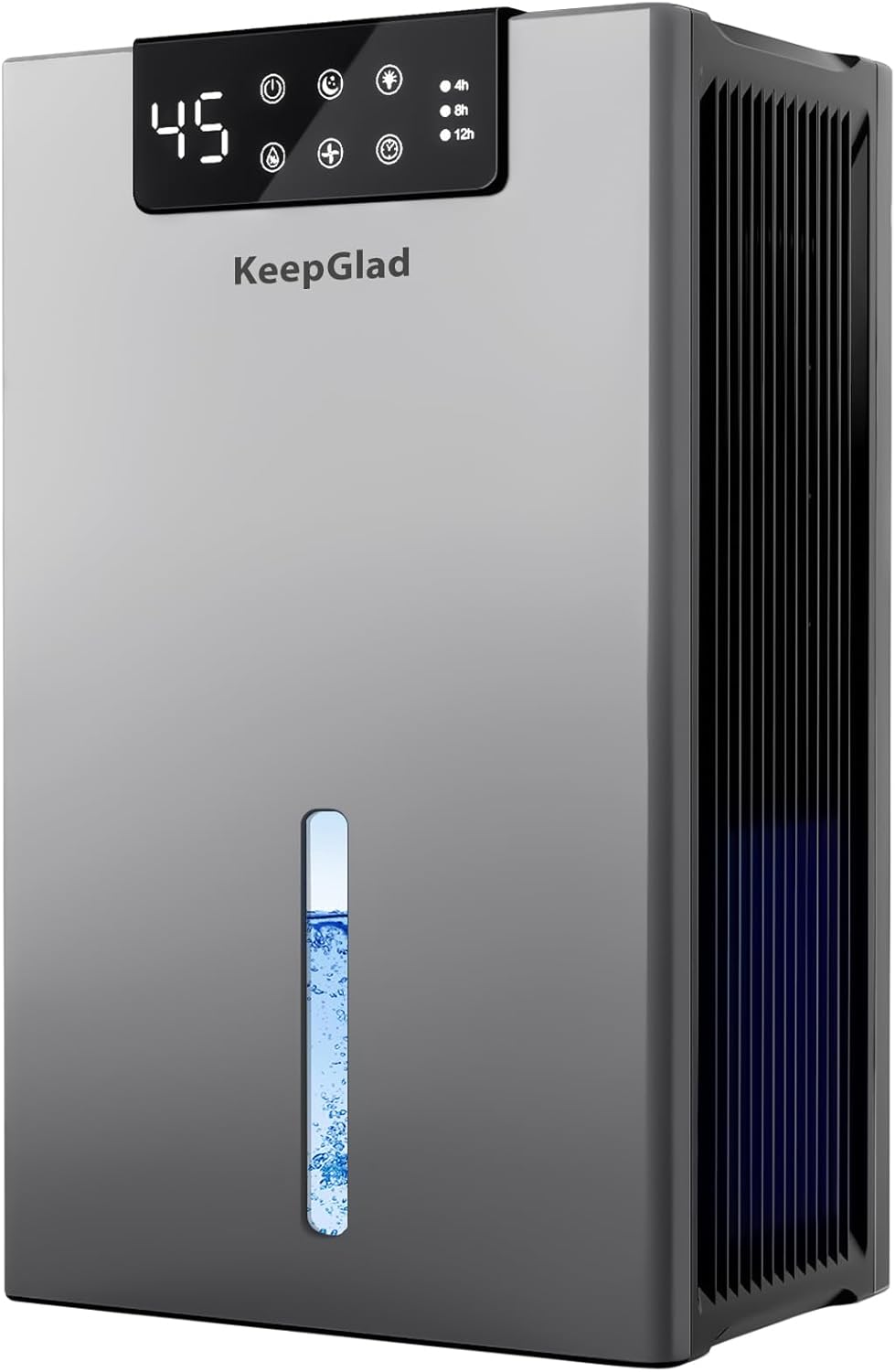
28 dB in sleep mode. That's quieter than most white noise machines. It's possible because this is a semiconductor unit - a Peltier element cools a plate, moisture condenses on it, and the only moving part making noise is the fan. No compressor to kick on at midnight.
The humidity display is what sets it apart from the four other semiconductor units in this segment. At $60, most of them give you a button and an on/off state. This one tells you the actual humidity percentage, in real time. Buyers who've tried units without it describe the difference as going from flying blind to knowing when the job is done.
Who this is for: Light sleepers in a humid bedroom, bathroom, or closet up to 300 sq ft. Anyone who's tried a compressor unit and couldn't tolerate the cycling at night.
The honest caveat: 1,000 sq ft is the AHAM standard rating in controlled conditions. In a real 300 sq ft humid bedroom, you're at the comfortable ceiling. In a wet basement, this won't make a dent. Match the tool to the problem.
Three fan speeds, washable filter, 3-liter tank. Solid buyer feedback from people with bathroom mold and humidity issues who describe the air noticeably changing within 48 hours.
We earn a commission on purchases via these links. It does not change the price you pay or our ranking.
ZUKBEN Dehumidifier
Small-room workhorse. Damp bathroom cleared in hours.
ZUKBEN Dehumidifier
Small-room workhorse. Damp bathroom cleared in hours.
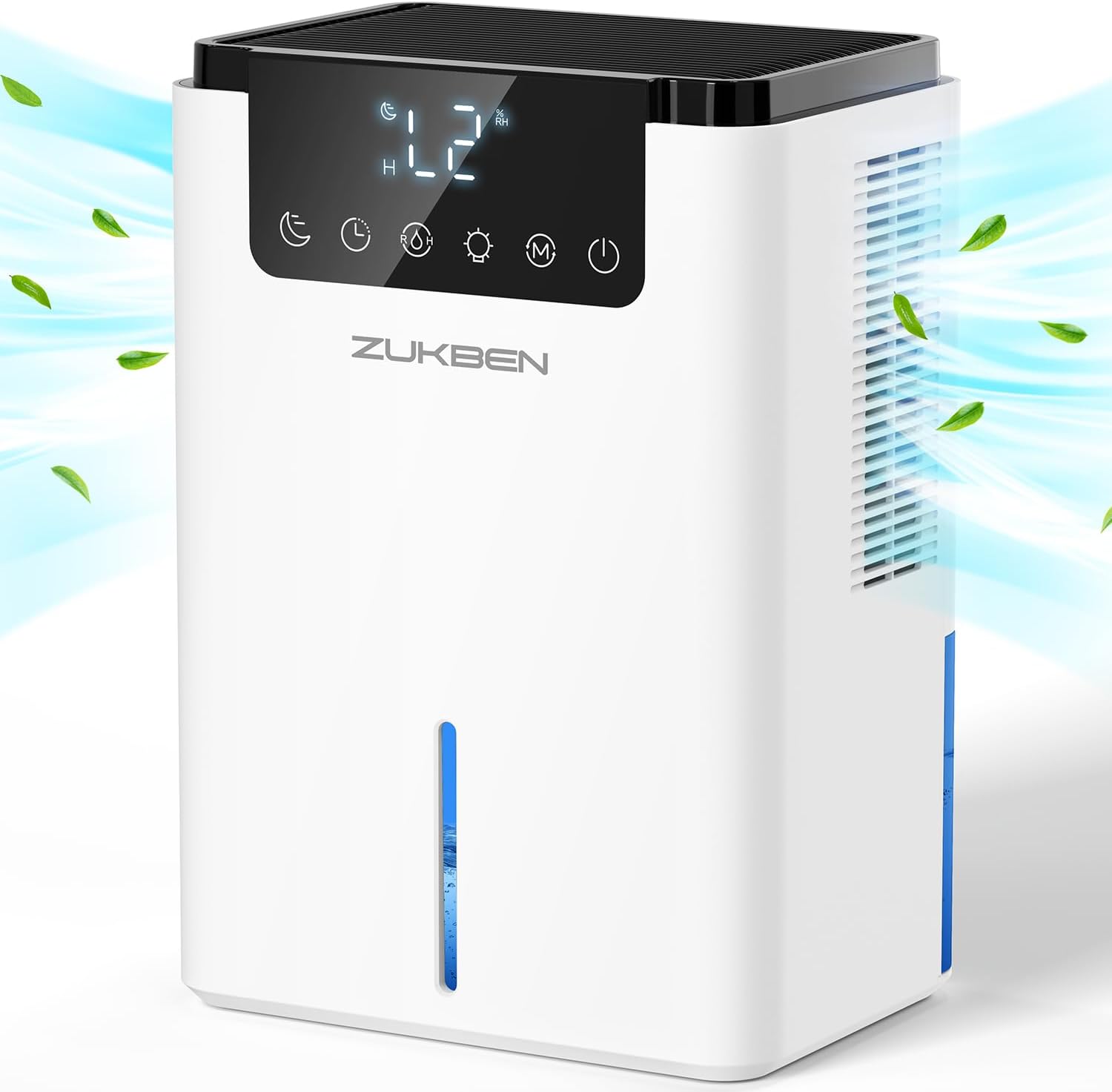
The bathroom dehumidifier pick. Buyers running it after showers see humidity drop from the mid-70s into the mid-50s within a few hours. The tank is clear-sided, so you can see the water level without opening anything. In a high-use bathroom, that means knowing at a glance whether you need to empty it before bed.
Two things worth noting here that most competitors skip: the auto-defrost function (activates below 35°F, useful if this lives in a garage or unheated space) and the 12-hour timer. Set it running before a humid evening, let the timer cut it at midnight, wake up to dry air without thinking about it. Buyers describe exactly this pattern as the feature they reach for most.
Sleep mode gets it to under 30 dB. Normal operation is a light fan hum. One buyer described running it in a bathroom, measuring with a separate hygrometer, and watching the reading drop consistently over two weeks. That's what this costs $55 to do.
We earn a commission on purchases via these links. It does not change the price you pay or our ranking.
PSOS Dehumidifier
Temp and humidity display. Buyers feel the air change in days.
PSOS Dehumidifier
Temp and humidity display. Buyers feel the air change in days.
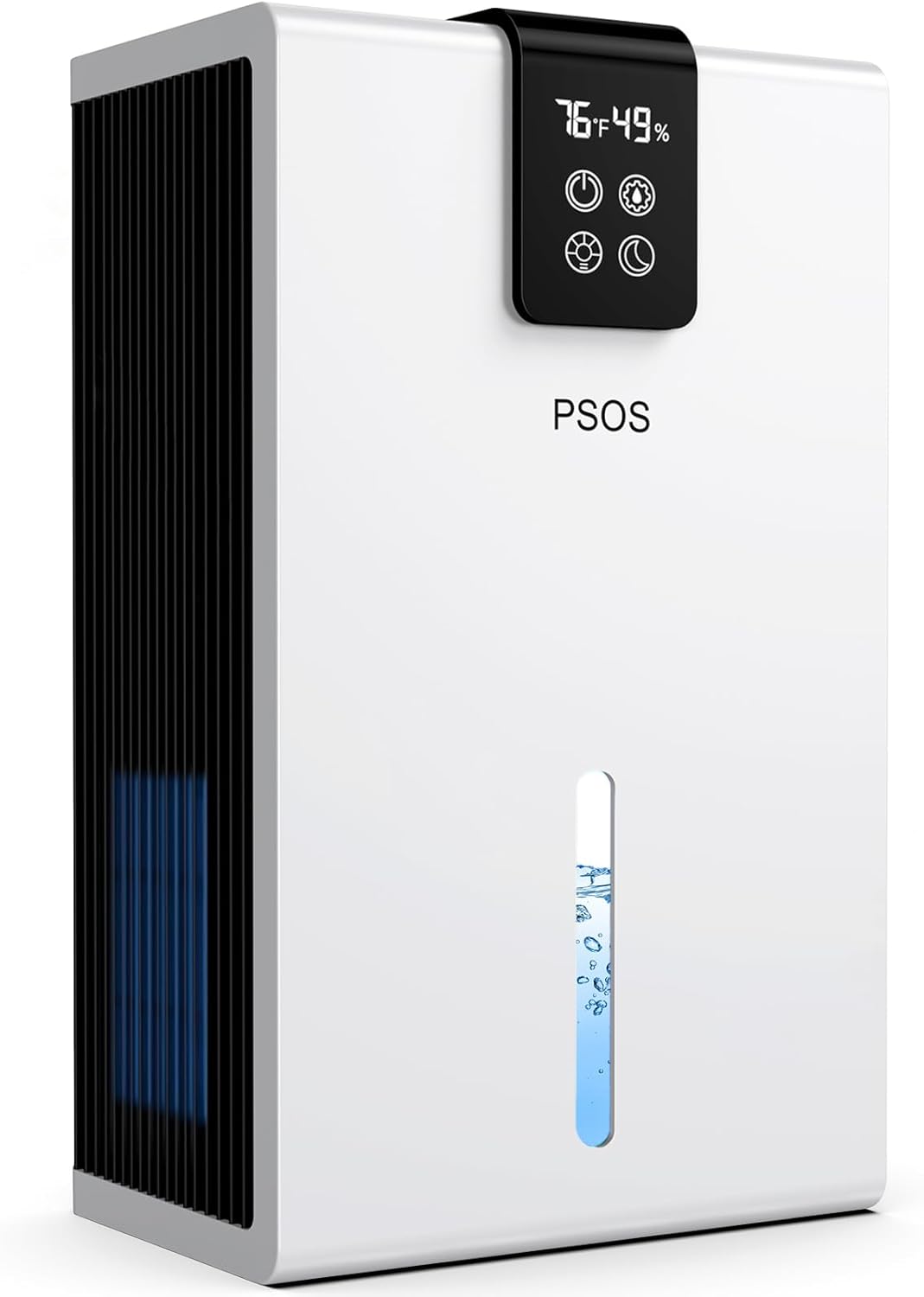
The dual display - temperature and humidity - is the detail that puts this ahead of most in the segment. Temperature matters for understanding why the dehumidifier works harder on some days. Knowing both numbers at a glance is genuinely useful in a damp bedroom.
Buyers across a wide range of humidity climates describe noticeably easier breathing within the first few days of use. That's the actual outcome people are buying this for - not the spec sheet, but the experience of waking up in a room that doesn't feel like a sauna. The PSOS delivers on that consistently.
One honest note: the built-in humidity sensor can read a few points differently from a separate hygrometer. This is normal for integrated sensors, not a defect. If precision monitoring matters, keep a $10 external meter as a reference. Auto-defrost activates at 41°F, the same floor as the ZUKBEN. Under 30 dB in sleep mode.
We earn a commission on purchases via these links. It does not change the price you pay or our ranking.
NineSky Dehumidifier
Unusually strong quiet signal for the price. True silence reports.
NineSky Dehumidifier
Unusually strong quiet signal for the price. True silence reports.
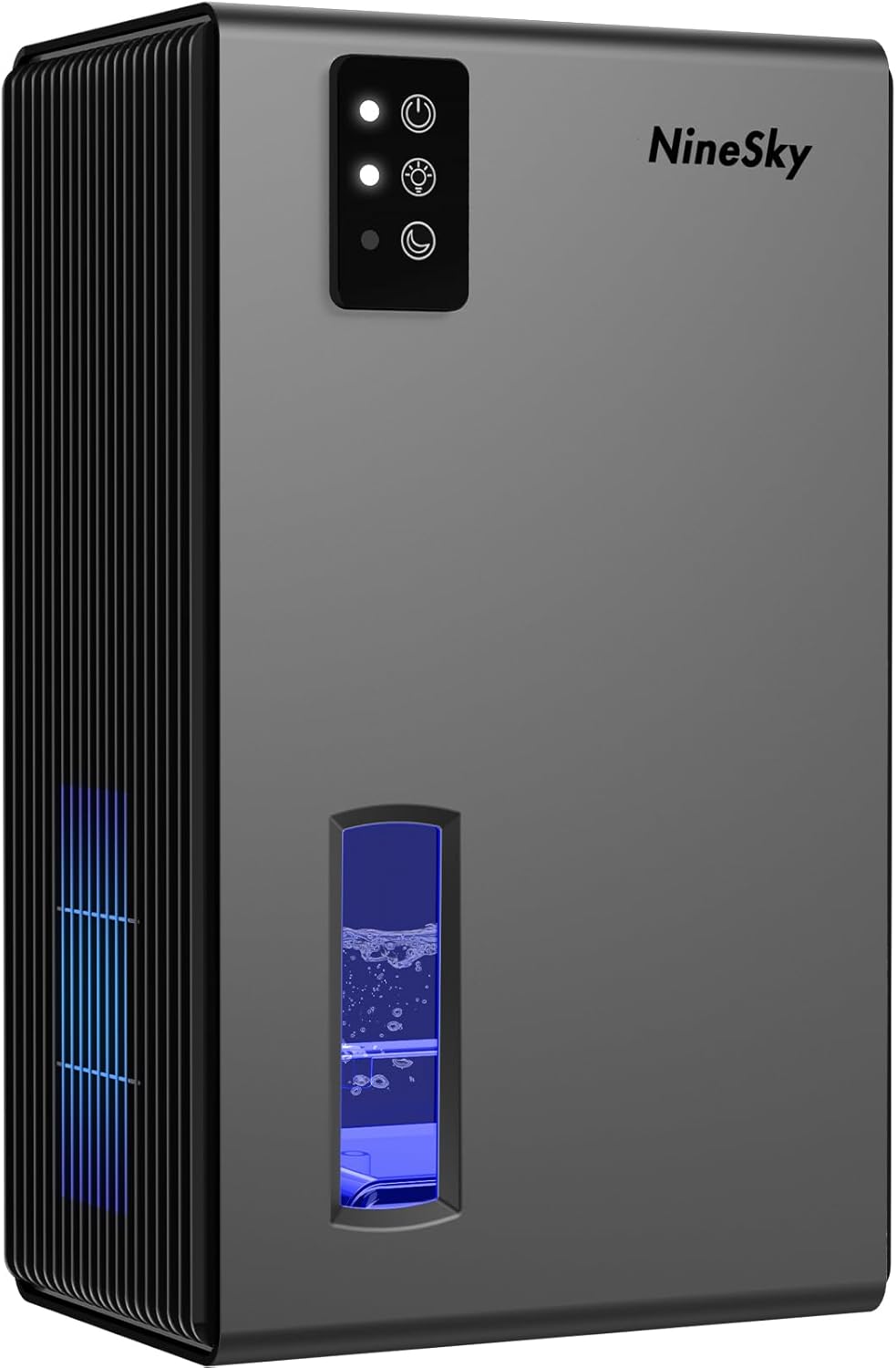
Something interesting happened in the NineSky buyer data: multiple people in different markets, writing in different languages, independently used the phrase "completely silent." For a $60 semiconductor unit, that's an unusually clean noise signal. Most units at this price get "quiet enough" or "don't notice it." Not "completely silent."
NineSky doesn't publish a dB spec for normal mode, only the night mode claim. So we're working from buyer signal, not a number. The signal is good. The compact footprint - 8.3 by 5.7 by 14 inches - fits on a bathroom shelf where most competitors don't. Night mode shuts off all the LED lighting, which matters for anyone who sleeps in total darkness.
The caveat: NineSky is a newer brand with less than two years of review history in this category. There's no long-term durability signal yet. Buy it somewhere with a reasonable return window, and you're taking a sensible risk at this price.
We earn a commission on purchases via these links. It does not change the price you pay or our ranking.
Best-Selling Semiconductor ToLife Dehumidifier
The category benchmark by volume. Buyers forget it's on.
ToLife Dehumidifier
The category benchmark by volume. Buyers forget it's on.
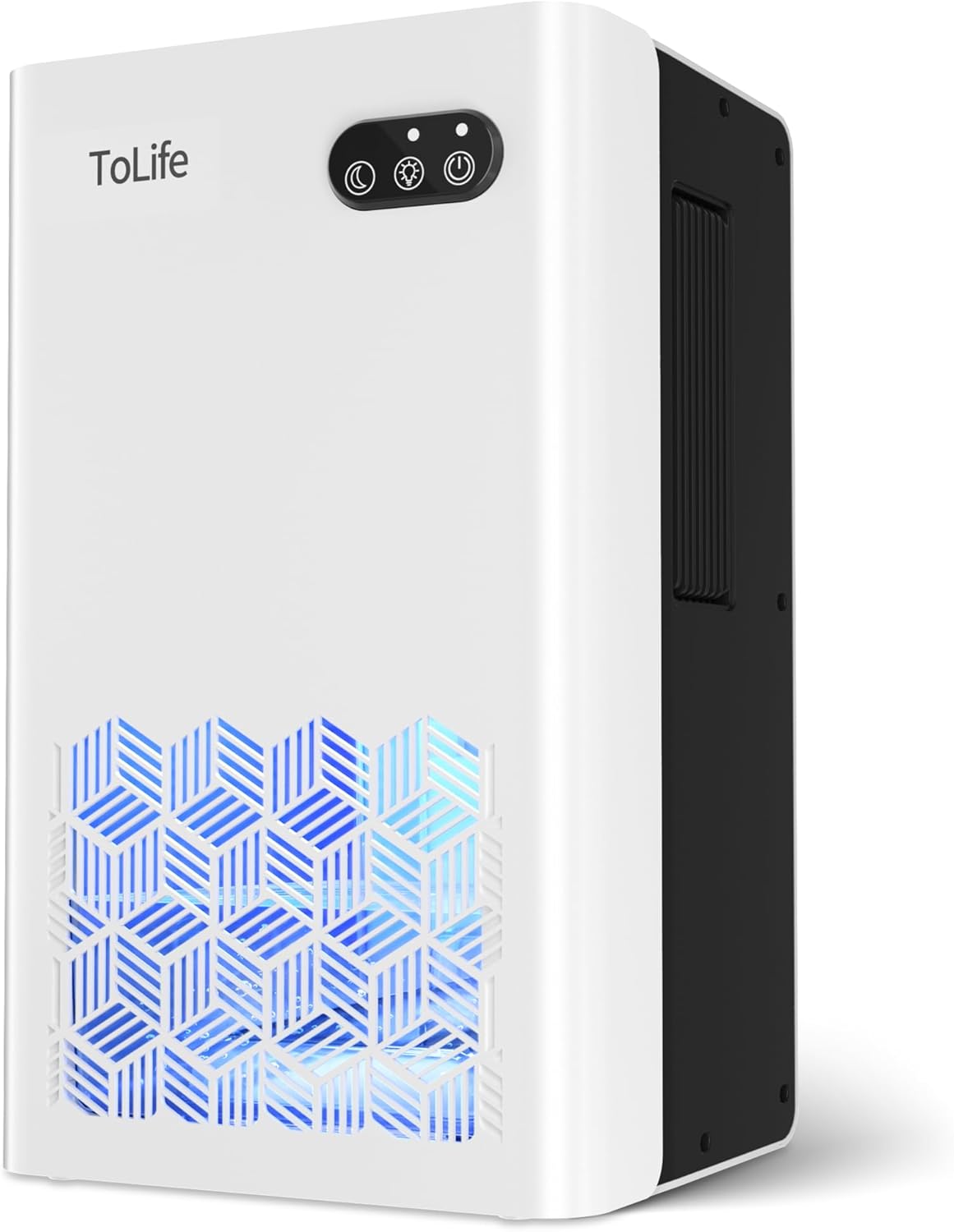
More verified buyer feedback than any other semiconductor unit on this page. That depth matters when the question is "does this thing actually work as described." With enough reviews, the outliers wash out and the real performance pattern emerges. The ToLife pattern: quiet operation, consistent moisture removal, buyers dealing with bathroom mold who see genuine improvement over several weeks.
The "forget it's on" pattern shows up repeatedly in the feedback - specifically in sleep mode. Worth clarifying: on high mode, the ToLife is audibly present. It's a fan running at speed. Sleep mode drops both the fan speed and the noise floor significantly. If you're using this in a bedroom, use sleep mode. Normal mode is for daytime runs when you want faster moisture removal.
No humidity display, no temperature sensor. This is the basic version - two modes, auto-shutoff, drain hose port, seven-color lights. If the KeepGlad's humidity display is worth $1 more to you, get that. If you just want the most battle-tested option in the category, this is it.
We earn a commission on purchases via these links. It does not change the price you pay or our ranking.
BEDRED Dehumidifier
RV-validated. Low steady hum, not silence. No display.
BEDRED Dehumidifier
RV-validated. Low steady hum, not silence. No display.
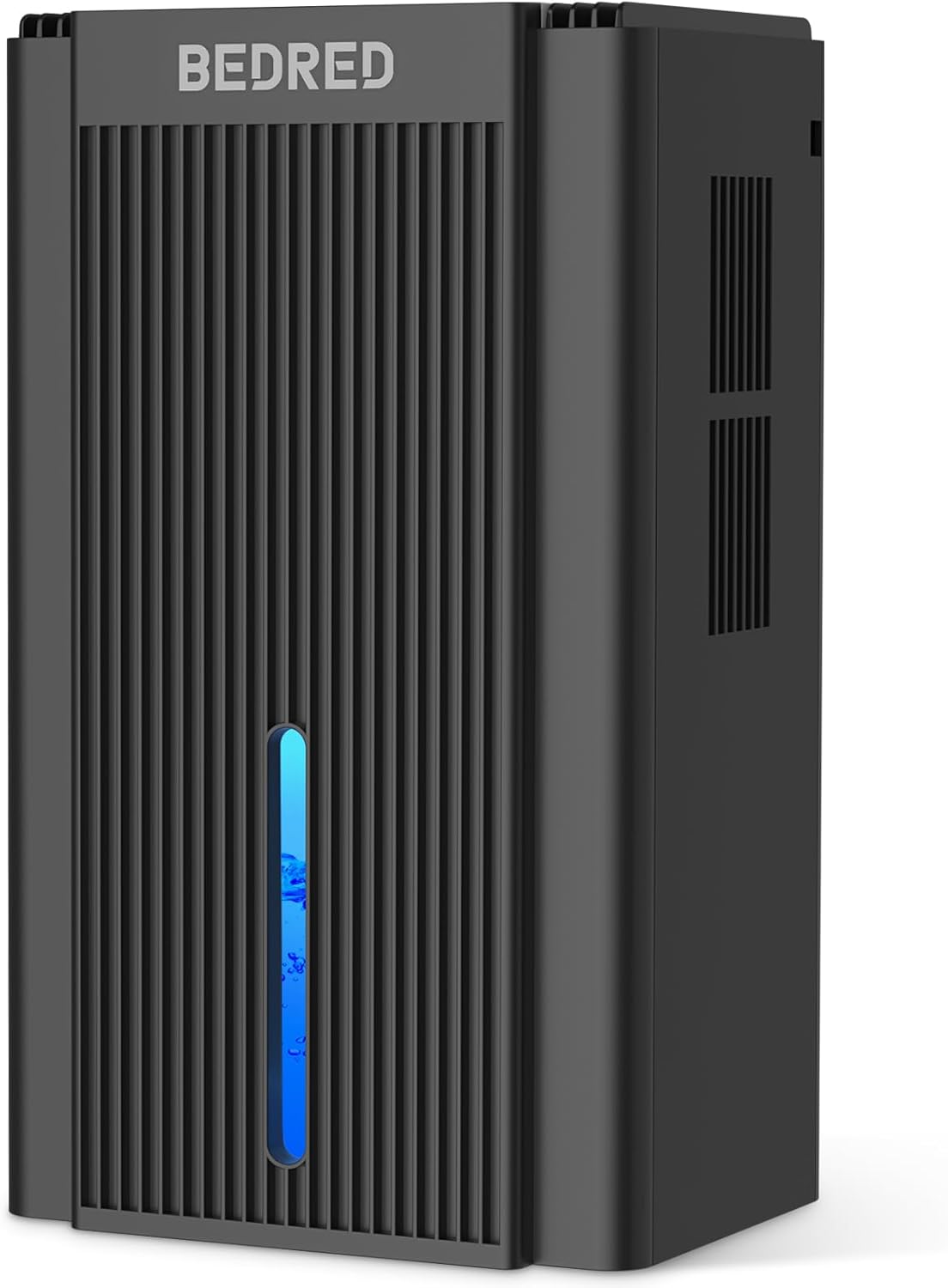
The RV pick in this segment. Several buyers running it in 27-foot trailers and fifth-wheels describe exactly what you'd want to know: lightweight, small footprint, fits on a counter without using usable space, auto-shutoff works every time. For an RV, those aren't nice-to-haves - they're requirements.
The noise description from multiple buyers is "low steady hum." Not silent. Not disruptive. A steady hum. Sleep mode dims the lights and reduces the fan somewhat, but this isn't the quietest unit in the segment. If you're comparing it to the KeepGlad or NineSky on bedroom quietness, those win. If you're comparing it on portability and mobile use, the BEDRED is the right conversation.
No humidity display. You won't know the current RH without a separate meter. Available in black or white - same product, same performance, different color.
We earn a commission on purchases via these links. It does not change the price you pay or our ranking.
Mid-size compressor dehumidifiers ($120-$170)
Compressor units pull 20-34 pints a day and handle rooms semiconductor units can't touch. The noise floor is higher, but in auto mode these cycle off when the target humidity is reached - which means periods of silence between cycles, not constant running.
Best Mid-Size Pick FreAire 2500 Sq Ft Dehumidifier
Compressor that earns its quiet claim. 34 pints per day.
FreAire 2500 Sq Ft Dehumidifier
Compressor that earns its quiet claim. 34 pints per day.
A 40 dB compressor is what you buy when the semiconductor units have stopped being enough.
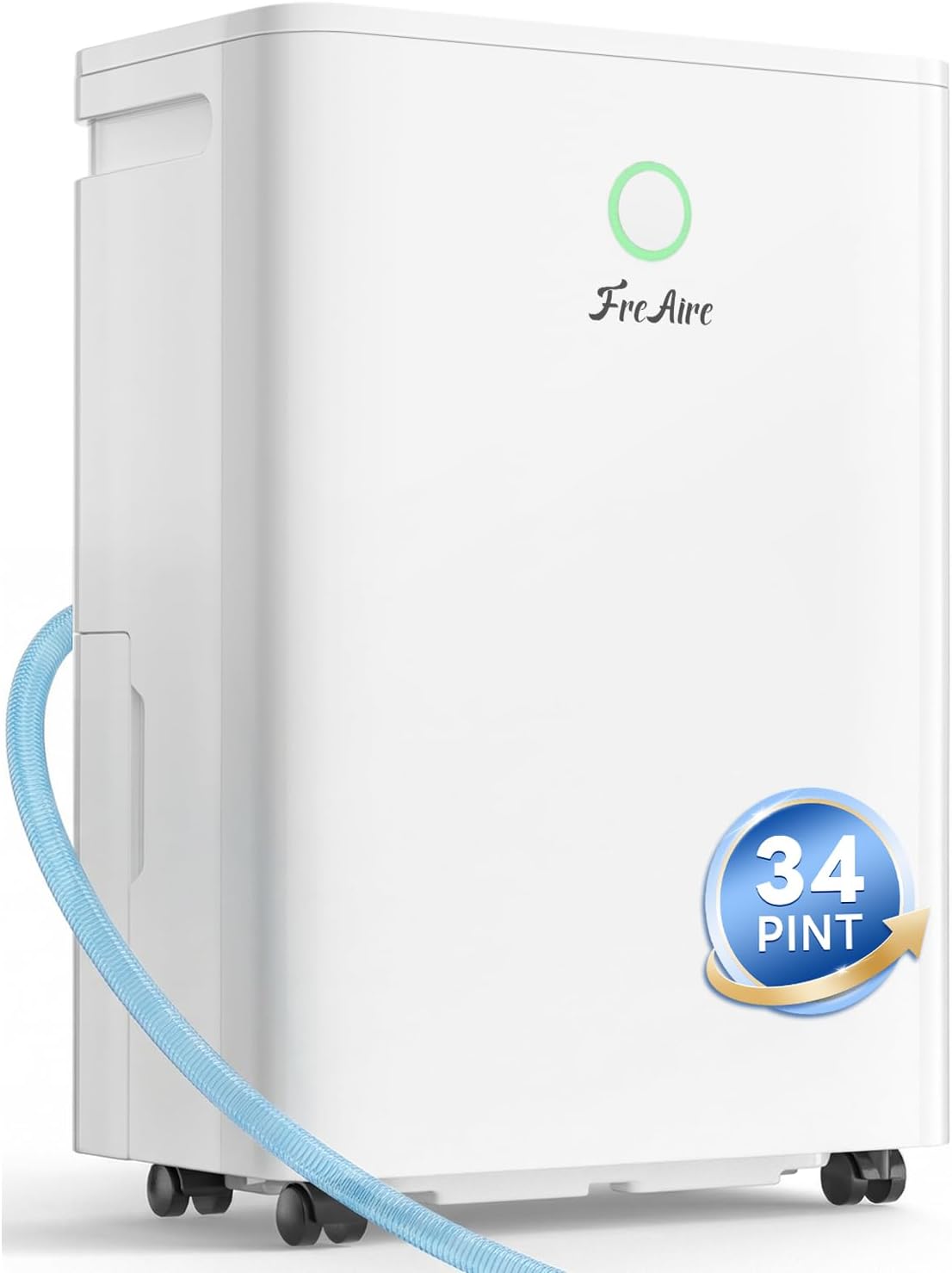
The upgrade path from bedroom semiconductor units looks like this: your single room is fine but the rest of the house isn't. Or you moved to a place with real basement humidity. Or the small Peltier unit is running continuously and barely keeping up. That's when you need a compressor, and 40 dB is the best you can do in this class without paying significantly more.
The 3-color humidity indicator deserves more credit than it typically gets. A red light means the humidity is high and the unit is working hard. Blue means it's at target. Green means dry. No looking at a display, no checking an app - glance at it from across the room and you know the status. That's a small design decision that adds up over years of use.
What the 40 dB means in practice: A brief startup surge when the compressor kicks on, then steady operation at 40 dB. That's roughly a quiet office or library background level. You'll hear it in a quiet room, but it won't dominate the space.
Included drain hose: 6.56 feet. Route this to a floor drain or bucket and you eliminate the manual emptying chore entirely - plus the tank-drip sound that some buyers find more annoying than the unit itself.
Buyers consistently describe it as outperforming similarly-priced competitors on moisture removal speed. The 34 pints per day rating is at 95°F/90% RH - in typical household conditions at 70-75°F, plan for around 15-20 pints. Still real capacity for a bedroom or living room.
We earn a commission on purchases via these links. It does not change the price you pay or our ranking.
VEAGASO 2500 Sq Ft Dehumidifier
The basement workhorse. Audible but effective.
VEAGASO 2500 Sq Ft Dehumidifier
The basement workhorse. Audible but effective.
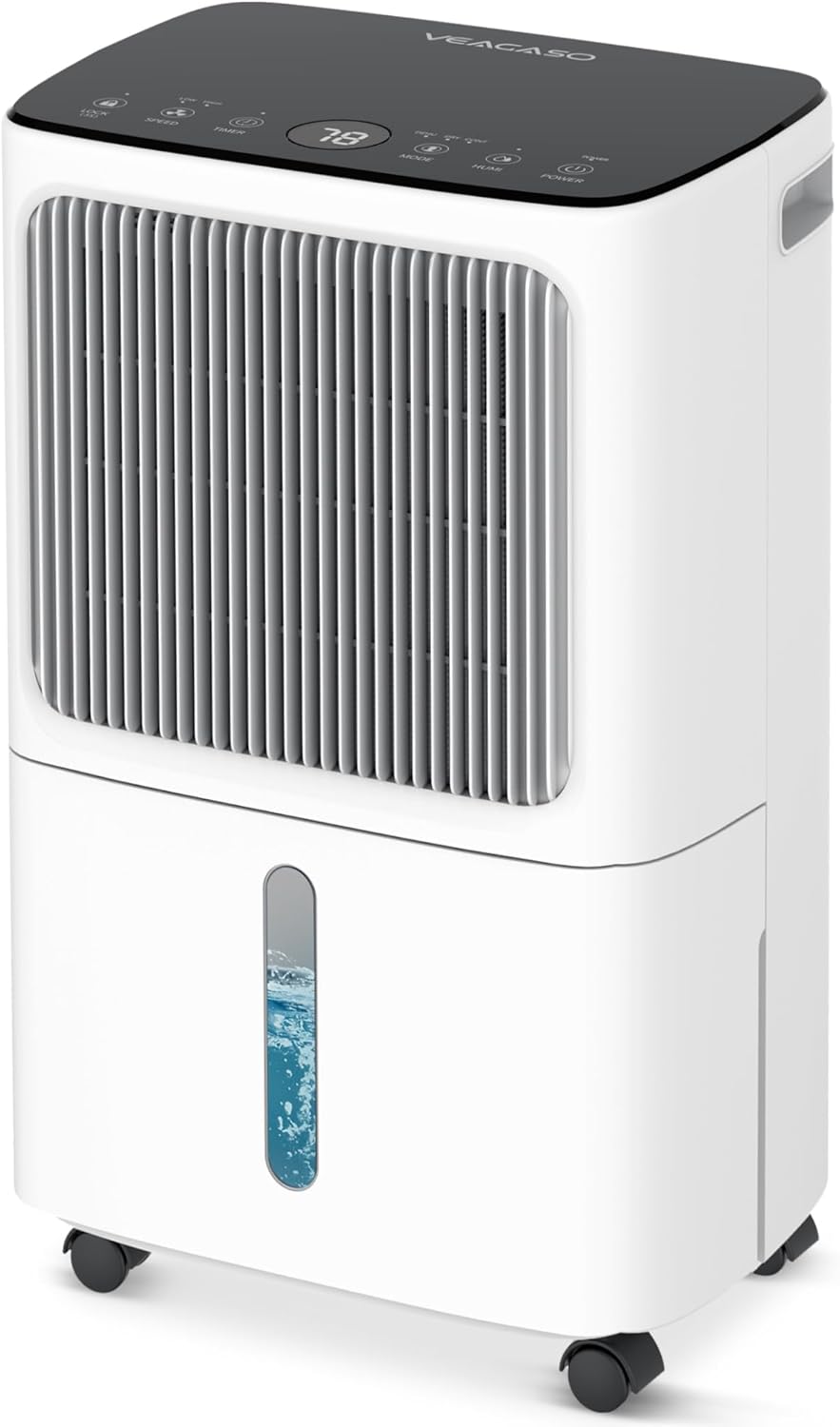
One buyer's description said more than the spec sheet: they live near a creek bed in California, put this in a cool downstairs suite, and started calling it "the beast." Not because it's loud - it's not, by compressor standards - but because it's working all the time and pulling a meaningful amount of water out of rooms that were persistently damp. The "I don't care about the electricity bill because it's fixing the problem" framing shows up across the feedback.
DRY mode is specifically praised for laundry. Hang wet clothes in a closed room, set it to DRY mode, come back in a few hours. This isn't a marketed feature on most competitors, and it's genuinely useful in a climate with grey winters. The touchscreen controls are clean and the wheels make it easy to move from room to room.
Noise level is "reasonable" - which means you'll hear it. The VEAGASO belongs in a basement, a laundry room, or a utility space. Not a bedroom. The 2,900+ review pool is deep enough to trust the signal: it works, it's durable, and people buy a second one.
We earn a commission on purchases via these links. It does not change the price you pay or our ranking.
Aiusevo 1500 Sq Ft Dehumidifier
Quieter than expected for a compressor at this price.
Aiusevo 1500 Sq Ft Dehumidifier
Quieter than expected for a compressor at this price.
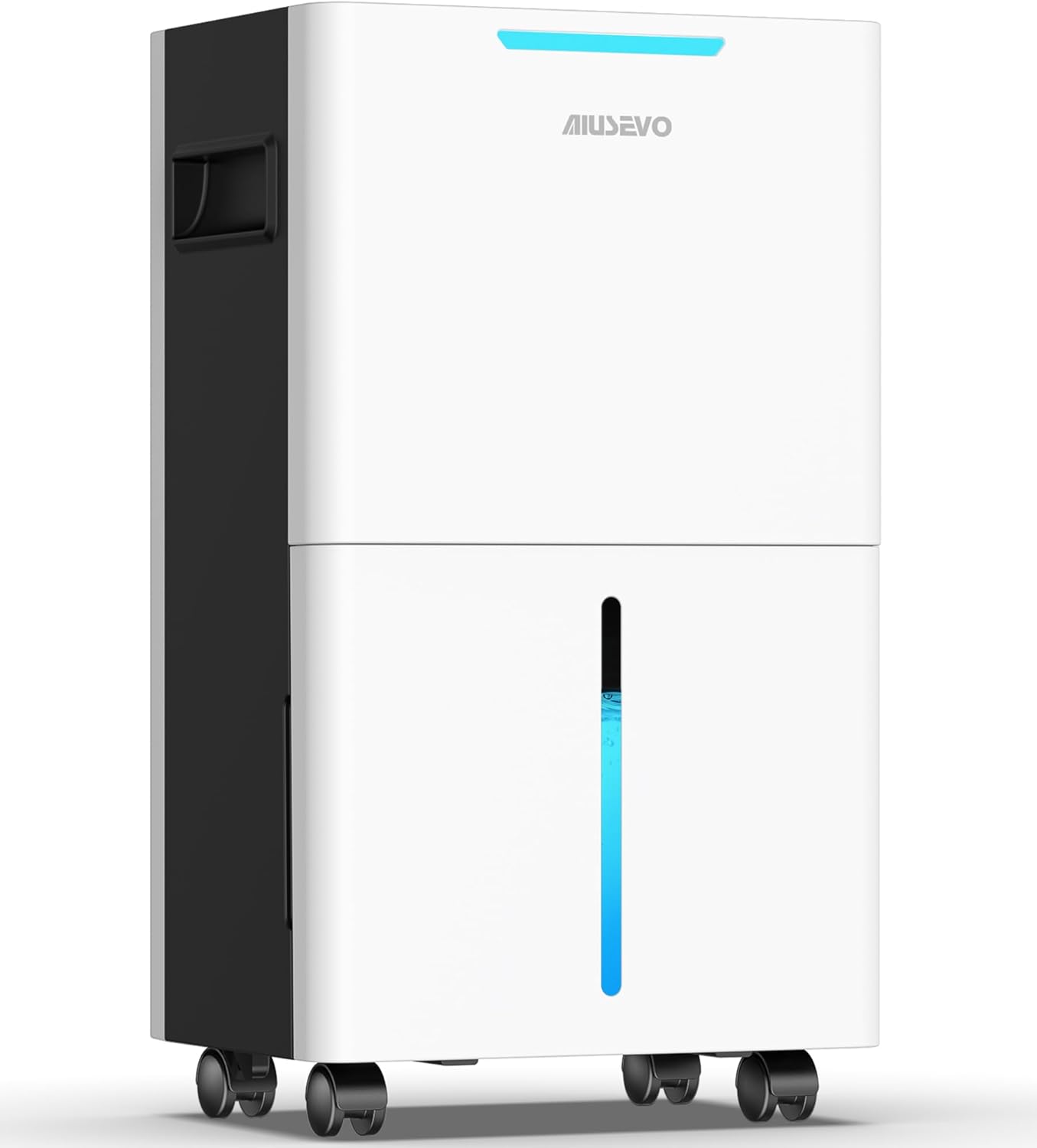
The noise signal for the Aiusevo is unusually positive for a compressor in this price range. Multiple buyers comparing it to previous units they've owned describe it as markedly quieter. "Runs smoothly and quietly, pulling water out of the air, using less energy" - that's the pattern. One buyer specifically noted that the high fan speed is almost as quiet as the low setting, which matters if you're running it at full capacity in a humid space.
Something that doesn't come up on the spec sheet: the adjacent-room effect. Buyers placing this in a living room and running it with the bathroom door open report pulling humidity from the bathroom through the doorway. The 1,500 sq ft rating handles a real multi-room scenario when placement is smart.
Build quality gets specific praise - the water tank and wheels are described as solid compared to cheaper alternatives. The 2L tank is on the smaller side for a compressor unit, so the included 3.28-foot drain hose is genuinely useful. Handles down to 41°F, which extends the shoulder-season basement use case into cooler months.
We earn a commission on purchases via these links. It does not change the price you pay or our ranking.
Large-space and basement dehumidifiers ($190-$240)
Basement moisture, crawl spaces, whole-home humidity - these units are sized for the job. They're not quiet in any absolute sense. But a large compressor running in the basement means no dehumidifier needed in the bedroom, which is a different kind of quiet.
8-Year Track Record hOmeLabs 4500 Sq Ft Wi-Fi Dehumidifier
Eight years and still running. The durability story.
hOmeLabs 4500 Sq Ft Wi-Fi Dehumidifier
Eight years and still running. The durability story.
Eight years. Still running. In a category where most units last two to four years, one buyer's eight-year update is the most useful data point on this page.
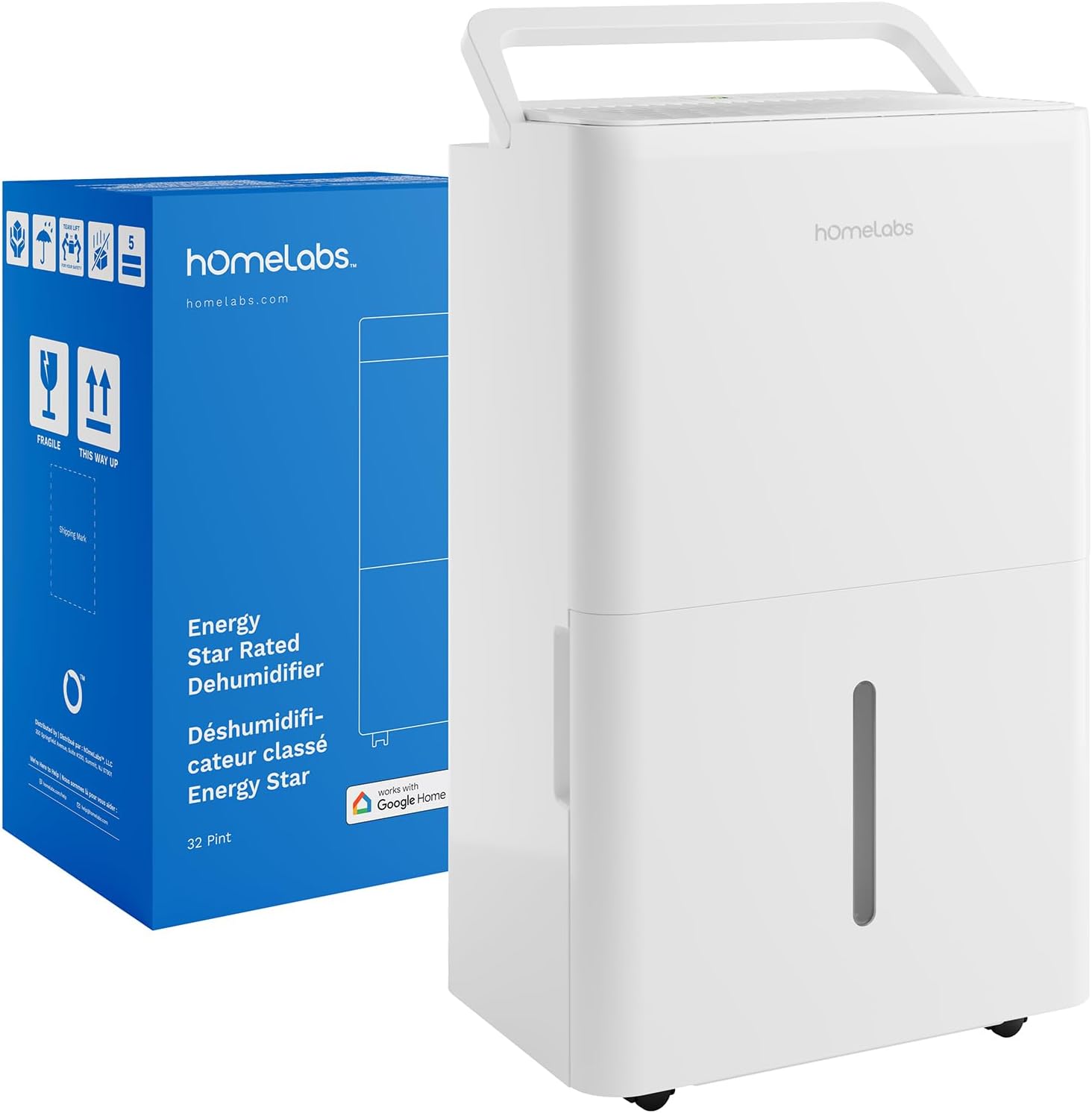
One buyer has left eight update posts on their review over eight years. The unit is still running. In a category where most compressor units show meaningful wear at two to four years, that's the kind of data no spec sheet provides. It's a bathroom dehumidifier running daily, not a basement unit running 24/7, which is relevant context. But eight years is eight years.
The Wi-Fi is actually useful here, not a gimmick. A basement dehumidifier you can check from upstairs - current humidity, whether the tank needs emptying, whether it's running - means fewer trips down to look at a display. Works with Alexa and Google Assistant. Set a humidity target via the app and leave it.
What to know about the noise: This is a full compressor appliance. It sounds like one. The 28,000+ buyer pool includes people who say it's fine for a basement and people who specifically say they wouldn't sleep next to it. Both are right. This is not a bedroom unit.
The weight: 40 pounds. The rolling casters aren't optional - you need them. Plan your placement before setup.
32 pints per day at typical household conditions, 80 pints at AHAM peak. Covers 4,500 sq ft. The 1-gallon tank handles a day or two before needing emptying; the continuous drain hose option eliminates that entirely. Buy the drain hose option if you have a floor drain nearby.
We earn a commission on purchases via these links. It does not change the price you pay or our ranking.
hOmeLabs 1800 Sq Ft Wi-Fi Dehumidifier
Smaller hOmeLabs. Fan-level noise with Wi-Fi control.
hOmeLabs 1800 Sq Ft Wi-Fi Dehumidifier
Smaller hOmeLabs. Fan-level noise with Wi-Fi control.
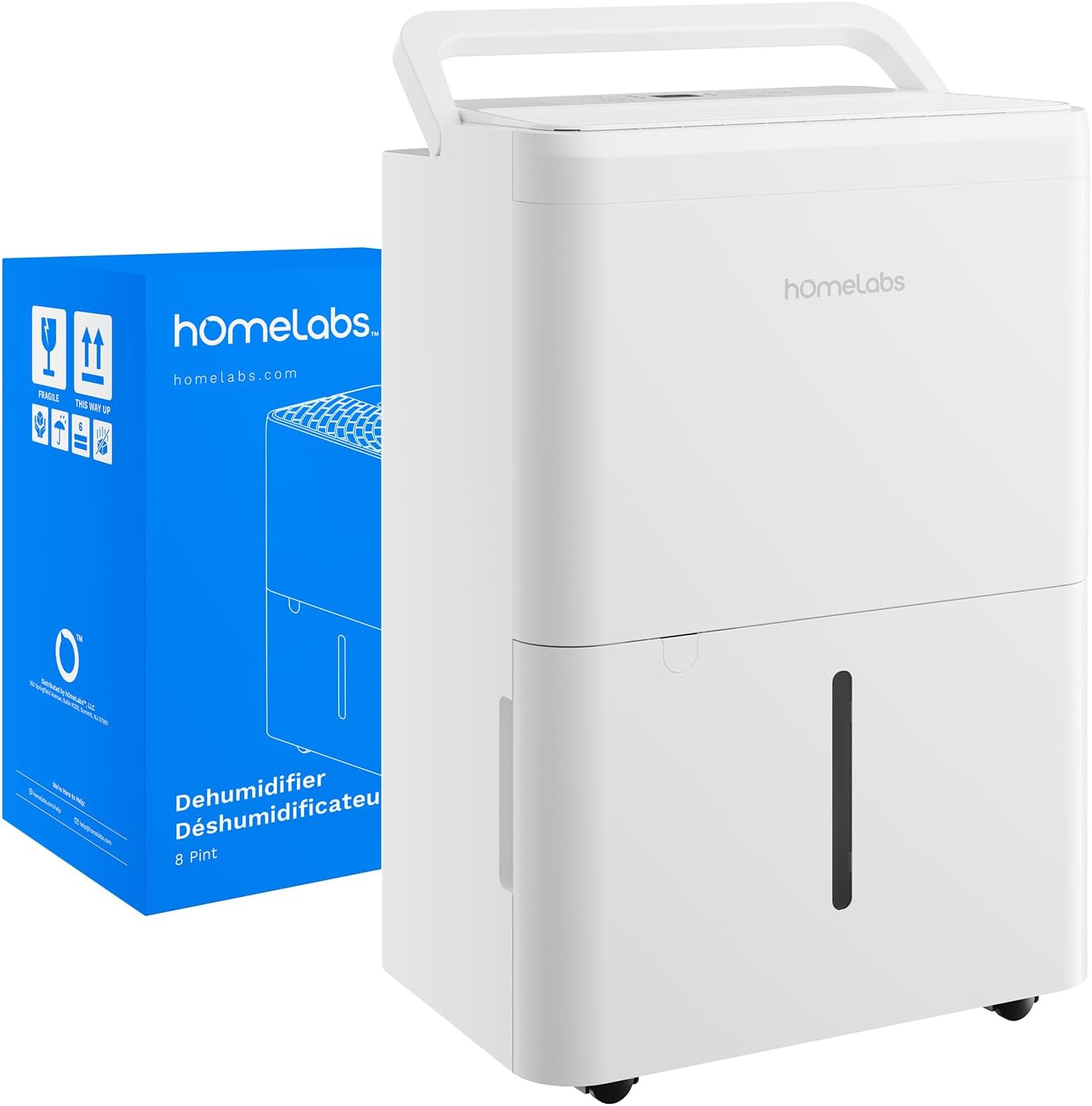
The gap filler. Too large a humidity problem for a semiconductor unit, too small a space for the 4,500 sq ft machine. An apartment, a first floor, a small house - 1,800 sq ft is realistic coverage for a couple of connected rooms.
38 dB is the spec - the only published hOmeLabs noise rating in this line. Buyers on the Gulf Coast and in Florida describe it as "fan-level noise" and "not super noisy" - which is accurate for 38 dB, roughly a quiet office or library background. One buyer specifically chose this model because they needed it quieter than their previous large dehumidifier for master bedroom use. It handled 65% down to 45% RH on their humidity target.
The Wi-Fi and app control are the same as the larger model - remote monitoring, voice assistant compatible, timer setting without going to the machine. The water tank is on the smaller side for the price; the included 3.3-foot drain hose is the right call for most permanent placements. One reported quirk: a small puddle on the floor when emptying the tank manually. Empty slowly, or just use the drain hose.
We earn a commission on purchases via these links. It does not change the price you pay or our ranking.
What to know before you buy
The type question comes first
Semiconductor vs. compressor is the real buying decision - not brand, not price, not feature count. Get this wrong and nothing else matters.
Semiconductor (Peltier) units have no compressor. The noise floor is whatever the fan speed is - steady, predictable, genuinely quiet at 28-35 dB. The limit is capacity: these units handle 200-500 square feet under real conditions, not the optimistic 1,000 sq ft on the label. They're right for a single damp bedroom, a bathroom that stays humid after showers, a closet where mildew keeps appearing.
Compressor units handle basements, whole floors, and serious humidity loads. The noise is higher, but they cycle off when the target humidity is reached - so in a well-insulated room, you get periods of silence between runs. For a basement or utility space, put the compressor down there and let it handle the whole house. That's quieter for the bedroom than putting a small unit in each room.
What those dB numbers actually mean
A reference scale, calibrated to everyday sounds:
- 28-35 dB - Whisper at 3 feet. Semiconductor sleep mode territory. Near-silent in practice.
- 38-42 dB - Quiet office, library background. Good small compressor, normal semiconductor operation.
- 45 dB - Refrigerator hum. Standard compressor class. Present but livable.
- 50-52 dB - Light rainfall, quiet conversation. Audible and noticeable. Not for bedrooms.
Manufacturer specs are measured in controlled lab conditions at one meter. In a real room with reflective walls and a closed door, add 5-8 dB to any claim. A product listed at 40 dB may land closer to 47-48 dB in your actual kitchen.
The sleep mode caveat
Most manufacturer dB specs are sleep mode measurements. On semiconductor units, sleep mode reduces fan speed significantly - this is real and meaningful. On compressor units, sleep mode mainly reduces fan speed; the compressor still cycles. The gap between the spec and what you hear at 2 AM is widest on compressor units running in a quiet room.
If you're evaluating a compressor unit for bedroom use, the relevant question is: how loud is the compressor startup surge? That's not on the spec sheet. It's in buyer reviews. Which is why we read them.
Why dehumidifiers get louder over time
They do - and it's worth knowing why before you buy. The main causes:
- Dirty air filter. A clogged filter forces the fan motor to work harder. Clean it monthly, or at the frequency the manufacturer recommends.
- Mineral scale on coils. Hard water deposits reduce heat transfer efficiency, forcing the compressor to run harder and longer. Annual descaling in hard-water areas prevents this.
- Compressor bearing wear. Normal mechanical wear over years of continuous operation. A grinding or rattling sound from a previously quiet unit is usually this. Not fixable without service.
- Loose fasteners. Vibration over time loosens the screws holding the housing. A sudden rattle from a quiet unit is often just this - check the panel screws first.
A unit running 24 hours a day in a wet basement will show wear in 2-3 years. One running 6 hours a day in a bedroom may last 5-7 years at consistent noise levels. The hOmeLabs 4500 running daily in a bathroom for eight years is genuinely exceptional - but that's 6 hours a day, not 24.
Placement reduces perceived noise more than any setting
Distance is the most effective noise control. Every 10 feet between you and the unit reduces perceived loudness by about 6 dB. A 45 dB compressor in an adjacent room is quieter than a 38 dB semiconductor unit on your nightstand.
Avoid corner placement against shared walls with sleeping areas - corners reflect and amplify sound. Floor placement reduces vibration transmission to furniture surfaces. If the unit has a drain hose option, use it - the sound of water dripping into a nearly-full tank is often more noticeable than the machine itself.
Frequently asked questions
- What dB level is considered quiet for a dehumidifier?
- Under 40 dB is genuinely quiet - semiconductor units in sleep mode reach 28-35 dB, which is near-whisper level. Compressor units running at 40-45 dB are good for their class. Above 50 dB is noticeable in any room and becomes a problem at night.
- Are semiconductor dehumidifiers actually quieter than compressor ones?
- Yes, but the trade-off is real. Semiconductor units have no compressor, so the noise floor is just a fan - genuinely quiet at 28-35 dB. The problem is capacity: they handle one small room, not a basement or large space. If your humidity problem is bigger than a single room, a semiconductor unit will run at full capacity constantly and still not solve the problem. Match the tool to the job.
- Can I run a dehumidifier in my bedroom at night?
- A semiconductor unit in sleep mode - 28-35 dB - works for most people and is comparable to a white noise machine. A compressor unit in a bedroom is harder to sleep with, especially when the compressor cycles on and off. A better approach for serious humidity problems: run a large compressor unit in the basement and let it handle the whole house. No unit in the bedroom needed.
- Why is my dehumidifier getting louder over time?
- Most likely causes: a dirty air filter (clean it), mineral scale on the coils (descale annually in hard-water areas), or normal compressor bearing wear on older units. A sudden rattle from a previously quiet unit is often just a loose panel screw - check that first before assuming anything is broken.
- What's the difference between sleep mode and regular mode on a dehumidifier?
- On semiconductor units, sleep mode reduces fan speed significantly - that's where the 28-35 dB specs come from, and the reduction is real. On compressor units, sleep mode mainly slows the fan; the compressor still cycles. The gap between the published sleep-mode spec and what you actually hear during normal operation is wider on compressor units than semiconductor ones.