Portable Generators · 2026 edition
Quietest portable generators for camping and outdoor use
The loudest thing at a campground is usually someone's generator. It doesn't have to be yours. The difference between a 52 dBA inverter and a 70 dBA unit marketed as "super quiet" is not a rounding error - it's the difference between neighbors who don't notice you and neighbors who file a complaint. Most pages that rank for "quietest portable generator" list both without telling you which one gets you kicked out after 10pm.
We went through 30 generators and kept 10. Two sit below 52.5 dBA - the threshold where generators stop being audible at campground distances. Five cover the dual-fuel mid-range for buyers who want propane flexibility for storm prep. Three cover the budget tier, with honest notes on where the noise trade-offs land. The dB reference scale in the buying guide below explains what these numbers actually mean at your campsite.
Ultraquiet: At or below 52.5 dBA
These two generators hit the threshold where campground neighbors stop noticing you. 52 dBA is a refrigerator hum, not a generator hum. Both are carry-weight portable. Neither will win a wattage contest - that's not what this tier is for.
Quietest Overall ERAYAK 2400W Inverter Generator
The best-documented quiet spec in this class, verified by deep buyer feedback from off-grid campers.
ERAYAK 2400W Inverter Generator
The best-documented quiet spec in this class, verified by deep buyer feedback from off-grid campers.
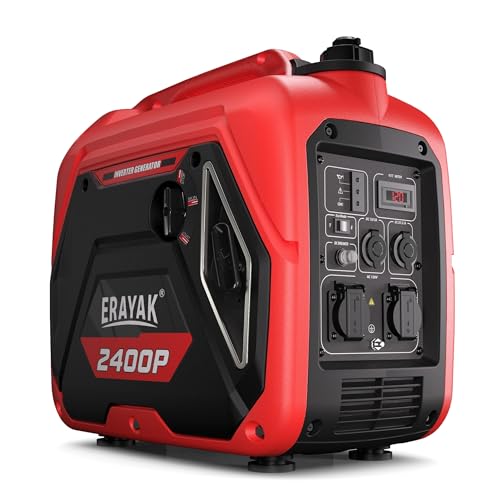
The spec sheet says 52.5 dBA. Not 52, not 53. That specificity matters: manufacturers who give you a round number are often rounding up. Manufacturers who give you a decimal are usually working from an actual measurement.
Buyers who have camped with it confirm the spec holds. The consistent report from people doing week-long off-grid trips is that neighboring campsites didn't know it was on. That's what 52.5 dBA means in practice - it drops below ambient background noise at campground distances when running in ECO mode.
ECO mode does real work here. The engine throttles to match actual load, so at light camping loads (lights, fans, phone charging, a small coffee maker) the unit barely ticks over. At 25% load you can get 16 hours of runtime from the 1.05-gallon tank. That's overnight plus the next morning without refueling.
At 42 lbs with a carry handle, it's a one-hand carry for most adults.
Know the limit: 1800W running watts is the ceiling. That handles camping essentials but not a 15,000 BTU RV air conditioner. If you're running a large RV AC unit, look at the Westinghouse iGen4500 in the next section. The ERAYAK isn't trying to do that job and it shows in the price.
We earn a commission on purchases via these links. It does not change the price you pay or our ranking.
Best for Camping WEN 56235i 2350W Super Quiet
The most-reviewed inverter generator under $400. Five years of real camping and backup data.
WEN 56235i 2350W Super Quiet
The most-reviewed inverter generator under $400. Five years of real camping and backup data.
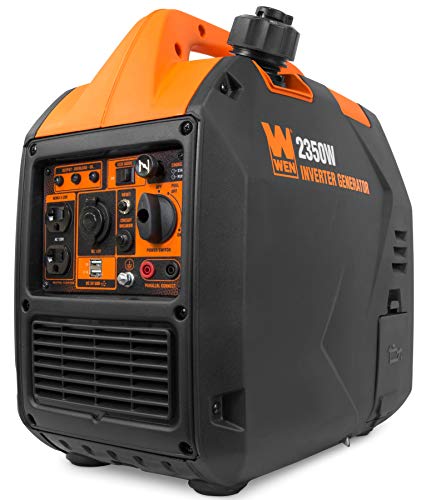
WEN doesn't publish a specific dBA number for this model. They cite the US Department of Health and Human Services benchmark: "comparable to the sound of a normal conversation." That's the DHHS reference point for approximately 58 dBA - which puts it squarely in the campground-friendly tier.
What WEN does have that most competitors don't: years of real-world buyer feedback at this volume. People who compared it to the Honda EU2200i before buying, ran it at campgrounds, and came back to say it held up. Buyers who owned loud open-frame generators and describe the noise difference as revelatory. That depth of feedback is harder to fake than a spec sheet.
A pattern worth knowing: buyers who want 4700W without lugging a heavy generator sometimes buy two of these and run them in parallel with WEN's optional parallel kit. Each unit stays under 40 lbs. It's a real strategy, not a workaround.
Starts easily on the first or second pull in most conditions - cold weather, high altitude, first start of the season. WEN's 3-year warranty is meaningfully longer than most competitors at this price.
Gas only. No propane option, no electric start. If you want dual-fuel or remote start, the Westinghouse iGen4000DFc is the step up.
* WEN does not publish a specific dBA spec for this model. The ~58 dB estimate uses the DHHS "normal conversation" benchmark WEN cites in their product listing.
We earn a commission on purchases via these links. It does not change the price you pay or our ranking.
Dual Fuel Mid-Range: 2500W to 4500W
Dual-fuel means gas for everyday use, propane for long-term storage. Propane stores indefinitely - gasoline degrades in 30-90 days without stabilizer. For storm prep or emergency backup, that difference matters. These units cover 2500W to 4500W at 52-69 dBA.
Best Dual Fuel Pick Westinghouse iGen4000DFc
Remote start, dual fuel, 4000W, 52 dBA. The convenience pick for RV owners and storm-prep households.
Westinghouse iGen4000DFc
Remote start, dual fuel, 4000W, 52 dBA. The convenience pick for RV owners and storm-prep households.
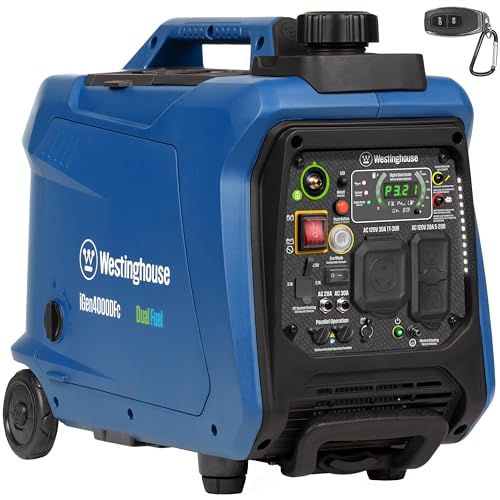
The key fob remote start is not a gimmick at this price. Start it from inside the RV. Start it from inside the house when the power goes out at 2am. Start it from the tailgate without walking to the cargo bay. Buyers who use it this way mention the convenience specifically - it's the kind of feature that seems minor until you've done the alternative a dozen times in bad weather.
At 52 dBA it matches the ERAYAK 2400W's noise floor despite putting out nearly twice the wattage. The Westinghouse inverter design is doing real work here. Buyers running it from anchored boats report neighboring vessels can't tell it's on.
Propane mode runs slightly quieter than gas and eliminates the fuel storage problem for seasonal or emergency use. The digital display shows fuel level, power output, and remaining runtime - useful data that cheap generators omit.
One maintenance note: the electric start battery needs periodic attention if the unit sits for months between uses. Buyers who store it for an entire winter sometimes find the battery needs a charge before the electric start engages. Manual recoil start is always available as a backup, but it's worth being aware of if your use case is "store it and forget it until the next storm."
We earn a commission on purchases via these links. It does not change the price you pay or our ranking.
Westinghouse iGen4500
5000W peak at 52 dBA. The most powerful quiet inverter in this guide.
Westinghouse iGen4500
5000W peak at 52 dBA. The most powerful quiet inverter in this guide.
3900W running at 52 dBA is where the math gets interesting. That wattage handles a 15,000 BTU RV air conditioner, a refrigerator, and campsite lights simultaneously - not one at a time. For RV owners who want the quiet spec and the real coverage, this is the unit.
The review pool here is unusually deep for an inverter at this size. Buyers who traded up from a Honda EU3000iS consistently find it quieter per watt and significantly less expensive. Off-grid cabin owners who run it through winter as a primary source report no reliability issues across extended use.
18 hours of runtime at light load on a 3.4-gallon tank means overnight without refueling in low-demand scenarios. Remote start from outside the RV or cabin adds convenience at this wattage tier.
Worth noting: the wheel kit and telescoping handle are the right call at this weight (73+ lbs). This is not a one-handed carry. Position it, wheel it, and let the 52 dBA do the rest. If you need to actually hike a generator to a campsite, look at the ERAYAK or AIVOLT instead.
WEN DF480iX 4800W Dual Fuel
Dual fuel, electric start, 4800W. Quieter than a conventional generator; louder than the 52 dBA units above.
WEN DF480iX 4800W Dual Fuel
Dual fuel, electric start, 4800W. Quieter than a conventional generator; louder than the 52 dBA units above.
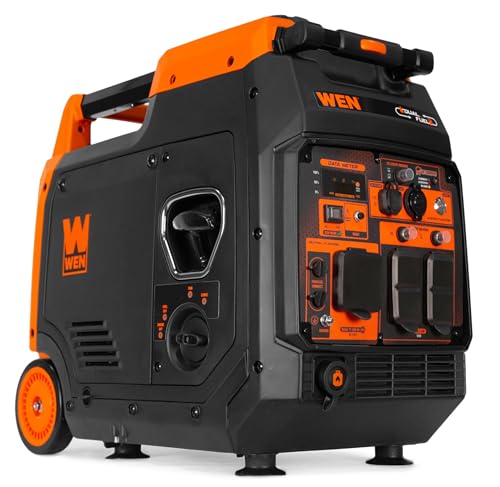
Before anything else: 69 dBA is the honest number, not a typo. This unit is quieter than an open-frame conventional generator by a significant margin. It is not in the same noise tier as the 52 dBA Westinghouse units. Position accordingly.
What it offers that the quieter units don't: 4800W peak wattage, dual-fuel flexibility, and electric start - all in one package at $647. Buyers running it for furnace backup during winter storms describe it as working reliably with minimal setup fuss.
The propane-for-storage argument applies here too. A dual-fuel unit with propane tanks on hand is more reliable for emergency use than a gas-only unit - propane doesn't go stale in the garage over six months.
WEN's CO Watchdog auto-shutoff is present and functional. Buyers who run it near patios or enclosed spaces specifically mention the safety feature as a purchase consideration.
The battery issue again: like the Westinghouse iGen4000DFc, this unit's electric start battery needs periodic maintenance if it sits between uses. It needs a charge if you haven't started it in several months. Plan for that or stick to the WEN DF360iX (no electric start, no battery to maintain).
We earn a commission on purchases via these links. It does not change the price you pay or our ranking.
Best Budget 4000W Champion 4000W Inverter Generator
Under 49 lbs for a 4000W inverter. Champion's track record and a $190 price advantage over the Westinghouse.
Champion 4000W Inverter Generator
Under 49 lbs for a 4000W inverter. Champion's track record and a $190 price advantage over the Westinghouse.
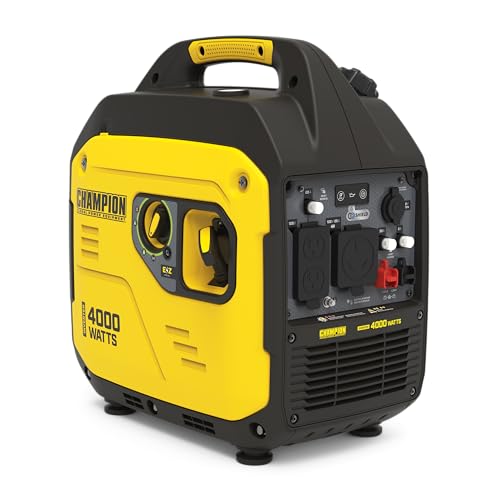
Under 49 lbs for a 4000W inverter generator is unusual. The next-step-up units in this wattage class typically run 60-75 lbs. Buyers loading generators into truck beds or cargo bays mention the weight advantage specifically - it's not just a spec sheet number.
64 dBA sits meaningfully above the 52 dBA Westinghouse tier, and meaningfully below the 70-75 dBA conventional generator range. Think: vacuum cleaner in an adjacent room rather than vacuum cleaner in your room. Acceptable for campgrounds without strict quiet-hour enforcement; check your campground's rules for the 60 dB threshold most National Forest sites enforce at night.
At $559 it undercuts the Westinghouse iGen4000DFc by $190. You trade dual-fuel capability and remote start. The buyers who choose Champion here are typically weighing price and weight against feature set, not noise - both models are quiet enough for most use cases.
Gas only. No propane option. If emergency preparedness or long-term storage reliability matters, dual-fuel is worth the premium. If you're primarily camping and tailgating, this gap matters less.
We earn a commission on purchases via these links. It does not change the price you pay or our ranking.
WEN DF360iX 3600W Dual Fuel
3600W dual fuel at the WEN price. No electric start, which also means no battery to maintain.
WEN DF360iX 3600W Dual Fuel
3600W dual fuel at the WEN price. No electric start, which also means no battery to maintain.
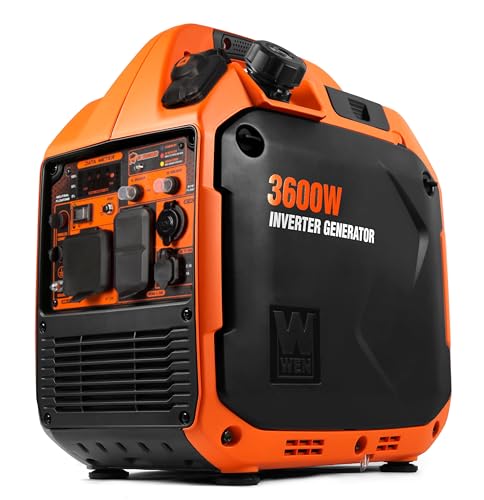
The practical argument for this unit over the DF480iX is the lack of an electric start battery. No battery means nothing to maintain between uses. Pull-start only - but WEN's pulls start reliably, even after sitting through a season. For buyers who want dual-fuel for the propane storage advantage but don't need the electric start convenience, this is the simpler choice.
Running watts differ by fuel: 2900W on gas, 2600W on propane. Know which number applies to your load before buying. The difference matters if you're close to the edge of your appliance requirements.
Buyers in camping and RV contexts consistently describe the noise as acceptable. WEN cites the DHHS "normal conversation" benchmark here too - approximately 58 dBA at light load in eco mode.
WEN's 3-year warranty applies. At $599 it sits just above the Champion 4000W, with the dual-fuel flexibility as the main trade-off in its favor.
* WEN does not publish a specific dBA spec for this model. The ~58 dB estimate uses the DHHS benchmark WEN cites.
We earn a commission on purchases via these links. It does not change the price you pay or our ranking.
Budget options: Under $450
Lower price, louder output. These generators run at 57-70 dBA. Quiet for their wattage class, but at the edge of what most campgrounds allow after dark. Fine for tailgating, job sites, remote locations, or campgrounds that don't enforce strict noise rules.
Best Budget Dual Fuel PowerSmart 3800W Dual Fuel Inverter
The most affordable dual-fuel inverter with meaningful buyer data. 70 dBA is the trade-off.
PowerSmart 3800W Dual Fuel Inverter
The most affordable dual-fuel inverter with meaningful buyer data. 70 dBA is the trade-off.
$449 for a dual-fuel inverter generator with 3800W peak is the compelling number here. The next dual-fuel inverter up the list costs $150 more. What you give up for that savings is noise: 70 dBA is the loudest spec in this guide.
To be direct about what 70 dBA means: it exceeds the 60 dB quiet-hour limit most national campgrounds enforce after 10pm. For campground use after dark, this generator is not the right choice. For tailgating in a parking lot, a remote job site, a farm, or a campground that doesn't enforce strict noise rules, the calculation changes.
The buyers who are happiest with this unit came from open-frame conventional generators and found the noise reduction dramatic. That's the appropriate frame - it's quiet relative to the louder alternative, not quiet in absolute terms.
Buyers specifically praise the oil-change access as engineered-in rather than an afterthought. Starts first or second pull consistently. PowerSmart has real buyer volume here, not just a handful of reviews.
AMERISUN 2500W Portable Inverter Generator
Newer brand with strong early buyer signal. At $350, 39.7 lbs, and CO sensor included.
AMERISUN 2500W Portable Inverter Generator
Newer brand with strong early buyer signal. At $350, 39.7 lbs, and CO sensor included.
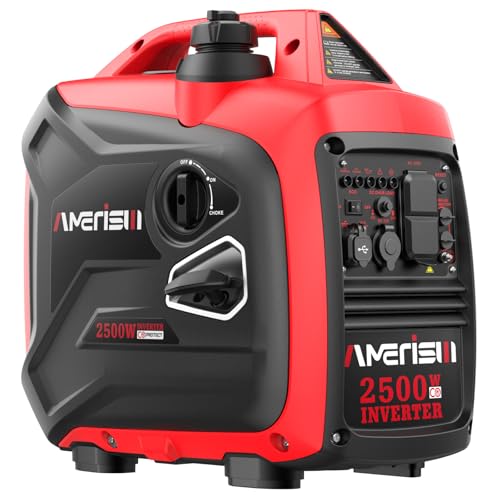
AMERISUN is a newer name in this category - no five-year track record, no decade of Amazon reviews. What it does have is a solid batch of buyer feedback from real use: RV boondocking on beaches, hurricane recovery, extended power outages. The early signal is positive, which matters more than the brand age when you're making a budget decision.
Buyers running it in RV boondocking contexts describe handling a mini-split air conditioner plus other loads simultaneously. 11 hours of runtime at 25% load in ECO mode is notable for a unit this compact. At 39.7 lbs it carries easily.
At 69 dBA the noise caveat is the same as the PowerSmart above: not for quiet campgrounds after dark. The CO sensor is standard on this unit and worth having.
Honest caveat: AMERISUN doesn't have the multi-year durability data that WEN or Westinghouse carry. It's a value option with good early signals - treat it as such.
We earn a commission on purchases via these links. It does not change the price you pay or our ranking.
Lightest Pick AIVOLT 1600W Super Quiet Inverter Generator
28 lbs. The lightest generator in this guide by a real margin.
AIVOLT 1600W Super Quiet Inverter Generator
28 lbs. The lightest generator in this guide by a real margin.
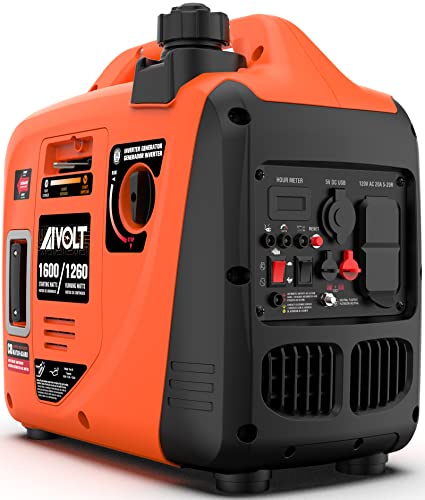
28 lbs. That's the headline. Every other generator in this guide weighs 39 lbs or more. If you need to carry a generator to a campsite, load it into a kayak or canoe hatch, strap it to a pack rack, or lift it into an overhead cargo bin, those 11 lbs matter.
The noise spec is legitimately good: 57 dBA at 23 feet puts it well inside campground-acceptable territory and competitive with the Westinghouse units, despite costing a fraction of the price. 1260W running watts is the honest limit - that covers LED lights, fans, phone and laptop charging, a CPAP machine. Not a mini-fridge. Not an air conditioner.
Backpackers, solo tent campers, and small-trailer owners describe this as the first generator that doesn't feel like dragging a lawnmower to the woods. CPAP machine users specifically mention it as one of the few portable generators that runs the machine without issues through the night.
Parallel-capable if you eventually want more output - buy a second unit and connect them.
The reliability caveat is real: the buyer data shows a mixed signal on long-term durability. Some buyers report it stopped running after moderate use. This is appropriate for occasional camping, not sustained heavy use or primary emergency backup. Go in knowing that.
We earn a commission on purchases via these links. It does not change the price you pay or our ranking.
All 10 compared
Sorted by noise level, quietest first. The dB column is the editorial number used throughout this page. An asterisk (*) means the manufacturer uses a benchmark reference rather than a measured dBA spec.
| Product | dB | Class | Price | Badge | Verdict |
|---|---|---|---|---|---|
| Westinghouse 4000 Peak Watt Super Quiet Dual Fuel Portable Inverter Generator | 52 dB | Inverter 4000W DF | $750 | Best Dual Fuel Pick | Remote start, dual fuel, 52 dBA. The convenience pick. |
| B06XC47ZX4 | 52 dB | Inverter 4500W | - | 5000W peak at 52 dBA. Deepest review pool in this class. | |
| ERAYAK 2400W Portable Inverter Generator for Home Use | 52.5 dB | Inverter 2400W | $329 | Quietest Overall | Quietest spec in the class. Campers say it disappears at 30 feet. |
| AIVOLT 1600W Super Quiet Inverter Generator | 57 dB | Inverter 1600W | $285 | Lightest Pick | 28 lbs. If you need to carry it a real distance, this is the pick. |
| WEN Super Quiet 2350 | ~58 dB* | Inverter 2350W | $376 | Best for Camping | Most-reviewed sub-$400 inverter. Bought in pairs, run in parallel. |
| WEN Quiet and Lightweight 3600 | ~58 dB* | Inverter 3600W DF | $600 | Dual fuel 3600W. Gas or propane; no electric start, no battery issues. | |
| Champion Power Equipment 4000 | 64 dB | Inverter 4000W | $559 | Best Budget 4000W | Lightest 4000W inverter in class. Champion track record. |
| WEN Quiet and Lightweight 4800 | 69 dB | Inverter 4800W DF | $647 | Dual fuel, electric start, 4800W. Quieter than specs suggest in practice. | |
| AMERISUN 2500 | 69 dB | Inverter 2500W | $350 | New brand, strong early signal. Budget buy with honest trade-offs. | |
| B0FSD2SJJP | 70 dB | Inverter 3800W DF | - | Best Budget Dual Fuel | Cheapest dual-fuel inverter with real buyer data. 70 dBA is the trade-off. |
What the dB numbers actually mean
Generator spec sheets aren't lying, exactly. They're just measuring in conditions that don't match your campsite. Here's how to read them.
The dB reference scale for portable generators
Decibels are logarithmic. A 10 dB increase roughly doubles perceived loudness. That means 70 dBA isn't "a bit louder" than 52 dBA - it's about three times louder to the human ear.
| dB level | What it sounds like at your campsite (at 23 ft) |
|---|---|
| 50-53 dBA | Barely audible above campfire crackle and wind |
| 54-60 dBA | Present but not intrusive; a nearby conversation drowns it out |
| 61-65 dBA | Clearly audible; annoying at quiet campgrounds after dark |
| 66-70 dBA | Clearly disruptive; neighbors notice; many campgrounds prohibit this level during quiet hours |
| 71+ dBA | Loud. Fine for job sites or remote locations; not appropriate for campgrounds |
Campground noise rules
Most National Forest sites and many state campgrounds enforce a 60 dBA limit during quiet hours (typically 10pm-6am). This is not a soft suggestion. Campground hosts enforce it. The 52-58 dBA generators in this guide comfortably clear this threshold at light loads. The 69-70 dBA units in the budget section do not - they're above the limit.
If you're camping at a site with strict quiet hours, stick to the ultraquiet or dual-fuel mid-range segments above. The budget options are for situations where noise rules are less of a factor: tailgating, job sites, remote private land, or informal camping.
Why inverter generators are quieter than conventional ones
A conventional (open-frame) generator runs its engine at a fixed 3600 RPM regardless of how much power you're actually drawing. Full throttle all the time. That's why they're loud.
Inverter generators decouple the engine speed from the output frequency using electronics. The engine slows to match your actual load. Drawing 500W at the campsite? The engine barely ticks over. Drawing 2000W? It works harder. This is why a 52 dBA spec is achievable - and why all the generators in this guide are inverter designs.
What eco mode actually does (and doesn't do)
ECO mode (also called economy mode or load-sensing) is the feature that enables the engine-throttling behavior above. Most manufacturer dB specs are measured at 25% load in ECO mode. At 75-100% load, the same generator runs 8-15 dBA louder than the advertised spec.
The practical implication: dB specs are a floor, not a constant. Running a heavy load - an air conditioner, a microwave, power tools - pushes noise above the spec. Leave headroom in your wattage selection if you want the quiet spec to hold.
Dual fuel and propane storage
Propane operation is typically 2-4 dBA quieter than gas on the same unit. The bigger advantage is storage. Propane stores indefinitely in sealed tanks. Gasoline degrades in 30-90 days without fuel stabilizer. For a generator you store between camping seasons or keep for emergencies, a propane-capable unit with a tank on hand starts more reliably than a gas-only unit with old fuel.
Parallel capability
Most inverter generators on this page can be connected in pairs with an optional parallel kit to double their output. Two 2350W WEN units in parallel give roughly 4700W. Each unit stays in the carry range. It's a real strategy for buyers who want serious wattage but prefer smaller, lighter units.
Wattage sizing guide
- 1000-1800W running: LED lights, fans, phone/laptop charging, CPAP machines. Not kitchen appliances.
- 1800-2500W running: Small fridge, box fan, coffee maker (not simultaneously). Light camping power.
- 2500-3500W running: 13,500 BTU RV AC unit (may need 3000W+), full-size refrigerator, small power tools.
- 3500-4500W running: 15,000 BTU RV AC, multiple appliances, whole-campsite coverage.
Starting watts (surge watts) are 25-50% higher than running watts. The AC compressor's startup surge is the most likely load to trip a generator. Always check running watts vs your appliance's rated wattage before buying.
What "RV Ready" means on a generator
An RV-ready generator includes a TT-30R (30-amp) outlet that plugs directly into an RV's shore power inlet. It does not mean the generator can run everything in a large RV. A 30-amp service at 120V is 3,600W maximum regardless of the generator's wattage rating. Size to the actual load, not to the outlet.
Frequently asked questions
What is the quietest portable generator available?
The ERAYAK 2400W (B09PDR11L4) at 52.5 dBA and the Westinghouse iGen4000DFc (B0CQMK94H7) at 52 dBA are the quietest in this guide. Both are verified by substantial buyer feedback from campground and off-grid use. At these levels, generators disappear into background noise at 30-foot campground distances when running in ECO mode at light loads.
How many dB is considered quiet for a portable generator?
Under 60 dBA clears most campground quiet-hour rules. Under 55 dBA is genuinely quiet by any standard - noticeable but not intrusive. "Quiet for a generator" and "actually quiet" are different thresholds; most pages conflate them. A 70 dBA generator marketed as quiet is quieter than a conventional open-frame generator (75-85 dBA), not quiet in absolute terms.
Are inverter generators really quieter than conventional generators?
Yes, meaningfully so - by 10-20 dBA in most comparisons. The engine-throttling design of an inverter generator runs the engine at much lower speeds at partial load, which is where the noise difference comes from. That said, not all inverters are equal: specs range from 52 to 75 dBA across different inverter models. The category label doesn't guarantee a specific noise level.
Which generators can pass campground quiet-hour noise rules?
Most National Forest and state campgrounds enforce a 60 dB limit during quiet hours. The ERAYAK 2400W, WEN 56235i, Westinghouse iGen4000DFc, Westinghouse iGen4500, WEN DF360iX, Champion 4000W, and AIVOLT 1600W all fall at or below 64 dBA and meet this threshold at light eco mode loads. The PowerSmart 3800W and AMERISUN 2500W at 70 and 69 dBA respectively do not. Check your specific campground's posted rules - enforcement varies.
Does running a generator on propane make it quieter than gas?
Yes, modestly - typically 2-4 dBA quieter than gas operation on the same unit. Propane combustion is smoother with fewer high-frequency combustion events. The more practical advantage is storage: propane in sealed tanks stores indefinitely, while gasoline degrades in 30-90 days without fuel stabilizer. For generators stored between uses or kept for emergency backup, propane capability has real reliability value beyond the marginal noise reduction.