RV Generators · 2026 edition
Quietest RV Generators: What Buyers Actually Report
Every generator sold in the last five years has “super quiet” somewhere on the box. Most are lying, or at least shading the truth. Manufacturers measure decibels at 23 feet and 25% load, on a still day. Your generator at a campsite is 10 feet from the neighboring rig, running the AC in July. That is a different number. The quietest RV generator for your rig depends on the rig, and that distinction matters more than the spec sheet suggests.
Most National Park campgrounds enforce 60 dBA at 50 feet during quiet hours. A generator rated 58 dB at 25% load can push 65+ dB when the AC compressor kicks on. And 65 dB at a campsite is the difference between fitting in and getting a knock from the ranger. Nine generators below, ranked by use case. Teardrop and van owners. Families in 25-foot travel trailers. Boondockers who want gas and propane in one unit. Fifth-wheel owners running two rooftop ACs.
Four use cases below. Small trailers. Mid-size gas. Dual-fuel boondockers. Big-rig. Pick the segment that matches your rig.
All 9 Picks: Sorted by Use Case
Every generator we recommend is here. The dB figures are rated-load estimates based on manufacturer claims adjusted for real operating conditions. Click any name to jump to the full writeup.
| Product | dB | Segment | Price | Badge | Verdict |
|---|---|---|---|---|---|
| WEN Super Quiet 2350 | 53 dB | Small trailers | $376 | Best Overall RV Generator | Sub-40 lb, the RV forum default for years, one-handed carry. |
| ERAYAK 2400W Portable Inverter Generator for Home Use | 55 dB | Small trailers | $329 | Budget Pick That Holds Up | Budget class; WEN 2350 is quieter if you can stretch the budget. |
| Champion Power Equipment 4000 | 58 dB | Mid-size | $559 | Best for RV Parks | 49 lbs for 4,000W inverter; honest 64 dB spec, not 25%-load fiction. |
| B0D7PVJPTV | 60 dB | Mid-size | - | Mid-size at a budget price; buyer satisfaction a step below the segment leaders. | |
| Westinghouse 4000 Peak Watt Super Quiet Dual Fuel Portable Inverter Generator | 52 dB | Dual-fuel | $750 | Best Dual-Fuel | Remote start, TT-30R outlet, dual fuel, CO shutoff; premium done right. |
| WEN Quiet and Lightweight 3600 | 57 dB | Dual-fuel | $600 | The smart middle-ground pick for mid-size trailers with single AC. | |
| WEN Quiet and Lightweight 4800 | 57 dB | Dual-fuel | $647 | Best for Mid-Size Trailers | First tier that runs RV plus microwave plus extras without Westinghouse pricing. |
| B06XC47ZX4 | 52 dB | Big rig | - | Best for Big Rigs | Ran a 30-foot trailer without complaint; the one-answer pragmatic pick. |
| WEN 6800 | 62 dB | Big rig | $798 | Whole-Trailer Backup | Fifth-wheel power; heavy, but the only unit here that runs dual AC. |
Small Trailers, Teardrops, and Vans
One AC or a fridge plus chargers. Under 2,500W surge. Campground quiet hours start at 10pm, and teardrop owners are the pickiest listeners on Earth. These two generators get you through boondocking without the ranger tapping on the window.
Best Overall RV Generator WEN 2350W Super Quiet Inverter
Under 40 lbs, the RV forum default, one-handed carry.
WEN 2350W Super Quiet Inverter
Under 40 lbs, the RV forum default, one-handed carry.
Under 40 pounds. That's the headline. Lift it into a truck bed one-handed, and it starts on the first pull.
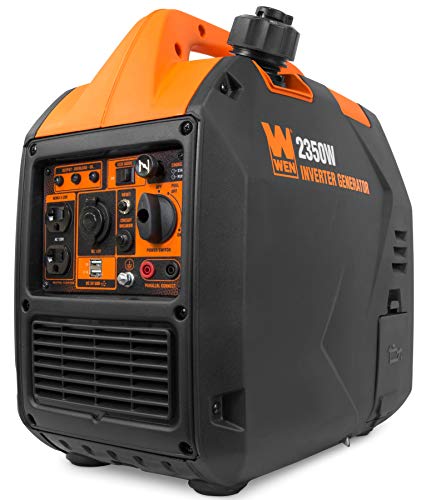
Under 40 pounds. That is the headline, and it should be. You can lift this into a truck bed one-handed, set it up solo at midnight, and run it without waking the neighboring site. Buyers across years of hurricane prep and campground boondocking describe first-pull starts as the norm, not the exception. The feedback pile is deep enough that this pattern is more a fact than a claim.
What it won't do is run your AC. 1,900 running watts is fridge, lights, charger, and CPAP territory. Try to start a 13,500 BTU air conditioner with this and you'll trip the overload before the compressor engages. That is not a knock on the WEN, it is the physics of the unit. This generator exists to power everything except the AC.
Who it's wrong for: anyone who bought it expecting to run an RV air conditioner. Who it's right for: teardrop owners, van campers, and anyone boondocking with a 12V fridge and a couple of USB chargers. Nobody regrets this purchase. They only regret misunderstanding what they were buying.
We earn a commission on purchases via these links. It does not change the price you pay or our ranking.
Budget Pick That Holds Up ERAYAK 2400W Inverter Generator
Budget class; WEN 2350 is quieter if you can stretch the budget.
ERAYAK 2400W Inverter Generator
Budget class; WEN 2350 is quieter if you can stretch the budget.
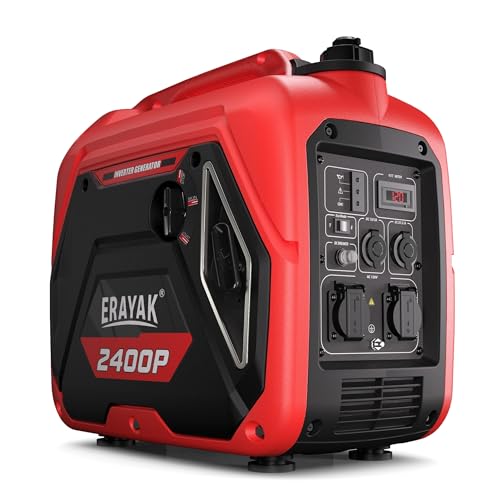
About $50 cheaper than the WEN 2350, same weight class. ERAYAK claims 52.5 dB at 7 meters and 25% load, which is worth flagging: that is a longer measurement distance and a lighter load than most manufacturers use. In practice, real operational noise is probably within 1-2 dB of the WEN, but the spec is doing some marketing work that the WEN spec is not.
Buyer feedback is positive enough to take seriously. The brand has less long-term history than WEN, which matters if you are buying a generator for a decade of RV ownership. For a trip or two a season? The value pick, especially if the WEN is out of stock or the budget is genuinely tight.
We earn a commission on purchases via these links. It does not change the price you pay or our ranking.
Mid-Size Gas Workhorses (3,000-4,500W)
Single AC plus microwave plus a few extras. The “we're at Yellowstone with a 25-foot travel trailer” segment. Gas-only because fuel type isn't the bottleneck at this size. Weight and noise are.
Best for RV Parks Champion 4000W Inverter Generator
49 lbs for 4,000W inverter; honest 64 dB spec, not 25%-load fiction.
Champion 4000W Inverter Generator
49 lbs for 4,000W inverter; honest 64 dB spec, not 25%-load fiction.
49 pounds for a 4,000W inverter. That is one of the lightest-per-watt ratios in the mid-size class.
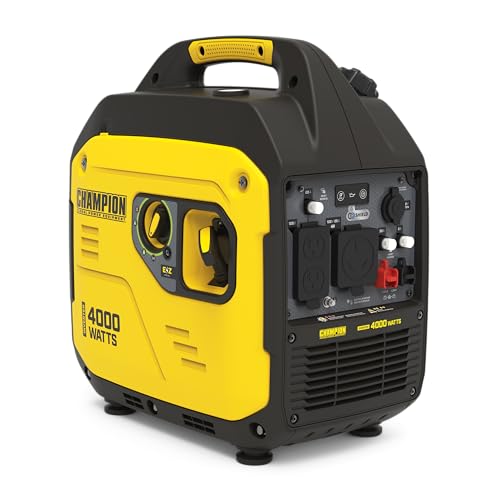
Champion publishes a 64 dBA spec at 23 feet at rated load. That is the number that matters - not the 25%-load figure most competitors lead with. At actual operating load, a generator that stays in the 58-64 dB range is genuinely campground-usable. One that claims 64 dB at quarter-load is considerably louder when the AC compressor kicks on. At 49 pounds for 4,000W, this is also one of the lightest-per-watt units in the mid-size class - weight matters when you're muscling it out of a truck bed alone.
- Handles a 13,500 BTU AC plus microwave with headroom
- Champion's warranty and service network covers most of North America
- Inverter output protects sensitive electronics
- CO shutoff sensor included
Champion has been building generators long enough that "light and quiet" from them means something different than the same claim from a brand that launched 18 months ago. The field record matters here. If you want more data before committing, trust the brand track record - it earns weight that a newer entrant can't buy.
We earn a commission on purchases via these links. It does not change the price you pay or our ranking.
ERAYAK 4500W Inverter Generator
Mid-size at a budget price; buyer satisfaction a half-tier below the segment leaders.
ERAYAK 4500W Inverter Generator
Mid-size at a budget price; buyer satisfaction a half-tier below the segment leaders.
Listed for completeness rather than as a headline recommendation. The ERAYAK 4500W is mid-size at budget pricing, with a 60.5 dB claim at 23 feet and a 55-pound carry weight. Buyer satisfaction sits a noticeable step below where Champion lands in the same segment. If the Champion 4000W is available and within budget, it is the cleaner choice on quality-per-dollar. If it is not, this covers the same wattage range at a lower price. Reasonable option; not the one to reach for first.
Dual-Fuel for Long Boondocking
Gas for convenience, propane for the 20-pound tank you already have for the BBQ. Propane runs 10-15% lower wattage than gas on the same unit, but the fuel logistics payoff over a week off-grid is the point.
Best Dual-Fuel Westinghouse iGen4000DFc Dual-Fuel
Remote start, TT-30R outlet, dual fuel, CO shutoff; premium done right.
Westinghouse iGen4000DFc Dual-Fuel
Remote start, TT-30R outlet, dual fuel, CO shutoff; premium done right.
Remote start is not a gimmick when you need to start a generator at 3am in a freezing Montana campsite.
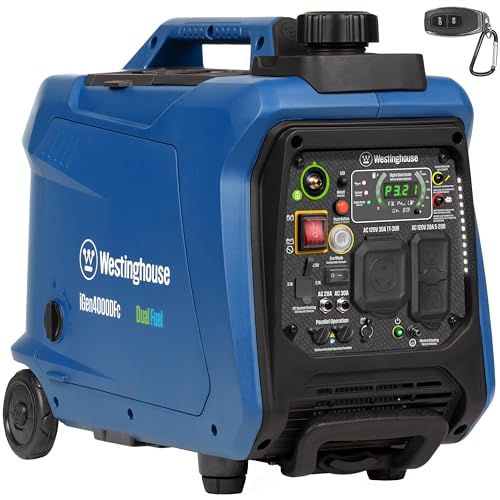
The feature stack is the story. Dual-fuel gas or propane, remote start key fob, RV-ready TT-30R outlet built in, CO shutoff sensor, and a Westinghouse warranty behind all of it. Buyers describe the setup-once-trust-it experience, which is the thing you actually want from a generator you're depending on at a campsite or during a power outage.
Remote start sounds like a luxury until you need to start a generator in freezing rain at 3am. The buyers who mention it most aren't the tech-enthusiast crowd; they're the people who experienced an ice storm and came back to say it was the feature that mattered most. That pattern shows up across many buyer reports, not just a handful.
At $750, this is double the WEN 2350. The price is justified for buyers who actually boondock regularly, experience extended outages, or need the 30A outlet. For weekend campers with a 20-foot trailer who rarely run the AC, it is overkill. Be honest about your use case before buying.
We earn a commission on purchases via these links. It does not change the price you pay or our ranking.
WEN 3600W Dual-Fuel Inverter
The smart middle-ground pick for mid-size trailers with single AC.
WEN 3600W Dual-Fuel Inverter
The smart middle-ground pick for mid-size trailers with single AC.
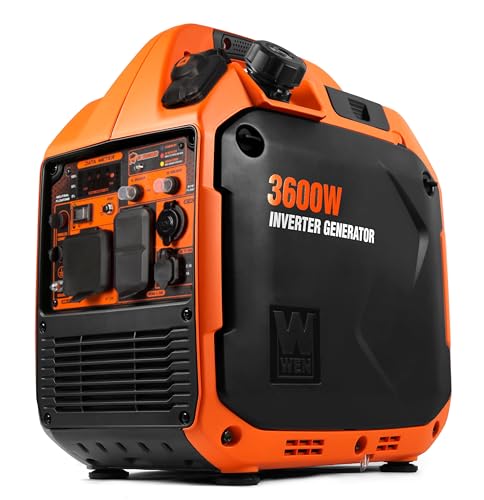
Mid-size trailer, single AC, and you don't want to choose between gas and propane at every fill-up. That's the use case this generator was built for. On gas, 2,900W running is comfortable for a 13,500 BTU AC unit without much headroom left over. On propane, that drops to around 2,600W - the 10-15% penalty that comes with every dual-fuel generator, not just this one. Buy on the gas rating; treat propane as the logistics bonus.
Buyers describe it as the smart middle ground, which is accurate. It sits between the small-trailer generators and the full boondocking premium. One caveat: 15,000 BTU AC users should size up. This is a single 13,500 BTU unit's generator, not a dual-AC handler. Fifth-wheel owners can stop reading here and scroll down to the big-rig section.
We earn a commission on purchases via these links. It does not change the price you pay or our ranking.
Best for Mid-Size Trailers WEN 4800W Dual-Fuel Inverter
First tier that runs RV plus microwave plus extras without Westinghouse pricing.
WEN 4800W Dual-Fuel Inverter
First tier that runs RV plus microwave plus extras without Westinghouse pricing.
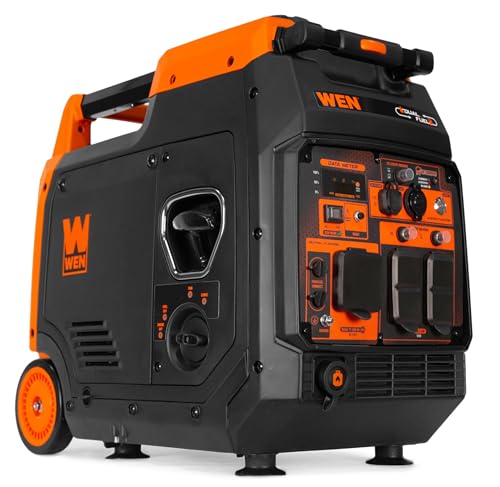
This is the pragmatic dual-fuel pick. Not the premium choice, not the budget choice. At 4,800W surge and 4,000W running on gas, it is the first tier where you run the RV air conditioner, the microwave, and a few other loads simultaneously without constant math in your head about what's on. At $699, it undercuts the Westinghouse iGen4000DFc by $50 with comparable wattage.
224cc engine. 57 dB at rated load. The weight is real, and buyers are upfront about it: about the max you'd want to have to move around. If you're at a site you drive to and set up once, weight is a logistics problem you solve once. If you're moving it daily, that's a different calculation.
Newer product, less long-term data than the Westinghouse. WEN's track record on generators is solid, so "less data" is not a red flag here, just an honest caveat about a model that hasn't been in the field for a decade yet.
We earn a commission on purchases via these links. It does not change the price you pay or our ranking.
Fifth Wheels and Dual-AC Setups (5,000W+)
Two rooftop AC units, microwave, water heater, all at once. Heavy, but still inverter-quiet. This is where the weight-to-power trade stops pretending to be portable and becomes functional.
Best for Big Rigs Westinghouse iGen4500 5000W
Ran a 30-foot trailer without complaint; the one-answer pragmatic pick.
Westinghouse iGen4500 5000W
Ran a 30-foot trailer without complaint; the one-answer pragmatic pick.
If a friend says 'just tell me what to buy' for a real travel trailer, this is the answer.
Buyers running 30-foot travel trailers come back with the same report: it handles the AC, the microwave, and whatever else is running without complaint or drama. The feedback volume behind this unit is substantial, built up over years of real-world RV use. Remote start key fob. TT-30R outlet built in. Westinghouse warranty.
If someone asks for one generator recommendation for a real travel trailer, this is it. Not the smallest trailer and not a 50-amp fifth wheel, but everything in between: the 25-to-35 foot travel trailer that a family takes to national parks and state campgrounds. One answer, handles every situation in that range.
Gas-only. About 100 pounds. That is not a carry weight, it is a wheel-it-to-the-site weight. And if two rooftop ACs on a fifth wheel are what you need, scroll down to the WEN 6800. This one won't cover that.
Whole-Trailer Backup WEN 6800W Dual-Fuel Generator
Fifth-wheel power; heavy, but the only unit here that runs dual AC.
WEN 6800W Dual-Fuel Generator
Fifth-wheel power; heavy, but the only unit here that runs dual AC.
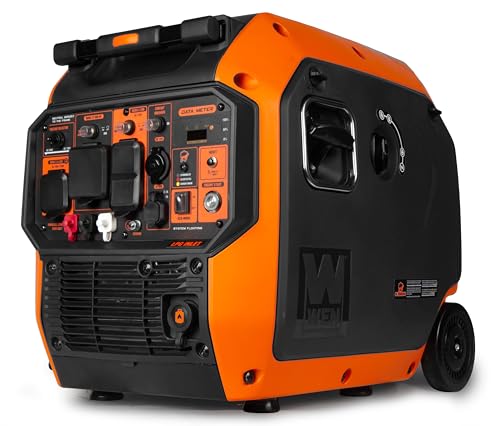
Two rooftop AC units on a fifth wheel. That is the scenario this generator exists for. 5,100W gas running power is enough to handle two 13,500 BTU units plus the microwave and convenience loads, which is where every other generator on this page runs out of headroom.
What the buyers confirm: the 224cc engine holds up at 6,800W surge, and dual-fuel flexibility (gas or propane) covers extended boondocking the way a gas-only unit can't.
What they're honest about: weight. This is about the max you'd want to have to move around. Budget enough time, a hand truck, and a flat path to the site.
One feature worth noting for the right buyer: bonded neutral 240V output means EV charging capability. Niche, but for a fifth-wheel owner who also has an EV at home and wants one generator to cover everything, it is a real differentiator. At 62 dB, this is the loudest unit on this page. A lot of generator. Right for the right buyer, overkill for everyone else.
We earn a commission on purchases via these links. It does not change the price you pay or our ranking.
How to Buy a Quiet RV Generator Without Getting Fooled by the Spec Sheet
The spec sheet is a marketing document. Here's what the numbers actually mean, and how to read them in your favor.
The 25%-load number versus the one that matters
Manufacturers measure dB at 25% load, at 23 feet, on a calm day. That is the number on the box. Your generator at a campsite is running the AC compressor at startup surge, which is rated load. At rated load, add 5-10 dB to whatever the spec says.
A generator that hits 58 dB at rated load is genuinely quiet for an RV campsite. One that hits 58 dB at 25% load is probably 65+ dB when the AC is running. And 10 dB is not a small gap: it is roughly twice the perceived loudness. That difference is the difference between "the neighbors don't notice" and "the ranger is walking over."
Size for surge, not running watts
Running watts keep the AC on. Surge watts start the compressor. Those are different numbers, and the surge number is the one that determines whether your generator can run your AC at all.
One option worth knowing about: Micro-Air EasyStart and similar soft-start devices reduce AC surge demand by 50-70%. A 2,000W generator can sometimes start a 13,500 BTU AC with one installed. It is marginal and depends on AC model, but it works for some buyers who want to keep a small generator.
Dual fuel: the propane math
Propane burns 10-15% less efficiently than gas in the same engine. A generator rated 3,600W on gas produces around 3,000-3,200W on propane. That is always the case, on every dual-fuel unit, because propane has lower energy density by volume.
Buy dual-fuel generators on their gas rating. The propane capability is valuable for long boondocking (indefinite shelf life, no carburetor fouling during storage, the 20-pound tank you already have). It is not valuable if you need peak wattage.
Outlet types: TT-30R, 14-50R, and 5-20R
TT-30R is the standard 30-amp RV outlet. Most travel trailers and pop-ups use it. If the generator has a TT-30R built in, you plug directly into the shore power inlet, no adapter. 14-50R (50-amp) covers larger fifth wheels. The household 5-20R outlets work with a TT-30R adapter, but limit your draw to whatever the generator's total output is, not 30A specifically.
Campground compliance math
Most National Park campgrounds enforce 60 dBA at 50 feet. At typical 30-40 foot campsite spacing, a generator rated 60 dB at 23 feet measures 55-58 dB at the neighboring site. A 65 dB generator measures 60-63 dB at the same distance, right at or above the enforcement limit.
That 5 dB gap between spec sheets is the difference between allowed and asked to shut it down. It is not a rounding error.
Altitude derating
Gasoline engines lose 3-3.5% power per 1,000 feet of elevation. At 5,000 feet (Colorado, Sierra Nevada), expect 15-20% less output than the sea-level rating. At 8,000 feet, figure 25%+ derate. If your camping happens in the mountains, size up one tier from what you'd need at sea level.
CO safety
Generator CO poisoning kills roughly 250 people in the US every year. Minimum 20 feet from any window or vent. Never run a generator inside a compartment, even partially enclosed. CO shutoff sensors (standard on Westinghouse, Champion, WEN Watchdog units) detect dangerous CO buildup and shut the engine down. Worth the upcharge.
Parallel operation
Two 2,000W inverter generators wired in parallel produce 4,000W with more carry portability than one 4,000W unit. Some buyers choose this specifically because two lightweight units are easier to handle than one heavy one. The perceived noise is also often lower than a single larger unit at full load, since both run at partial throttle. Most WEN and Westinghouse inverters support parallel kits.
Frequently Asked Questions
What decibel level is considered quiet for an RV generator?
55 dB or below at rated load is genuinely quiet for an RV campsite. The catch is that most manufacturers publish the 25%-load number, not the rated-load number. Add 5-10 dB to what you see on the box for a realistic sense of what it sounds like when your AC is running. National Park campgrounds enforce 60 dBA at 50 feet; a generator that measures 55 dB at rated load at 23 feet falls right at the safe side of that line.
What size generator do I need to run my RV air conditioner?
A 13,500 BTU AC needs 3,000-3,500W surge to start the compressor, and around 1,500W to keep it running. A 15,000 BTU unit needs 3,500-4,000W surge. Add another 1,500W if you also want to run a microwave simultaneously. Soft-start devices like the Micro-Air EasyStart can cut surge demand significantly, sometimes allowing a 2,000W generator to start a 13,500 BTU AC, but that is a marginal arrangement. A 3,000-3,500W inverter generator is the safer default for any trailer with an AC unit.
Can you run a 2,000-watt generator with an RV air conditioner?
Not reliably without a soft-start device. The raw startup surge from a 13,500 BTU AC compressor typically exceeds 2,000W, which trips the overload protection before the compressor can engage. With a Micro-Air EasyStart or similar device installed on the AC unit, some buyers manage it, but it is marginal and depends on both the generator and the AC model. A 3,000-3,500W inverter generator is the safer default if AC is a requirement.
Are dual-fuel generators as quiet as gas-only inverter generators?
Yes, at similar loads. Dual-fuel doesn't inherently change noise characteristics. What changes noise is engine RPM and casing insulation, not fuel type. Propane combustion is slightly cleaner than gasoline, so some buyers notice a marginal difference at light load, but it's within 1-2 dB. Not meaningful for campground compliance purposes.
Can I run an RV generator all night at a campground?
Usually no. Most campgrounds post quiet hours from 8pm or 10pm until 8am, during which running a generator is either prohibited or restricted to emergency use. National Park campgrounds enforce this by rule. CPAP users with a documented medical need: check with the specific campground in advance, some make exceptions. Battery-powered CPAP packs that run 8-12 hours on a single charge are the most common workaround, and worth the investment if overnight camping is regular.