Sump Pumps · 2026 edition
Quietest sump pumps: what the noise data actually says
The bang happens about four seconds after the pump stops. You learn to anticipate it. A sharp thump, sometimes a rattle that travels up the discharge pipe and into the floor joists. Then quiet. Then it starts again ten minutes later. That's not the pump. That's the check valve.
We tracked noise reports across 13 sump pumps and check valves. No published dB specs exist for residential sump pumps - there's no EU EPREL equivalent, no ISO test standard. What we have is buyer noise reports over time and one fact that every competitor buries: a spring-loaded silent check valve costs $20 and eliminates the loudest noise event in most sump systems.
Eight picks: pumps and check valves
Pumps first, then the check valves that solve the noise problem most buyers don't know they have. No dB column - no standardized test exists for residential sump pumps. The dB tier is our editorial call based on construction quality and buyer noise reports.
| Product | dB | Category | Price | Badge | Verdict |
|---|---|---|---|---|---|
| WAYNE CDU800 1/2 HP Submersible Sump Pump | Quiet | Submersible | $180 | Quietest Overall | Cast iron workhorse; buyers confirm quiet through high-volume storm cycling |
| Zoeller | Quiet | Submersible | $224 | Professional-grade; oil-filled motor, LED plug, strong 19-year track record | |
| Wayne 3/4 HP Heavy Duty Submerisble Cast Iron and Stainless Steel Sump Pump with NEW Switch | Quiet | Submersible | $220 | High-capacity 3/4 HP for serious water volume; limited early buyer data | |
| WAYNE SPF33 | Quiet | Submersible | $123 | Best Budget Pick | Oil-bath bearings, virtually silent per spec; honest budget Wayne |
| Acquaer 1/3 HP Submersible Water Pump | Average | Utility | $80 | Electronic sensor, ran 9 hours in a storm, capable and quiet enough | |
| PumpSpy Silent Check Valve | Silent | Check Valve | $20 | Top Noise Fix | Spring-loaded flapper; buyers say they had to check if it was running |
| Zoeller 30‑0040 Quiet Check Valve 1 | Silent | Check Valve | $29 | Solvent-weld PVC union; permanent, completely silent, 50 PSI rated | |
| ProCheck Quiet Silent Sump Pump Check Valve With Stainless Steel Vibration Resistant Couplings | Silent | Check Valve | $25 | Vibration-resistant ProFlex couplings; tackles vibration beyond water hammer |
What "quiet" means when there are no numbers
Every other category on this site has dB specs we can reference - dishwashers have EU EPREL entries, generators have ISO test ratings. Sump pumps have manufacturer marketing copy that nobody verifies. Here's what we can actually say.
The motor hum
A well-built submersible pump sits below the waterline. Water absorbs vibration the way air doesn't - a submerged motor hum is genuinely livable in a finished basement. Quiet submersible models in the 40-50 dB range (refrigerator territory) is a reasonable estimate based on similar motor types. The construction quality of the housing matters: cast iron absorbs vibration, thermoplastic transmits it.
The shutdown bang
This is what most people searching for a "quiet sump pump" are actually hearing. Standard check valves are flap-style: the discharged water slams the flapper shut under its own weight every time the pump stops. A spring-loaded check valve closes before the backflow builds momentum. The difference between the two is dramatic, fixable without replacing the pump, and costs less than a pizza.
Cycle frequency
An undersized pump running every two minutes is louder in practice than a correctly sized pump running every fifteen - even if per-cycle noise is identical. Total noise exposure scales with how often the pump cycles, not just how loud each cycle is. Right-sizing beats shopping for a "quieter" pump that just runs more often.
Quiet Basement Sump Pumps
Cast iron, oil-bath bearings, float switches tested to a million cycles. These are the permanent-installation picks - the ones that run for years and don't announce themselves at 3 AM.
Quietest Overall Wayne CDU800 1/2 HP
Seven years of buyer feedback confirm reliable and quiet - the basement sump benchmark.
Wayne CDU800 1/2 HP
Seven years of buyer feedback confirm reliable and quiet - the basement sump benchmark.
It ran for hours straight during a heavy storm. Didn't complain once.
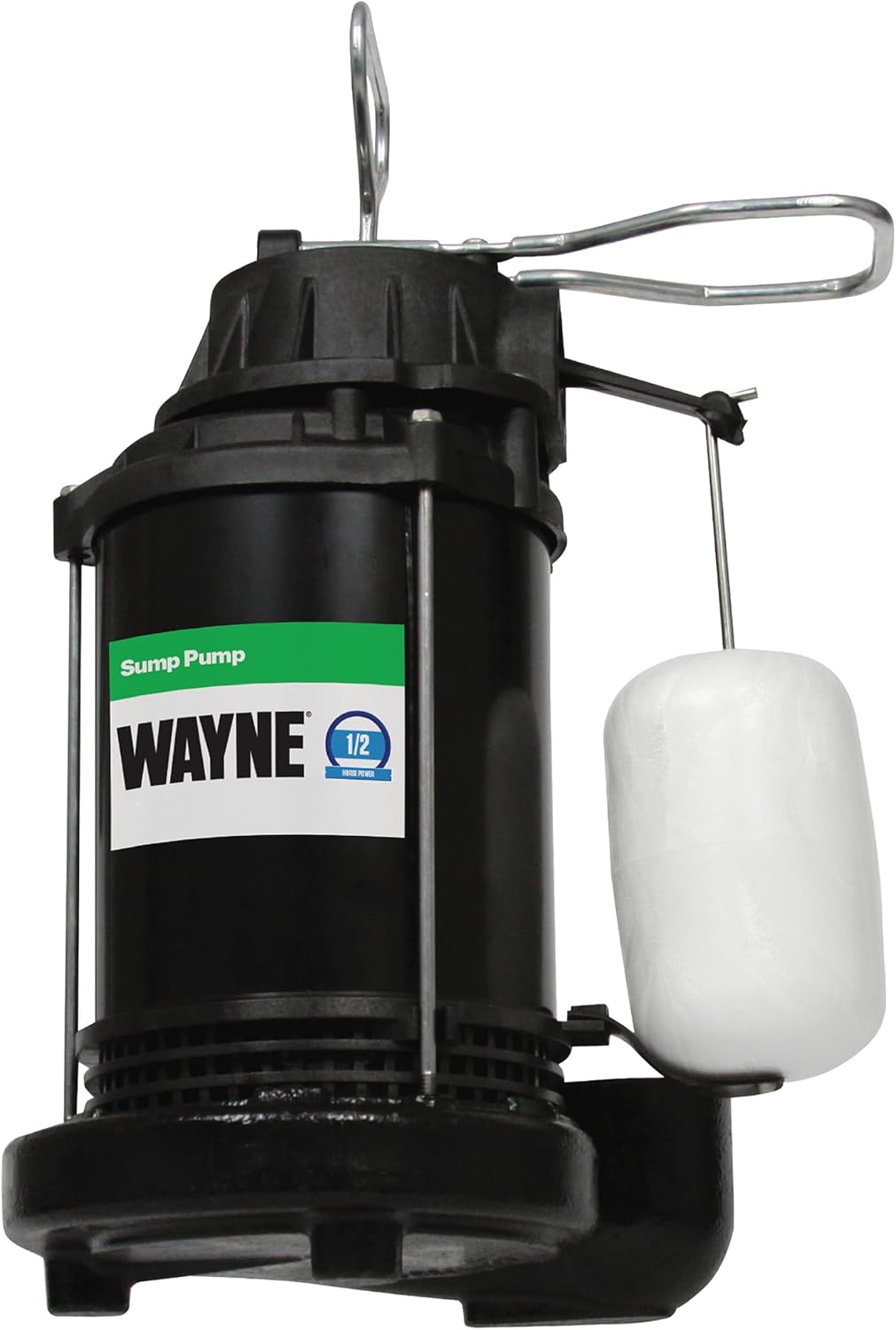
Cast iron body. Top suction design that eliminates air lock without drilling a weep hole. Float switch tested to 1 million cycles. This is what a pump looks like when it's built to outlast a decade of basement flooding, not to hit a price point.
Buyers describe it as quiet under heavy load, including one who ran it through a storm with the pump cycling continuously for hours. The consistent report: you hear the pump start, water moves, the pump stops. No rattling, no grinding, no 3 AM wake-up call. The check valve situation is worth addressing separately - the CDU800 ships with a standard valve, and pairing it with a spring-loaded silent check valve completes the job.
One limitation worth knowing: the vertical float switch is not adjustable. You can't swap it for a tether-style switch that lets you control water level triggers. Some buyers prefer that flexibility; most don't miss it. At this price, the trade-off is reasonable. Minimum 11-inch sump basin required. Backed by a 3-year warranty.
We earn a commission on purchases via these links. It does not change the price you pay or our ranking.
Zoeller Mighty Mate M53
Professional-grade; oil-filled motor, LED plug, the brand plumbers actually specify.
Zoeller Mighty Mate M53
Professional-grade; oil-filled motor, LED plug, the brand plumbers actually specify.
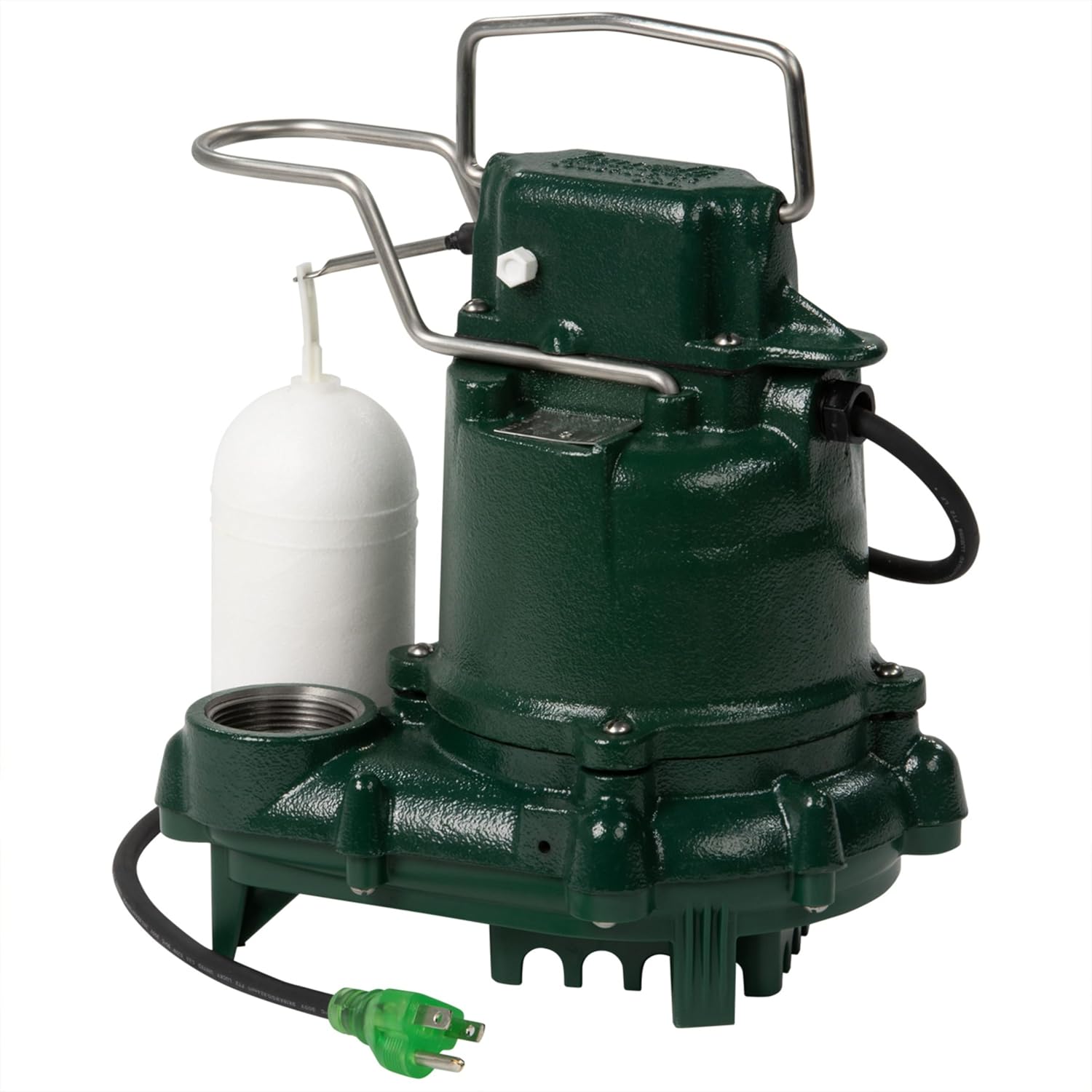
Zoeller is what gets specified when someone who knows plumbing picks a pump. The Mighty Mate M53's oil-filled motor runs cooler and quieter than motors that rely on water or air for cooling - heat dissipation is the same principle that makes oil-cooled machinery run smoother over time. Cast iron housing does the rest, absorbing vibration rather than broadcasting it through the discharge pipe.
The LED plug is a detail you don't realize you want until the first time you're checking the sump at midnight. Power confirmation without opening anything. Vortex impeller design passes small solids through without clogging - fewer maintenance noise events over the pump's life.
Buyer data is thinner for this specific model than for the Wayne CDU800. The Zoeller brand track record is the signal here - previous units running 19 years without replacement. For 3/10 HP, this is right for moderate water table situations. High-volume flooding scenarios call for more capacity.
We earn a commission on purchases via these links. It does not change the price you pay or our ranking.
Wayne CDU980ET 3/4 HP
High-capacity pick for serious water volume; same construction class as the CDU800.
Wayne CDU980ET 3/4 HP
High-capacity pick for serious water volume; same construction class as the CDU800.
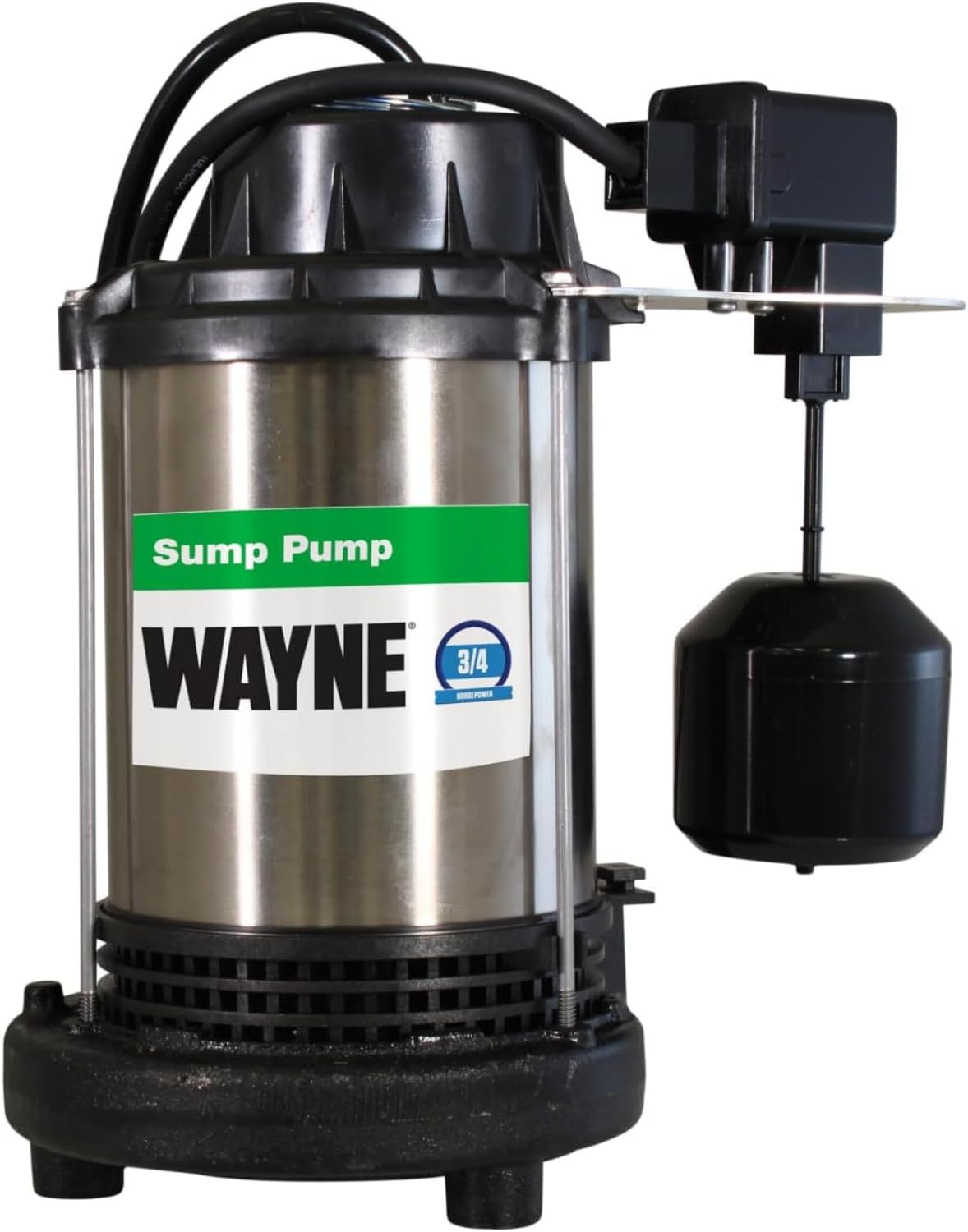
The capacity argument: 3/4 HP moves water faster, which means the pit empties sooner, which means fewer cycles per storm. A pump that runs for 45 seconds and stops is quieter in practice than a pump that runs for 3 minutes - per-cycle noise is only half the story. For basements in high water table areas that get serious rainfall, the CDU980ET earns its price premium through reduced cycling.
Same Wayne cast iron construction as the CDU800. Wayne's spec sheet says "ultra-quiet performance," and the 5-year warranty backs that claim with real money. Early buyers confirm quiet operation and fast water removal. The honest caveat: this product is early in its review life. The CDU800's track record is longer and better documented.
We earn a commission on purchases via these links. It does not change the price you pay or our ranking.
Best Budget Pick Wayne SPF33 1/3 HP
Oil-bath bearings, virtually silent per spec - the budget Wayne that earns it.
Wayne SPF33 1/3 HP
Oil-bath bearings, virtually silent per spec - the budget Wayne that earns it.
Upper and lower ball bearings in a sealed oil bath. That's the engineering reason it runs quietly.
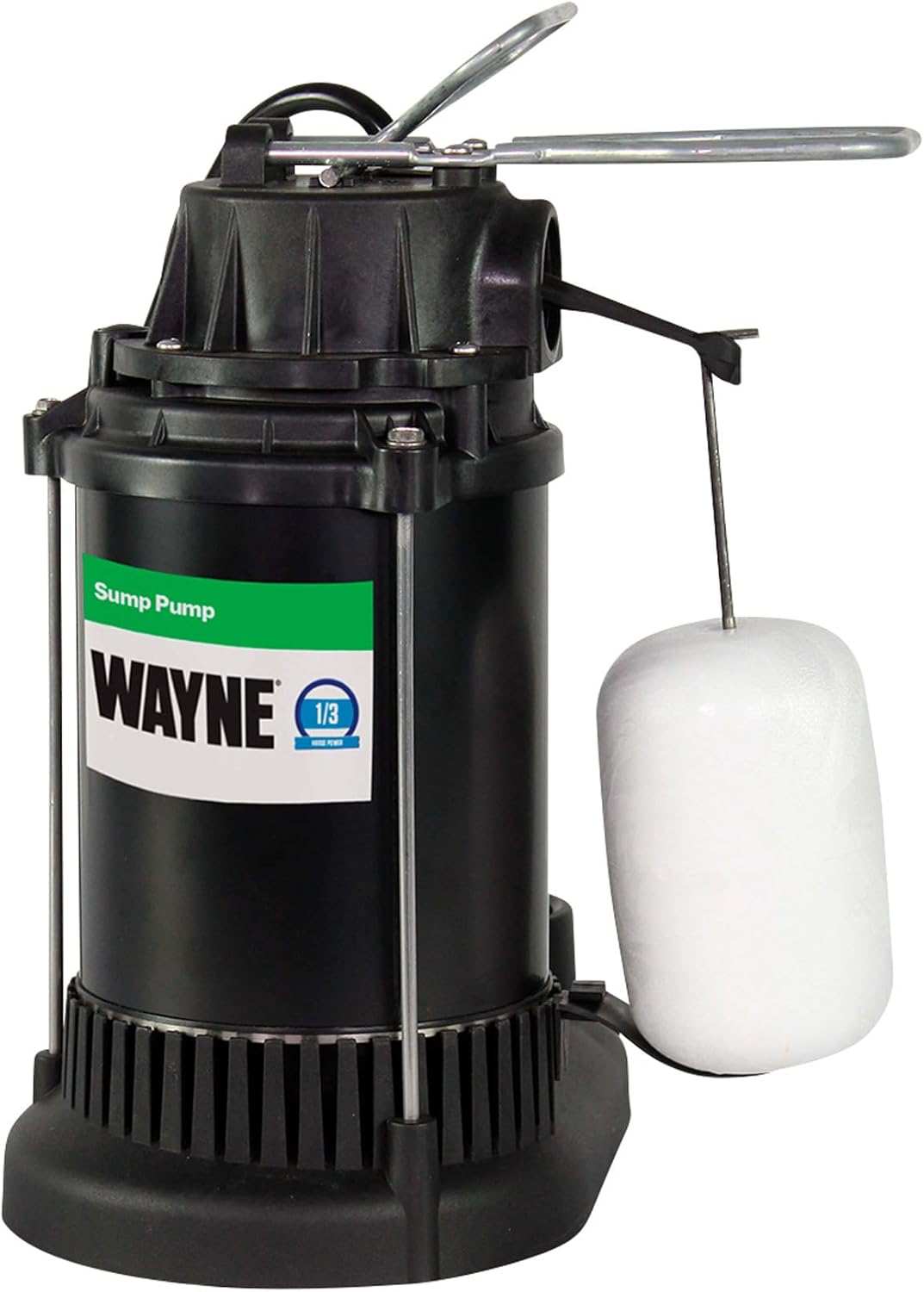
Upper and lower ball bearings in a sealed oil bath. That's the engineering reason the SPF33 runs quietly - it's the same principle used in precision machinery to reduce vibration. Wayne's own spec copy says "virtually silent operation," and for once that claim has a mechanism behind it rather than just being a line in the marketing brief.
The body is epoxy-coated steel rather than full cast iron, and at $123 that's the honest trade-off. The bearing design compensates for what the housing lacks in mass. Top suction design minimizes clogging, same as the CDU800. Buyers report years of reliable quiet operation and straightforward installation.
The warranty is 1 year - shorter than the CDU800's 3-year coverage. That's the real cost delta between models in this range. For an average basement where the pump cycles a dozen times during a rainstorm rather than continuously, the SPF33 is the correct purchase.
We earn a commission on purchases via these links. It does not change the price you pay or our ranking.
Budget Utility Pumps
Thermoplastic bodies, electronic sensors instead of float switches, lower price. For crawlspaces, emergency flooding, or as a backup where cast iron isn't the priority.
Acquaer 1/3 HP
Electronic sensor, ran 9 hours in a storm, capable and quiet enough for the price.
Acquaer 1/3 HP
Electronic sensor, ran 9 hours in a storm, capable and quiet enough for the price.
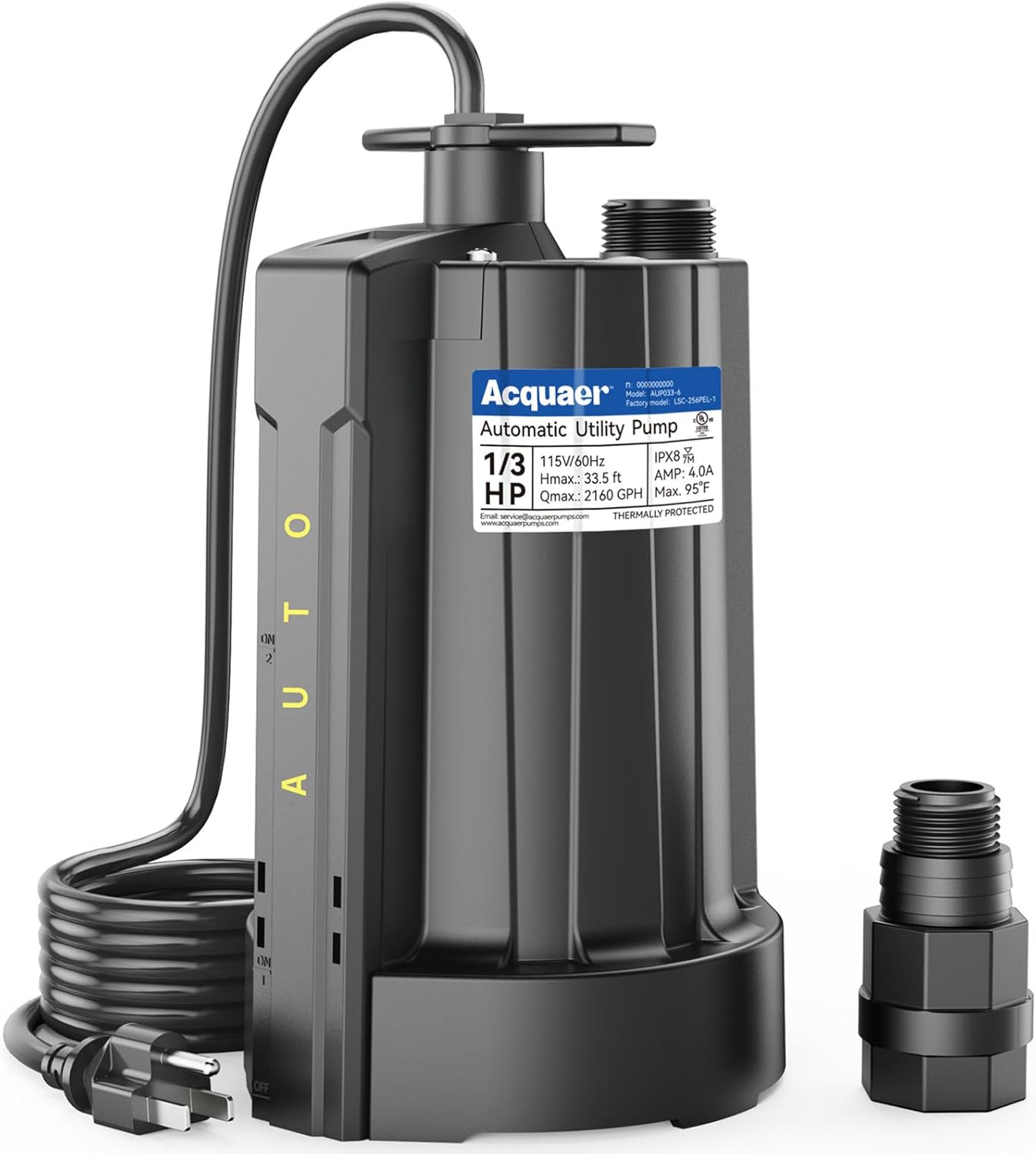
What sold buyers: it actually works. One ran it for nine hours straight during a Pacific Northwest torrential rain, crawlspace flooding, and reported it handled the job without complaint. That's an honest field test. The electronic sensor auto-activates at 1.5 inches, shuts off at 0.25 - no float arm to stick or adjust.
Thermoplastic construction means lighter, cheaper, and less vibration-dampening than cast iron. Buyers use it in crawlspaces, window wells, and emergency situations. It operates quietly by report - not in the same league as an oil-bath Wayne, but quiet enough that it's not the reason anyone returns it. For $79.99 and a 3-year warranty, it's a capable tool that doesn't ask to be more than that.
We earn a commission on purchases via these links. It does not change the price you pay or our ranking.
Silent Check Valves
The fix most sump owners need and don't know about. A standard check valve bangs every pump cycle. A spring-loaded silent valve closes before the backflow hits. $20 to $30. Install in 10 minutes.
Top Noise Fix PumpSpy Silent Check Valve 1-1/2"
Spring-loaded flapper; buyers say they had to check if it was even running.
PumpSpy Silent Check Valve 1-1/2"
Spring-loaded flapper; buyers say they had to check if it was even running.
Buyers describe having to check whether the system was still running. That's the bar the spring-loaded valve sets.
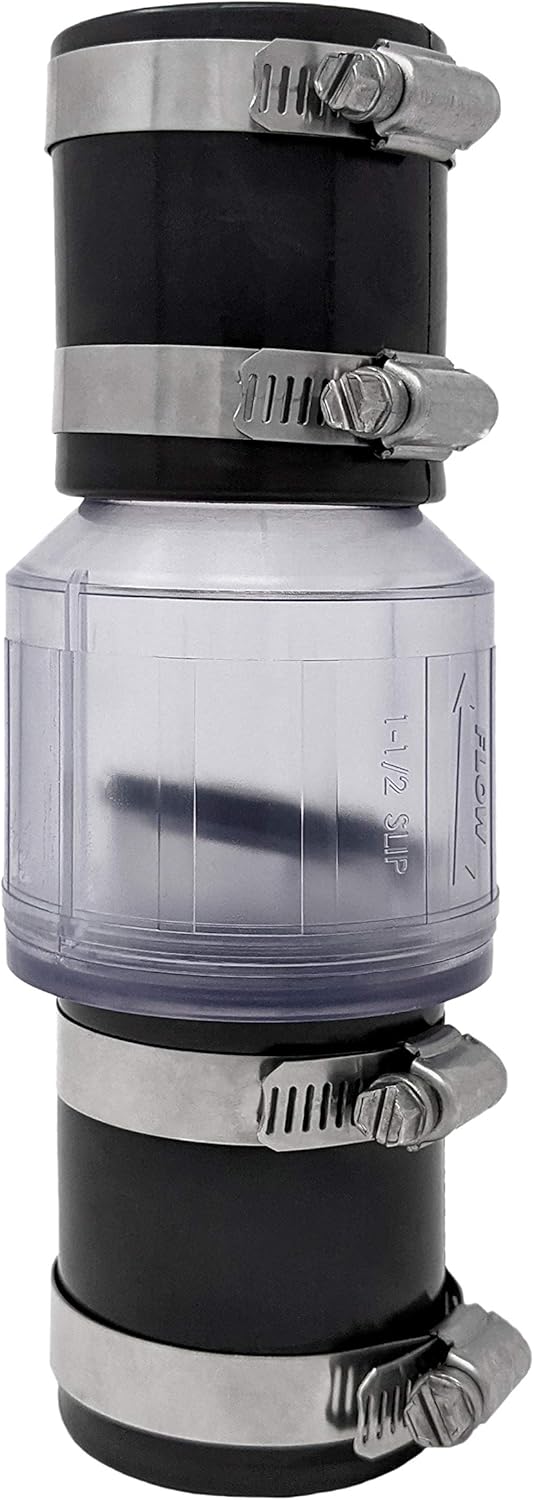
The problem: when your pump stops, water in the discharge pipe has momentum. A standard flap check valve sits in the path of that falling water and gets slammed shut. The resulting bang travels through the discharge pipe, through whatever brackets hold it to the wall, and into the floor joists. You hear it throughout the house.
The spring-loaded fix: a spring holds the flapper closed against the backflow before the water builds momentum. Nothing slams. Buyers describe immediate, dramatic noise reduction after installation - one said they had to check whether the system was still on, it had gotten so quiet. Another reported eliminating the thumping and gurgling that had been audible throughout the house. The clear valve body lets you visually confirm water is moving.
Installation: stainless steel hose clamps and Buna-N rubber couplings are included. Fits any existing 1-1/2-inch discharge pipe. Ten minutes. If you only do one thing on this page, do this.
We earn a commission on purchases via these links. It does not change the price you pay or our ranking.
Zoeller Quiet Check Valve 1-1/2"
Solvent-weld PVC with union fittings - permanent, completely silent, 50 PSI rated.
Zoeller Quiet Check Valve 1-1/2"
Solvent-weld PVC with union fittings - permanent, completely silent, 50 PSI rated.
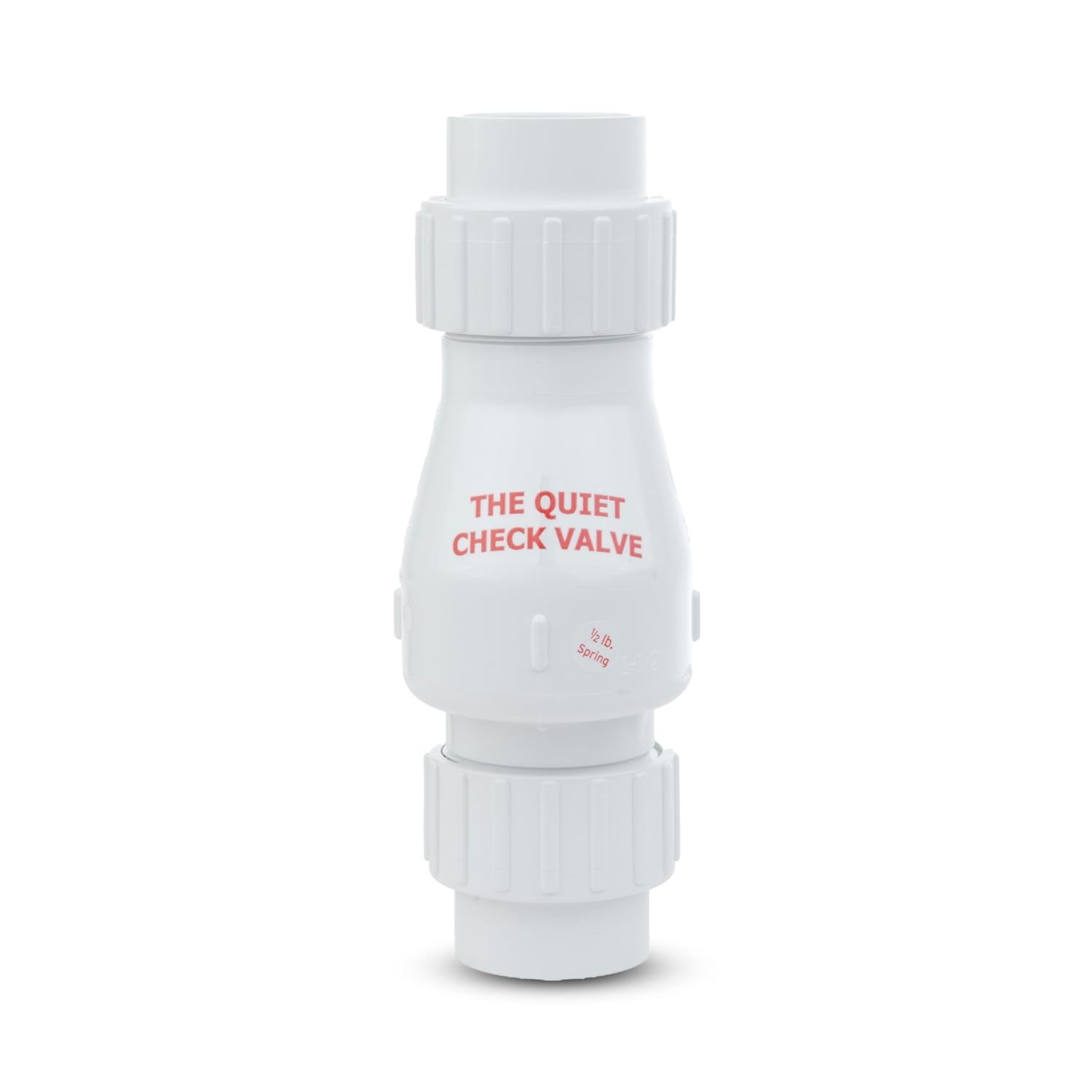
For buyers who want the valve to become part of the plumbing, not something clamped onto it. Zoeller's union-style solvent-weld ends splice into the existing PVC discharge line with standard PVC cement - once installed, it's part of the pipe. Rated to 50 PSI (115 feet of head), so long discharge runs aren't an issue. Works vertical or horizontal.
The trade-off for permanence: you need to cut the existing PVC pipe. Drain the sump as low as it will go first, have a PVC cutter and glue on hand, and budget an extra fifteen minutes over the hose-clamp style. Buyers who do the work report complete silence afterward. The spring-loaded mechanism is the same principle as the PumpSpy - closes before backflow, no hammer. Different form factor for a different installation preference.
We earn a commission on purchases via these links. It does not change the price you pay or our ranking.
Fernco ProCheck 1-1/2"
Vibration-resistant ProFlex couplings - tackles vibration noise beyond water hammer.
Fernco ProCheck 1-1/2"
Vibration-resistant ProFlex couplings - tackles vibration noise beyond water hammer.
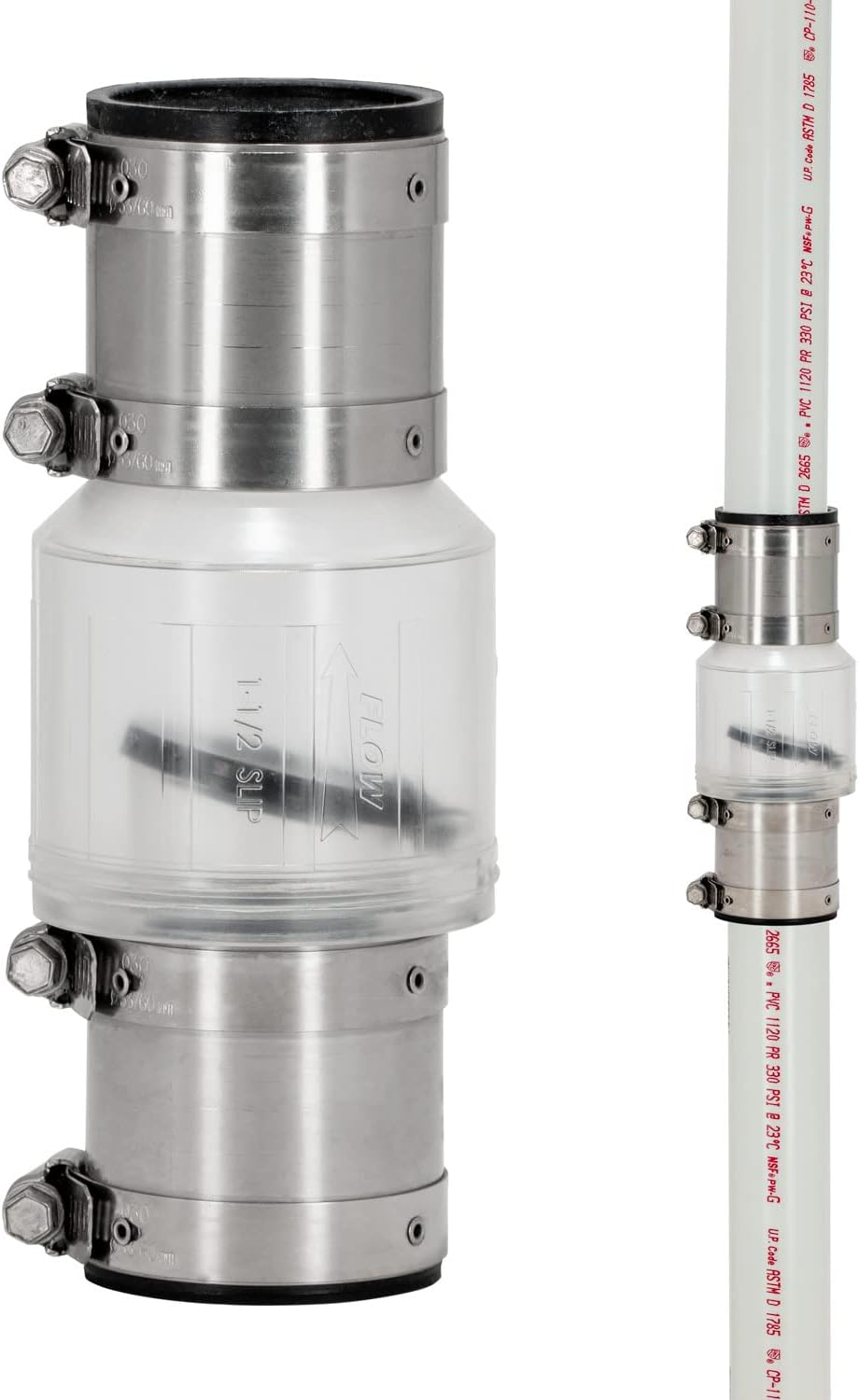
Most noise complaints are water hammer. But some sump systems have a second problem: the discharge pipe vibrates when water flows through it at pump pressure, and if that pipe sits against a floor joist or wall framing, the structure amplifies the vibration into a rumble that's not quite a bang and not quite a hum. The Fernco ProFlex couplings are engineered to break that vibration path.
The interior ridge design locks the pipe into the coupling under pressure. The spring-loaded flapper handles the water hammer. Buyers report elimination of vibration noise that had been traveling through floors and walls. Installation requires a hex driver for the hex-head screws; the steel plates make it slightly fiddlier than rubber-only couplings, but produce a more stable connection. If pure water hammer is your only issue, the PumpSpy is simpler. If vibration is part of the picture, this is the one to try.
We earn a commission on purchases via these links. It does not change the price you pay or our ranking.
Buying guide: the whole-system approach
A sump system has four noise sources and four corresponding fixes. Addressing only the pump leaves three of them unsolved.
Fix the check valve first
Before replacing a working pump to reduce noise, replace the check valve. This is the highest-ROI noise intervention available for any sump system. A $20 spring-loaded silent check valve eliminates the loudest noise event in most installations. If the pump itself is the problem (grinding, screeching, unusual hum), that's a different diagnosis - bearing wear in a pump over 7 years old is a replacement signal, not a maintenance one.
Submersible, not pedestal
Pedestal sump pumps have the motor mounted above the water line on a stand. The motor sits exposed to air and broadcasts vibration directly into the basement. Submersible motors are surrounded by water, which absorbs high-frequency vibrations before they reach the air. If noise matters, the pump type decision is made before you look at any specific model. Submersible. Full stop.
Why cast iron and oil-bath bearings matter
Cast iron absorbs vibration; thermoplastic transmits it. That's the entire explanation for why cast iron sump pumps run quieter. The mass of the housing dampens the motor's vibration before it reaches the discharge pipe. Oil-bath bearing designs (Wayne SPF33, Zoeller's oil-filled motor) add a second layer: the oil cushions the rotating shaft, reducing vibration at the source. Both features are primarily durability engineering, with quiet operation as the byproduct.
Size the pump for your water table
An undersized pump cycling every two minutes during a storm is louder in practice than a correctly sized pump cycling every fifteen. Pump sizing for a residential basement depends on the pit volume, the groundwater inflow rate, and the discharge elevation. For most homes in moderate climates, 1/3 to 1/2 HP is correct. High water table situations with serious inflow warrant 3/4 HP. Sizing up reduces cycle frequency, which reduces total noise exposure regardless of per-cycle noise level.
The accessory stack
Silent check valve, rubber anti-vibration pad under the pump, rubber-gasketed sealed pit cover, flexible connector at the discharge where it transitions to rigid pipe. Each one breaks a different vibration transmission path. A well-chosen pump with all four accessories outperforms an expensive pump with standard installation on every noise metric.
dB context (no sump pump standard exists)
- 40-50 dB Quiet submersible pump motor in operation (refrigerator hum territory)
- 65-80 dB Typical unoptimized sump pump system (vacuum cleaner territory)
- 70-100 dB Pedestal pump with exposed motor - avoid for any noise-sensitive installation
- Transient peak Check valve slam - not continuous, but the event that wakes people
These ranges come from buyer reports and general motor acoustic data. No standardized dB test exists for residential sump pumps - any specific number on a product listing is a manufacturer claim, not a verified measurement.
FAQ
- Why does my sump pump make a loud noise when it turns off?
- That's water hammer from a standard check valve. When the pump stops, water in the discharge pipe flows back down and slams the flap valve shut. A spring-loaded silent check valve ($20-30) closes before the backflow builds momentum. The difference is immediate and dramatic.
- What is the quietest sump pump you can buy?
- No standardized dB test exists for residential sump pumps, so there's no definitive answer. Based on buyer noise reports, cast iron submersible pumps with oil-bath bearing designs (Wayne CDU800, Wayne SPF33, Zoeller M53) are consistently reported as running quietly. Pair any of them with a spring-loaded silent check valve.
- How do I reduce sump pump vibration noise?
- Three steps in order of impact: install a spring-loaded silent check valve, place a rubber anti-vibration pad under the pump, and check that the pit cover is sealed and gasketed. If discharge pipe vibration is the issue, the Fernco ProCheck's vibration-resistant couplings address that specifically.
- Is a silent check valve worth it?
- If your system uses a standard check valve, yes. No question. It's $20, installs in 10 minutes on any 1-1/2-inch discharge pipe, and eliminates the loudest noise event in most sump systems without touching the pump.
- Should I hear my sump pump running?
- A faint motor hum through a closed basement door is normal for a submersible pump. A distinct bang or thump when it shuts off means the check valve needs replacing. Grinding or screeching from a pump over 7 years old means bearing wear - plan replacement before the next heavy rain, not after.